Australian Popular Music: A Journey Through Genres and Eras
From the rustic ballads of the outback to the high-energy beats of modern electronic dance music, Australia has cultivated a rich and diverse musical landscape. While early influences were heavily drawn from European traditions and later American trends, the nation has consistently evolved its own unique sonic identity, producing global superstars and groundbreaking genres.
Early Pop and the Roots of Country Music

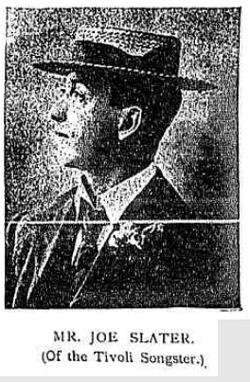
In the early twentieth century, Australian popular music was defined by composers like Joe Slater, Vince Courtney, and Herbert Cosgrove, who published works such as Ragtime and light ephemera. However, the rise of recording and broadcasting eventually led to a decline in demand for these local published works.
Parallel to this, Australia developed a deep tradition of country music. This evolved into two distinct styles: bush music (or bush band music) and a more Americanized country sound. Bush music is rooted in the folk traditions of Ireland, Scotland, and England, focusing on strictly Australian subjects. A prime example is "Waltzing Matilda," which is heavily influenced by Celtic folk ballads.
The Americanized style was pioneered in the 1930s by Tex Morton and later popularized by Slim Dusty. Dusty became the highest-selling domestic artist with over 7 million records, most famous for his 1957 hit "A Pub With No Beer." Other influential figures include the British-born Frank Ifield, who achieved three consecutive number-one hits in the UK during the early 1960s.
Contemporary Country and Global Success
Australian country artists such as Keith Urban and Olivia Newton-John have found massive success in the United States. Locally, the genre has seen a crossover with popular music through artists like Kasey Chambers, Lee Kernaghan, and Troy Cassar-Daley.

The Evolution of Rock and Pop

Australia's rock scene began with early stars like Johnny O'Keefe, whose 1956 hit "Wild One" marked the first Australian rock'n'roller to hit the national charts. By the 1960s and 70s, bands like the Easybeats and the Seekers gained international traction, while AC/DC emerged as a global powerhouse.
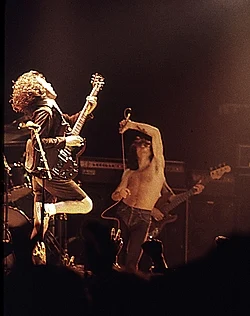
A defining moment in the industry was the 1970 radio ban, a dispute over copyright fees between record companies and commercial radio stations. Despite this, the mid-1970s saw a surge in local exposure thanks to the ABC-TV show Countdown and the non-commercial rock station Double Jay.
The 1980s and the Rise of Independence
The 1980s marked a shift toward artistic independence. Bands like INXS, Men at Work, and Hoodoo Gurus achieved worldwide fame. Men at Work's "Down Under" became a global anthem and the unofficial theme of the 1983 America's Cup. This era also saw the rise of TISM, known for their anonymity and humorous lyrics.
Alternative Movements: Grunge and Indie Rock

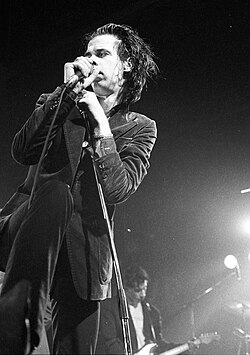
Grunge—a punk/metal hybrid—emerged in the mid-1980s in both the US Pacific Northwest and Australia. While often associated with Seattle, the term was used in Australia to describe bands like The Scientists and Beasts of Bourbon. In the 1990s, the teenage trio Silverchair became a global phenomenon with their album Frogstomp, selling over 4 million copies.
The 1990s also fostered a thriving indie rock scene. While some bands like the Hoodoo Gurus initially struggled for mainstream acceptance, they eventually became integral to the Aussie indie story. Much of this growth was supported by Triple J, the ABC's alternative radio station, which helped launch careers through its Unearthed program.
R&B, Soul, and Electronic Music
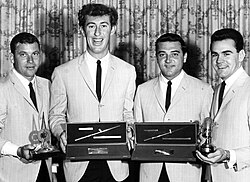
R&B and soul have had a profound impact, though early American recordings were sometimes suppressed on Australian radio due to racism. Despite this, artists like Renée Geyer and Marcia Hines became iconic figures. In more recent years, Australian Idol alumni like Guy Sebastian and Jessica Mauboy have dominated the R&B charts.

Electronic music gained momentum in the 1990s with experimental acts like Severed Heads. By the 2000s, The Presets helped define the "Modular Records" sound, blending electro-house and synth-pop to achieve critical and commercial success.

The Emergence of Grime
Grime, a British electronic genre characterized by 140 bpm syncopated breakbeats and urban lyrics, arrived in Australia around 2010. Pioneer Fraksha and the Smash Brothers collective introduced the style to the local raving scene, collaborating with UK artists like Skepta.
Children's Music and Global Phenomena

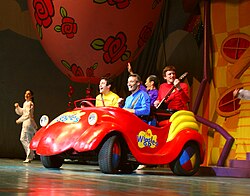
Children's music remained a niche market until the late 1990s with the arrival of The Wiggles. This group became a global powerhouse, earning 15 ARIA Awards for Best Children's Album and being inducted into the ARIA Hall of Fame. In 2007, they were the top-earning Australian entertainers, earning A$ 45 million.
Key Facts
- Slim Dusty is one of Australia's biggest selling domestic artists with over 7 million records.
- Kylie Minogue is the highest-selling female Australian artist of all time, with over 80 million records sold worldwide.
- The Wiggles hold the record for the most ARIA wins in the Best Children's Album category.
- The 1970 Radio Ban was a pivotal conflict over copyright fees between labels and commercial radio.
- Triple J has been a primary driver for the success of alternative and indie rock in Australia since 1975.
| Genre | Key Artists/Groups | Defining Characteristics |
|---|---|---|
| Bush Music | The Bushwackers, Buddy Williams | Celtic folk influence, Australian subjects |
| Rock/Pop | AC/DC, INXS, Kylie Minogue | Global commercial success, diverse styles |
| Grunge | Silverchair, The Scientists | Punk/metal hybrid, alternative sound |
| Electronic | The Presets, Severed Heads | House, techno, and synth-pop fusion |
| Children's | The Wiggles, Hi-5 | Educational, high-energy, global reach |
Frequently Asked Questions


What is the difference between bush music and Americanized country music in Australia?
Bush music is rooted in Celtic folk ballads from Ireland, Scotland, and England and focuses on strictly Australian themes. Americanized country music, pioneered by artists like Tex Morton, follows the stylistic conventions of US Country and Western music.
Who is the highest-selling female artist from Australia?
Kylie Minogue is the highest-selling female Australian artist of all time, having sold more than 80 million records worldwide.
What was the 1970 radio ban?
The radio ban was a dispute from May to October 1970 where commercial radio stations boycotted records from major labels over a disagreement regarding new copyright fees for playing pop records on air.
How did The Wiggles impact the children's music industry?
The Wiggles transformed children's music from a small segment into a global industry, achieving massive international popularity, numerous ARIA awards, and becoming one of the world's most successful preschool bands.
What role did Triple J play in the indie rock scene?
Triple J, a non-commercial ABC station, provided a platform for alternative music through programs like Unearthed and the Hottest 100, helping launch the careers of many indie and alternative bands.