Australasian Realm: Geography, Geology, and Biodiversity
The Australasian realm is one of the eight primary biogeographic realms on Earth. While it largely coincides with the geographical region of Australasia, it is defined specifically by its unique biological and evolutionary characteristics. This realm encompasses a vast area of the Southern Hemisphere, including Australia, the island of New Guinea (comprising Papua New Guinea and the Indonesian province of Papua), and the eastern Indonesian archipelago.
The realm's boundaries extend to include the island of Sulawesi, the Moluccas, and the Lesser Sundas (Lombok, Sumbawa, Sumba, Flores, and Timor). Additionally, it incorporates several Pacific island groups such as the Bismarck Archipelago, Vanuatu, the Solomon Islands, and New Caledonia, with New Zealand and its surrounding islands forming a distinctive sub-region.
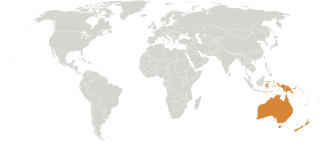
Key Facts
- Composition: Includes Australia, New Guinea, New Zealand, New Caledonia, and various Pacific and Indonesian islands.
- Geologic Origin: Australia, New Zealand, and New Caledonia are fragments of the ancient supercontinent Gondwana.
- Biological Isolation: Long-term separation from other landmasses has resulted in a high concentration of unique flora and fauna.
- Key Boundaries: Defined by the Wallace Line to the west and Lydekker's Line to the east.
- Biodiversity: Characterized by marsupials, monotremes, ratite birds, and eucalypts.
Geography and Biogeographic Boundaries
From an ecological perspective, the Australasian realm is defined by a shared geologic and evolutionary history. Because the region experienced prolonged biological isolation, it harbors a significant number of endemic species—plants and animals found nowhere else on Earth.
The Wallace and Lydekker Lines
The transition between the Australasian realm and the Indomalayan realm (tropical Asia) is marked by two critical biological boundaries:
- The Wallace Line: This western boundary separates islands that were once connected to the Asian mainland (such as Borneo and Bali) from those that were never connected.
- Lydekker's Line: This line separates islands isolated by deep water from those associated with the Sahul Shelf, the continental shelf surrounding Australia and New Guinea.
The area between these two lines is known as Wallacea. This transition zone includes Sulawesi, the Moluccas, and the islands from Lombok through Timor. While populated entirely via aerial or oceanic dispersal, Wallacea is classified as part of the Australasian realm.
Geological History and Flora
The foundation of the realm's biodiversity lies in its geology. Australia, New Zealand, and New Caledonia are fragments of Gondwana, an ancient supercontinent. These landmasses have been separated from other continents and each other for tens of millions of years, a fact evidenced by geophysical entities like the Christmas Island Seamount Province.
Due to this history, the entire realm shares Antarctic flora, though the northern tropical islands also exhibit plant species common to Southeast Asia. In Australia and New Guinea, eucalypts are the predominant tree species.
![The outlined ecoregions of the Australasian realm, each of a colored biome. Note that this realm has 10 of 14 biomes, or major habitat types, as defined by Olson & Dinerstein, et al. (2001).[4] Rock and Ice, or Abiotic Land Zones](/images/f4/cb/f4cbdf26aa59b212f5a9357c33b8608dc817ea830bfe0b5a8cffb99de0e64a1b.webp)
Ecology and Fauna
The distribution of animals in the Australasian realm does not always align perfectly with floral boundaries. For instance, many bird species are found in both the Indomalayan and Australasian regions, though they rarely span the entirety of either.
Australia, New Guinea, and Tasmania were linked during ice ages when sea levels were lower, leading to a shared fauna that includes marsupials (mammals with pouches) and monotremes (egg-laying mammals), as well as ratite birds. New Zealand, while lacking native land mammals, also hosted ratite birds such as the kiwi and the extinct moa.
While Australia, Melanesia, and Wallacea share many similar animals, these species rarely extend further into the Pacific. Conversely, much of the Polynesian fauna is more closely related to that of Melanesia.
| Feature | Details |
|---|---|
| Primary Landmasses | Australia, New Guinea, New Zealand, New Caledonia |
| Key Transition Zone | Wallacea (between Wallace and Lydekker Lines) |
| Ancient Origin | Gondwana supercontinent |
| Characteristic Fauna | Marsupials, Monotremes, Ratite birds |
| Characteristic Flora | Eucalypts, Antarctic flora |
Frequently Asked Questions
What is the difference between the Australasian realm and the geographical region of Australasia?
While they largely overlap, the Australasian realm is a biogeographic definition based on evolutionary history and species distribution, whereas Australasia is a geographical designation. Some classification schemes, such as those by Miklos Udvardy, place New Zealand, New Caledonia, and the Solomon Islands in a separate Oceanian realm.
What is the significance of the Wallace Line?
The Wallace Line is a biological boundary that separates the Indomalayan realm (Asian mainland influence) from the Australasian realm. It marks the point where islands were never directly connected to the Asian mainland.
Why are there so many unique species in the Australasian realm?
The region's high level of endemism is due to a long period of biological isolation following the breakup of the supercontinent Gondwana, which allowed species to evolve independently from those on other continents.
Which animals are characteristic of the Sahul Shelf region?
The regions associated with the Sahul Shelf, including Australia, New Guinea, and Tasmania, are characterized by marsupials, monotremes, and ratite birds.
Does New Zealand have the same mammals as Australia?
No. Unlike Australia, New Zealand has no native land mammals, although it did share the presence of ratite birds, such as the kiwi and moa.