Audio Description: Enhancing Media Accessibility for the Visually Impaired
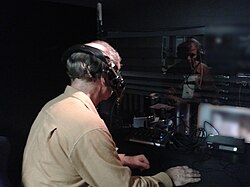
Audio description (AD), also known as described video or visual description, is a specialized form of narration designed to make media content accessible to blind and visually impaired audiences. By providing spoken descriptions of key visual elements—such as facial expressions, physical actions, and scene changes—AD ensures that the narrative flow of a film, television program, or theatrical performance is fully understood by everyone.
These narrations are strategically placed during natural pauses in the audio to avoid interfering with the primary dialogue, though they may occasionally overlap if the visual information is critical to the plot. In cases where a film features subtitles in a foreign language, the narrator may also read these subtitles aloud to maintain continuity for the listener.
Beyond the screen, audio description is utilized in museums and art exhibitions through universally designed tours. In these settings, trained docents or recorded programs provide augmented descriptions of visual art, allowing visitors with low vision to experience the exhibits fully.
Key Facts
- Purpose: Provides narration of visual elements for blind and visually impaired consumers.
- Delivery: Typically delivered via a secondary audio track, such as the Second Audio Program (SAP) in North America.
- Scope: Applied to cinema, television, live theater, sporting events, and museum tours.
- Global Regulation: Mandated by government bodies like the CRTC (Canada) and Ofcom (UK) to ensure accessibility quotas.
The Evolution of Audio Description
Early Beginnings
The drive for accessible cinema began with the arrival of "talkies" in the late 1920s. One of the earliest documented efforts occurred in 1929, when a screening of Bulldog Drummond was presented to members of the New York Association for the Blind and the New York League for the Hard of Hearing, featuring live descriptions. Later, in the 1940s and 1950s, Radio Nacional de España broadcast live audio simulcasts of films, framing them as radio dramas to reach visually impaired audiences before television became widespread in Spain.
The Rise of Descriptive Video Service (DVS)
In the 1980s, the Media Access Group at WGBH-TV in the U.S. developed a system for television using the Second Audio Program (SAP) channel, branding it as Descriptive Video Service (DVS). Developed in consultation with Dr. Margaret Pfanstiehl, the service underwent four years of trials before officially launching via 32 PBS member stations on January 24, 1990, starting with American Playhouse.

Global Expansion and Digital Integration
The UK adopted AD services through the BBC and ITV. By 2000, the BBC committed to describing at least 20% of its annual programming, often exceeding this goal. In 2009, BBC iPlayer became the first streaming on-demand service to support AD for all its broadcasted content. Canada also expanded access with the launch of The Accessible Channel on January 29, 2009, which provides "open" audio descriptions on the primary audio track.
Today, AD has extended to major live events, including the Olympic and Paralympic Games and the royal wedding of Prince William and Catherine Middleton.

Legal Mandates and Broadcasting Regulations
To ensure accessibility is not left to chance, several countries have implemented legal requirements for broadcasters.
Canada
The CRTC (Canadian Radio-television and Telecommunications Commission) mandated that as of September 1, 2019, certain broadcast and specialty networks must provide described video for prime-time programming (7:00 p.m. to 11:00 p.m.). This applies to genres including drama, comedy, children's programming, reality, and long-form documentaries. Other licensed services are expected to air at least four hours of DV programming per week by the fourth year of their license term.
United Kingdom
Under the Ofcom code, broadcasters active for at least five years must ensure at least 10% of their programming includes descriptions. The regulator strictly enforces these quotas; for example, in 2012, ESPN UK was fined £120,000 for failing to meet AD requirements, with Ofcom rejecting the claim that standard sports commentary was a sufficient substitute for AD.
United States
The U.S. journey has been more legally complex. In 2002, the FCC attempted to require major networks and cable providers to offer 50 hours of described programming per quarter. However, this was overturned by the Court of Appeals for the District of Columbia Circuit, which ruled the FCC lacked the statutory jurisdiction to enforce the rule. This was later addressed by the 21st Century Communications and Video Accessibility Act of 2010, which reinstated the FCC's authority. As of July 1, 2012, affiliates in the top 25 markets and top five-rated cable networks must provide at least 50 hours of video described programming per quarter.
Practical Applications and Technical Challenges
Live Sports and Stadiums
Audio description has seen significant success in live sports. During the 2006 FIFA World Cup in Germany, a project provided live commentary for visually impaired fans in the stadium. Switzerland followed suit in 2008, starting with FC Basel 1893. While these services originally used VHF and FM transmissions, they have since evolved into modern smartphone applications to provide real-time, delay-free descriptions.
Syndication and Streaming Hurdles
Despite mandates, technical gaps remain. In the U.S., many programs lose their DVS tracks during syndication. Some networks replace the AD track on the SAP channel with Spanish dubbing to reach a wider audience, leaving visually impaired viewers without access. Additionally, some shows have lost AD during platform migrations; for instance, The Mindy Project lost its DVS when it moved to Hulu before the platform supported the service.
| Region | Regulatory Body | Key Requirement | Notes |
|---|---|---|---|
| Canada | CRTC | Prime-time quotas for specific genres | Focuses on 7:00 p.m. to 11:00 p.m. window |
| United Kingdom | Ofcom | Minimum 10% of all programming | Strict enforcement with financial penalties |
| United States | FCC | 50 hours per quarter (top markets/networks) | Reinstated via 2010 Accessibility Act |
Frequently Asked Questions
What is the difference between audio description and standard commentary?
Standard commentary (like in sports) focuses on the action and play-by-play for a general audience. Audio description is specifically designed for the visually impaired, describing visual details, settings, and non-verbal cues that are not typically mentioned in standard commentary.
How is audio description delivered to the viewer?
In television, it is most commonly delivered via a secondary audio track, such as the Second Audio Program (SAP). In live settings, it may be delivered via headsets, VHF frequencies, or dedicated smartphone apps.
Does audio description overlap with the movie's dialogue?
Narrators typically place descriptions during natural pauses in the audio. However, if a visual element is essential to the scene and no pause exists, the description may briefly overlap with dialogue.
Is audio description available on streaming services?
Yes, many streaming services now support AD. For example, BBC iPlayer was a pioneer in this area, and services like Netflix have expanded their AD libraries to include a wide range of original and licensed content.
Why do some syndicated shows lack audio description?
In some cases, the DVS track is removed during syndication to make room for other audio tracks, such as foreign language dubs, or because the local affiliate station does not support the SAP channel required to broadcast it.