Auckland Light Rail: From Historic Trams to Modern Proposals
Auckland's journey with rail-based street transport is a story of evolution, ambition, and political debate. From the clatter of horse-drawn carriages in the late 19th century to multi-billion dollar proposals for high-tech light metros, the city has long sought the ideal balance between capacity and cost to move its growing population.
The Original Tramway System
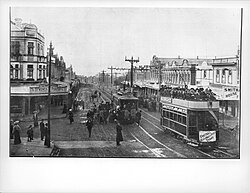
Long before modern transit debates, Auckland relied on a comprehensive network of traditional tramway tracks. This system began with horse-drawn trams operating from 1884 to 1902, eventually transitioning to electric trams which served the city from 1902 until 1956.
At its peak in the mid-1930s, the network spanned 72 kilometres (45 mi) before the first closures began in 1949. This legacy provided the blueprint for many of the city's primary arterial routes.
The Push for Modern Light Rail
By 2015, Auckland Transport identified a critical need for higher capacity on key corridors. Chief Engineer Steve Hawkins noted that Symonds Street and Fanshawe Street required as many as 150 buses each. This led to studies on replacing bus routes on Dominion Road, Manukau Road, Mt Eden Road, Symonds Street, and Queen St with light rail—routes that mirrored the city's former tram network.
Capacity and Efficiency Comparisons
A central part of the proposal was the choice between a segregated light rail line (dedicated right of way) and a street-running system (sharing the road with vehicles). The projected passenger capacities per hour highlighted the efficiency gap:
- Segregated Light Rail: 18,000 passengers
- Street-running Light Rail: 12,000 passengers
- Bus (Priority Path): 6,000 passengers
- Bus (Shared Path): 2,500 passengers
Airport and Botany Proposals
Beyond the city centre, a rapid transit line from the airport to Botany Downs was proposed. This plan included a two-stage development at Puhinui railway station. The first stage, estimated at $59 million, focused on an at-grade bus/rail interchange. The second phase envisioned a rapid transit overbridge to provide a more direct connection, eventually extending through Manukau railway station to Botany.
The Evolution of the Project (2017–2023)
In April 2018, the government announced the Auckland Transport Alignment Project, a $NZ 28 billion investment over ten years. This fast-tracked light rail to Auckland International Airport. Two primary routes were prioritized: one from Wynyard Quarter along Queen Street to the airport via Dominion Road, and another from Queen Street via Karangahape Road and Great North Road to Westgate, with potential extensions to Kumeū and Huapai.
The project's scope shifted significantly over time. While initial estimates in 2019 placed the cost of two lines at $6 billion, the vision evolved from surface-level rail to a light metro—a fully grade-separated, driverless system. Proponents argued this would reduce travel time from Queen St to the airport from 47 minutes to 30 minutes, though critics estimated costs could soar to over $20 billion.
By January 2022, the government endorsed a $14.6 billion "Tunnelled Light Rail" plan. This featured an underground section from the city centre to Mount Roskill, emerging to the surface for the final leg to the airport via Māngere. Auckland Light Rail Limited was established in October 2022 to manage the project.
Cancellation and Aftermath
Following the 2023 General Election, the new National-led government, headed by Prime Minister Christopher Luxon, moved to cancel the project, describing it as a "white elephant." Minister of Transport Simeon Brown ordered the winding up of Auckland Light Rail Limited in January 2024, citing unsustainable projected costs of $15 to $29.2 billion.
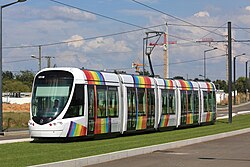
The cancellation was met with some resistance from Auckland Mayor Wayne Brown, who suggested that costs could be lowered by looking at international examples. He pointed to the light rail network in Angers, France, which cost approximately $53 million per kilometre, compared to the $375 million per kilometre seen in some Auckland options.
Despite the cancellation, a released business case indicated that the project would have yielded an economic benefit of $NZ 2.40 for every dollar invested. The government confirmed it would continue work on the City Rail Link, a separate project initiated by a previous National government.
Key Facts
- Historic Peak: The original tram network reached 72 km in the mid-1930s.
- Capacity Boost: Segregated light rail can move up to 18,000 passengers per hour, far exceeding bus capacity.
- Cost Escalation: Estimates grew from an initial $6 billion to projections as high as $29.2 billion.
- Economic Outlook: The cancelled project's business case projected a benefit-cost ratio of 2.4:1.
- Current Status: Auckland Light Rail Limited has been disestablished; the City Rail Link remains active.
| Transit Mode | Path Type | Max Capacity (pax/hr) |
|---|---|---|
| Light Rail | Segregated | 18,000 |
| Light Rail | Street-running | 12,000 |
| Bus | Priority Path | 6,000 |
| Bus | Shared Path | 2,500 |
Frequently Asked Questions
What was the difference between the light rail and light metro proposals?
The light rail proposal generally involved street-level vehicles that might share the road with traffic. The light metro proposal was for a fully grade-separated, driverless system with underground and elevated sections, designed for higher speeds and efficiency.
Why was the Auckland Light Rail project cancelled?
The National-led government cancelled the project due to unsustainable projected costs, ranging from $15 billion to $29.2 billion, and criticized the amount of money spent during the planning phase without any track being laid.
How did the proposed light metro affect travel times to the airport?
The light metro system was projected to reduce the travel time from Queen Street to the airport to 30 minutes, compared to 47 minutes under the previous streetcar model.
Is the City Rail Link also cancelled?
No, the government confirmed that work on the City Rail Link would continue, as it was started by a previous National government.
What was the economic justification for the project?
The business case released in February 2024 showed that for every $1 invested in the project, there would have been an economic benefit of $NZ 2.40.