AthensGreeceAcropolisParthenonAttica

Athens: The Eternal Capital of Greece

Athens: The Eternal Capital of Greece Athens, the historic capital of Greece, is a city where antiquity and modernity coexist in a vibrant urban landscape. Known as the "City of Wisdom" a...

Athens: The Eternal Capital of Greece

Athens, the historic capital of Greece, is a city where antiquity and modernity coexist in a vibrant urban landscape. Known as the "City of Wisdom" and the "City of Reason," it is often referred to by its poetic nicknames: tò kleinòn ásty ("the glorious city") and tò iostephès ásty ("the violet-crowned city"). Named after the goddess Athena, the city serves as the political, economic, and cultural heart of the Attica region.

From its origins as a Mycenaean settlement to its role as the cradle of Western civilization, Athens has evolved through numerous historical affiliations, including the Roman Empire, the Byzantine era, the Duchy of Athens, and the Ottoman Empire, before becoming the capital of the modern Hellenic Republic in 1833.
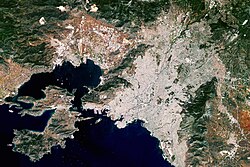
The Athens Urban Area within the Attica Basin, seen from space

Key Facts

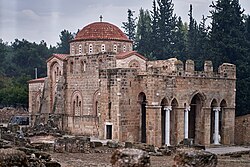
The Daphni Monastery, an 11th-century Byzantine monastery northwest of central Athens, is a designated UNESCO World Heritage Site.
  • Population: Approximately 3.6 million in the metropolitan area (2021).
  • Economy: Metro GDP of €115.495 billion as of 2024.
  • Geography: Located in the Attica Basin, with elevations ranging from 70.1m to 338m.
  • Governance: Managed by a mayor-council government, currently led by Mayor Haris Doukas.
  • Climate: Characterized by hot, dry summers and mild, rainy winters.

A Journey Through History
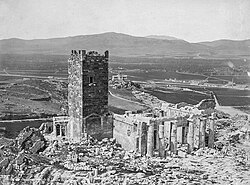
The Frankish Tower of the Acropolis of Athens in 1874, the year before it was demolished, with the ruins of the Propylaea and view west over the Athenian plain towards Mount Aigaleo

Antiquity and the Classical Age

In the classical period, Athens was a dominant city-state and the leader of the Delian League, a coalition of Greek city-states. This era saw the construction of the city's most iconic landmarks, including the Parthenon and the Ancient Agora, which served as the primary commercial and social hub of the city.
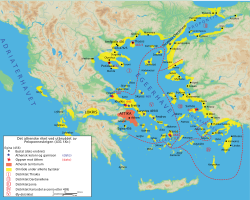
The Delian League under the leadership of Athens before the Peloponnesian War in 431 BC

From Empire to Independence

Following the classical age, Athens passed through the hands of the Roman Republic and Empire, and later became a center of the Eastern Roman (Byzantine) Empire. The city later experienced Frankish rule under the Duchy of Athens and centuries of Ottoman administration. The 1821 Greek Revolution eventually led to the establishment of the modern Greek state, with King Otto entering the city in 1839 to solidify its role as the new capital.
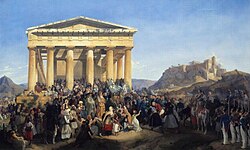
The Entry of King Otto of Greece into Athens by Peter von Hess, 1839

Geography and Environment

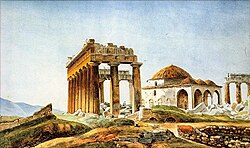
The second Parthenon mosque in the ruined Parthenon, which was destroyed by a Venetian bombardment in 1687, depicted by Pierre Peytier in the 1830s

Athens is situated within the Attica Basin, a geographic region in Central Greece. The urban area is densely populated, with a density of 7,430 people per square kilometer. The city's environment is shaped by its Mediterranean climate, though it faces modern challenges such as smog.
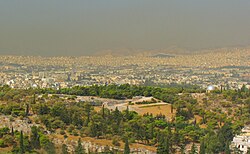
Smog in Athens
Smog in Athens

Climate Overview

The city experiences significant seasonal variation. Summers are characterized by high temperatures, with record highs reaching 44.8°C. Winters are mild, though occasional snowfall occurs, as seen in February 2021. Rainfall is most frequent between November and January.
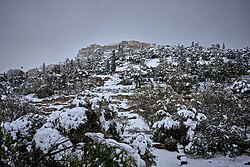
Snowfall in Athens on 16 February 2021

Urban Green Spaces

To balance the dense urban environment, Athens features several parks and gardens. Notable among these are the National Gardens, commissioned by Queen Amalia in 1838, and the Pedion tou Areos park.
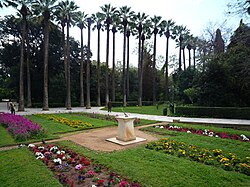
The entrance of the National Gardens, commissioned by Queen Amalia in 1838 and completed by 1840

City Infrastructure and Economy

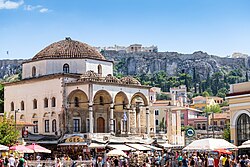
Tzistarakis Mosque, an Ottoman mosque, built in 1759, in Monastiraki Square

Transport and Connectivity

Athens boasts a comprehensive transport network comprising the Metro, Suburban Railway (Proastiakos), and the Athens Tram. For international travel, the Athens International Airport serves as the primary gateway to the city.
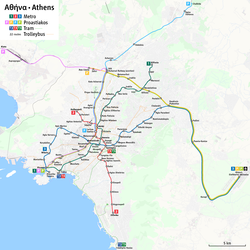
Athens railways network (Metro, Suburban Railway and Tram)

Economic Hubs

The city is the financial center of Greece, hosting the National Bank of Greece and major technology firms like OTE in Marousi. Commercial activity is centered around major thoroughfares such as Ermou Street.
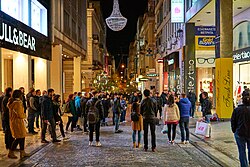
Ermou street, the main commercial street of Athens

Culture, Architecture, and Sports

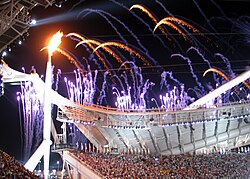
The Olympic Flame at the opening ceremony of the 2004 Summer Olympics

Architectural Landmarks

The skyline is dominated by the Acropolis, featuring the Parthenon dedicated to Athena Parthenos. The city also blends various architectural styles, from the 11th-century Byzantine Daphni Monastery to the neoclassical facade of the Academy of Athens.
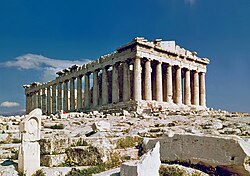
The Parthenon on the Acropolis hill of Athens, dedicated to Athena Parthenos

Museums and Arts

Athens is a global archaeological hub. Key institutions include the National Archaeological Museum, the Acropolis Museum, and the Stavros Niarchos Foundation Cultural Centre, which houses the National Library and the Greek National Opera.
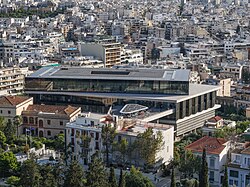
The Acropolis Museum

Sporting Legacy

As the birthplace of the Olympics, Athens maintains a strong sporting tradition. The Panathenaic Stadium, built in the 4th century BC, hosted the first modern Olympic Games in 1896. The city further expanded its facilities for the 2004 Summer Olympics.
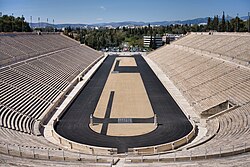
The Panathenaic Stadium of Athens (Kallimarmaron), dating back to the 4th century BC, hosted the first modern Olympic Games in 1896.

Athens at a Glance

The Pedion tou Areos park
Category Urban Area Metropolitan Area
Population (2021) 3,059,764 3,638,281
Land Area 412 km² 2,928.717 km²
Population Density 7,430/km² 1,242.278/km²
GDP (2024) N/A €115.495 Billion

Frequently Asked Questions

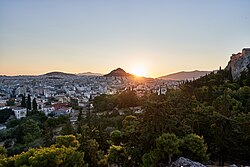
Sunrise in Athens
Sunrise in Athens
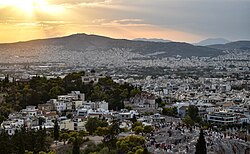
Sunset over the Hill of the Nymphs, viewed from the Propylaea, 2024
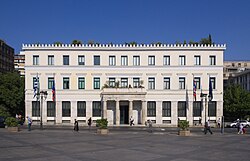
Athens City Hall
Athens City Hall
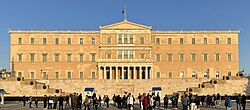
The Old Royal Palace
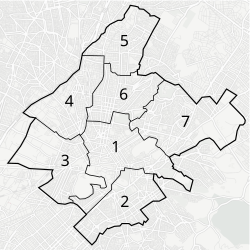
Municipal Communities
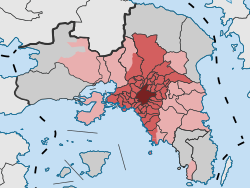
Athens metropolitan area
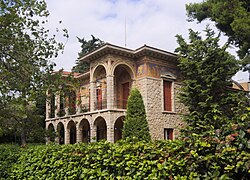
Vila Atlantis, in Kifissia, designed by Ernst Ziller
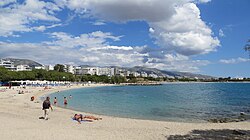
A beach in the southern suburb of Alimos – one of the many beaches on the southern coast of Athens
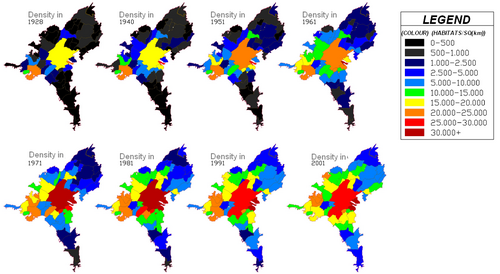
A map of Athens' population density
OTE headquarters in Marousi, the largest technology company in Greece
The National Bank of Greece is the largest Greek bank by total assets.[98][99]
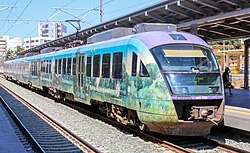
Suburban rail (Proastiakos)
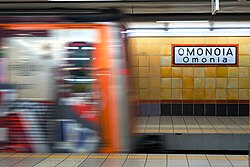
Athens Metro train at Omonia metro station
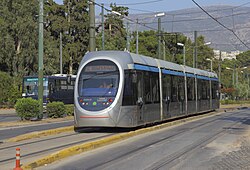
Vehicle of the Athens Tram
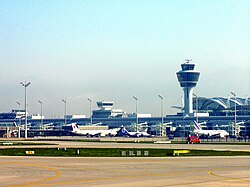
Athens International Airport
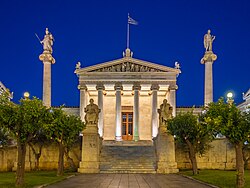
Facade of the Academy of Athens
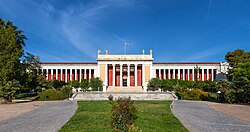
The National Archaeological Museum in central Athens
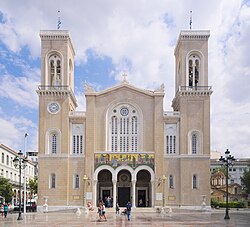
The Cathedral of Athens (Athens Metropolis)
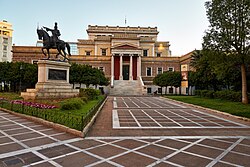
The Old Parliament House is now home to the National History Museum. View from Stadiou Street.
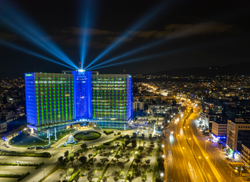
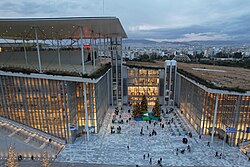
The Stavros Niarchos Foundation Cultural Centre, home of the Greek National Opera and the new National Library
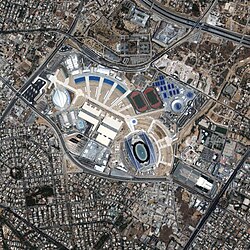
Athens Olympic Sports Complex
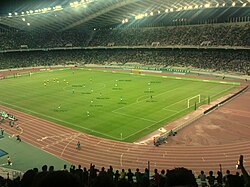
Panathinaikos vs Sparta Prague in the Athens Olympic Stadium, 2008
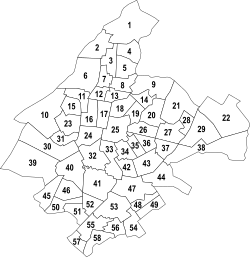
The 58 precincts of Athens (2004–).

What is the population of the Athens metropolitan area?

As of 2021, the Athens metropolitan area has a population of approximately 3,638,281 people.

Which landmark is dedicated to Athena Parthenos?

The Parthenon, located on the Acropolis hill, is the temple dedicated to Athena Parthenos.

When did Athens become the capital of modern Greece?

Athens became the capital of the modern Greek state in 1833.

What are the primary modes of public transport in Athens?

The city is served by a network of buses, the Athens Metro, the Suburban Railway (Proastiakos), and the Athens Tram.

Which stadium hosted the first modern Olympic Games?

The Panathenaic Stadium (Kallimarmaron), dating back to the 4th century BC, hosted the first modern Olympic Games in 1896.

References

  1. /ˈæθɪnz/ ATH-inz; Greek: Αθήνα, romanised: Athína, pronounced [aˈθina] ; Ancient Greek: Ἀθῆναι, romanised: Athênai, pronounced [atʰɛ̂ːnai̯][6]
  2. "Athens: City of Wisdom". Washington Independent Review of Books. 30 March 2022. Archived from the original on 10 September 2022. Retrieved 10 September 2022.
  3. "Athens and Jerusalem: City of Reason, City of Faith". RANE Network. 15 July 2022. Retrieved 18 October 2022.
  4. Municipality of Athens, Municipal elections – October 2023 Archived 19 February 2025 at the Wayback Machine, Ministry of Interior
  5. "Census 2021 GR" (PDF) (Press release). Hellenic Statistical Authority. 19 July 2022. Archived (PDF) from the original on 9 October 2022. Retrieved 12 September 2022.