Asian Century: The Rise of Global Economic and Cultural Dominance
For decades, the global balance of power has been shifting. The robust economic performance of Asia in the thirty years leading up to 2010 provided a compelling argument for the emergence of an Asian Century. While intermittent setbacks, such as the 1997 Asian financial crisis, occasionally obscured the trend, the early 21st century revealed a momentum capable of altering the distribution of global power. This shift suggests that leadership in diplomacy, military strength, technology, and soft power may increasingly reside within Asian nation-states.
Scholars like Kishore Mahbubani attribute this ascent to seven key pillars: free-market economics, science and technology, meritocracy, pragmatism, a culture of peace, the rule of law, and education. As these foundations strengthen, Asia is moving toward a structural centrality that makes its largest powers critical lynchpins of international affairs.
![The global contribution to world's GDP by major economies from 1 AD to 2003 AD according to Angus Maddison's estimates.[20] Before 18th century, China and India were the two largest economies by GDP output.](/images/43/d0/43d0da4f3d5c232a2d483477e1f6c2e58eeb9390f39027701c0304254280f433.gif)
Key Facts
- GDP Projection: Asia could produce 52% of global GDP by 2050, regaining a dominant position held 300 years ago.
- Demographic Shift: Asia's population is predicted to grow from four billion at the start of the century to over five billion by 2050.
- Economic Powerhouses: China and India are projected to become the largest and second-largest economies by 2050, respectively.
- Human Development: East Asia's Human Development Index (HDI) is expected to approach 0.94, nearing Western living standards.
- Cultural Reach: Asian influence is expanding globally through the "Korean Wave," Japanese pop culture, and the global adoption of Yoga.
Economic Drivers and Projections
The primary engine of this transition is continued productivity growth, particularly in China and India. According to 2011 modeling by the Asian Development Bank, Asia's GDP could surge from $17 trillion in 2010 to $174 trillion by 2050. This growth is expected to be led by seven powerhouse economies: China, India, Indonesia, Japan, South Korea, Thailand, and Malaysia.
![Projected shares of global GDP by region to 2050[21]](/images/5f/23/5f231f8382bfea95a9e7d25cebb0a0805cd646e42d44ac21d7664a7ab6086c2a.png)
The Roles of China and India
China's economic reforms, beginning with farm privatization in the late 1970s and urban reforms in the early 1990s, fueled growth rates between 8% and 10% for three decades. India followed a similar path starting in the late 1980s, with growth peaking at 9.2% in 2006. Goldman Sachs has characterized mainland China as the "industrial workshop of the world" and India as one of the "great service societies."
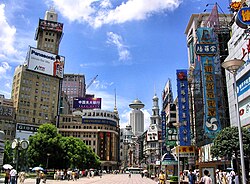
While China currently holds significant weight, some experts, including Professor John West, suggest India could emerge as the leading power due to faster growth rates and a population projected to overtake China's in 2022.
![India's middle-class population of 300 million is growing at an annual rate of 5%.[22] Shown here is the skyline in South Mumbai.](/images/56/0a/560a6b84ffe60a1ec148fefa03c658491ae876747686d297dbb8a1c234600759.jpg)
Human Capital and Living Standards
The rise is not merely about raw output but also human capital—the skills, knowledge, and experience possessed by an individual. A 2007 World Bank report noted that rising education levels boosted Asian growth by 0.75 to 2 percentage points. As hundreds of millions are lifted into the middle class, the Human Development Index (HDI)—a measure of living standards—is rising, with India's HDI approaching 0.8.
Infrastructure and Urbanization
Economic power is physically manifested in Asia's skyline. The region is currently the global leader in supertall skyscraper construction. Notable completed projects include the Burj Khalifa in Dubai, the Shanghai Tower, and Taipei 101. Future projects, such as the PNB 118 in Kuala Lumpur and Legacy Tower in Dhaka, signal continued ambition.
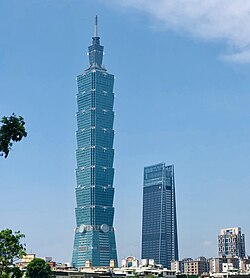
Cultural and Social Influence
The "Asian Century" extends beyond balance sheets into soft power—the ability to influence others through attraction rather than coercion. This is evident in the global popularity of the "Korean Wave" (K-pop and K-dramas), Japanese anime and manga, and the Indian film industry, which is the largest in the world by volume.
Global Integration of Eastern Philosophy
Eastern spiritual practices have entered the Western mainstream. Yoga is now celebrated globally every June 21, and concepts like Karma (the principle of cause and effect) and mindfulness meditation have become common in Western discourse. Furthermore, there has been a documented increase in the belief in reincarnation among Europeans, rising from roughly 5% in the 1950s to approximately one-fifth in more recent reports.
Language and Digital Presence
The economic utility of Asian languages has spurred global interest. Chinese has become the second most used language on the internet, supported by the spread of Confucius Institutes. As of 2020, China hosted the highest number of internet users globally, followed by India and Japan.
Political Evolution and Future Growth
Politically, China's status as a permanent member of the UN Security Council reflects its rising influence. India and Japan have also sought permanent seats, though these bids face regional opposition. There is a growing trend toward regional blocs, with ASEAN and the East Asian Summit potentially creating trade zones similar to the European Union.
Global Growth Generators and the Next Eleven
Beyond the established giants, several "Global Growth Generators" (3G) are emerging. Vietnam currently holds the highest 3G index, followed by China and India. Additionally, economist Jim O'Neill identified the "Next Eleven" (N-11)—including Bangladesh, Indonesia, and Vietnam—as countries with high potential to become the world's largest economies alongside the BRICs.
| Metric | Current/Recent Trend | 2050 Projection/Goal |
|---|---|---|
| Total Population | ~4 Billion (early 21st century) | Over 5 Billion |
| Share of Global GDP | Significant growth since 1980s | ~52% |
| Asia's Total GDP | $17 Trillion (2010) | $174 Trillion |
| East Asia HDI | Rising | Approaching 0.94 |
Frequently Asked Questions
What is the "Asian Century"?
The Asian Century refers to a projected period in the 21st century where Asia becomes the dominant global force in terms of economic output, political influence, and cultural impact, shifting the center of power away from North America and Europe.
Which countries are the primary drivers of this growth?
While many nations contribute, China and India are the primary drivers. Other key contributors include Indonesia, Japan, South Korea, Thailand, and Malaysia.
How is Asia's cultural influence spreading?
Influence is spreading through "soft power" exports such as K-pop, Japanese anime, Bollywood films, Asian cuisine, and the global adoption of Yoga and mindfulness meditation.
What are the "Next Eleven" (N-11) countries?
The Next Eleven are Bangladesh, Egypt, Indonesia, Iran, Mexico, Nigeria, Pakistan, Philippines, Turkey, South Korea, and Vietnam. They were identified by Goldman Sachs as having high potential to become the world's largest economies.
What role does education play in Asia's rise?
The expansion of human capital through quality education has been critical, boosting average growth by 0.75 to 2 percentage points and improving life expectancy and institutional quality.