Asado: The Art and Tradition of South American Barbecue
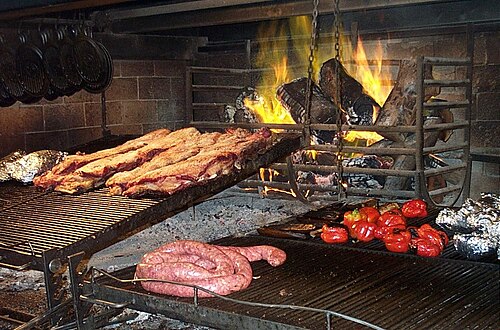
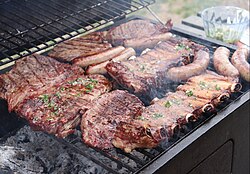
Asado is far more than just a cooking technique; it is a cornerstone of social life across several South American countries. While most prominent in Argentina and Uruguay, the tradition extends to Brazil (specifically Rio Grande do Sul), Chile, and Paraguay. At its heart, an asado is a communal event centered around the slow-grilling of various meats over an open fire or a specialized grill.
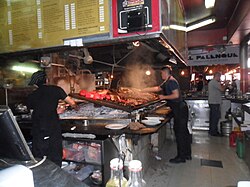
The process is overseen by a designated cook known as the asador or parrillero, who manages the heat and timing to ensure the meat is cooked to perfection. Typically, the meal is accompanied by red wine and fresh salads, creating a feast that celebrates both culinary skill and kinship.
Key Facts
- Primary Regions: Argentina, Uruguay, Brazil, Chile, and Paraguay.
- Core Meats: Beef, pork, chicken, chorizo, and morcilla.
- Cooking Tools: The parrilla (grill) or asadores (metal crosses).
- Key Accompaniments: Chimichurri, salsa criolla, and ensalada rusa.
- Cooking Style: Slow-cooked over wood or charcoal, usually taking around two hours.
The Fire and Cooking Methods
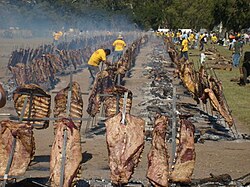
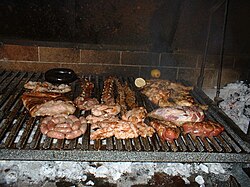
The foundation of any asado is the fire. The asador typically ignites charcoal made from native trees, such as quebracho or algarrobo, avoiding resinous woods like pine or eucalyptus that can impart strong, unwanted smells. In Uruguay, charcoal is often bypassed in favor of grilling directly over hot embers or coals.
There are two primary methods of cooking:
- A la parrilla: Meat is placed on a grill over a bed of hot charcoal.
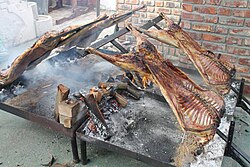
- Al asador: A fire is lit in a pit, and the animal's carcass is splayed open and held by metal crosses (asadores) to receive heat from the side.
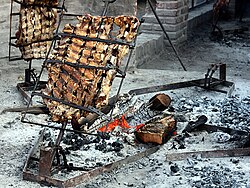
In the Patagonia region, a variation called asado al palo is common. Here, a whole animal—usually lamb or pork—is nailed to a wooden stick driven into the ground and roasted over live coals.
The Sequence of the Feast
Embutidos and Achuras
An asado typically begins with appetizers known as achuras (offal) and embutidos (sausages). These include chorizos, morcillas (black pudding), chinchulines (cow chitterlings), and mollejas (sweetbreads), often served alongside provoleta (grilled provolone cheese). A popular street-food version of the chorizo served on a baguette is known as choripán.
The Main Meats
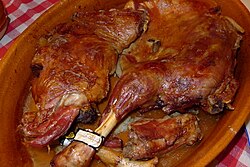
Once the appetizers are finished, the heavier cuts are served. This usually begins with costillas or asado de tira (flanken-cut short ribs), followed by vacío (flank steak) and matambre. Depending on the region and venue, chicken, chivito (goatling), and Patagonian lamb are also common.
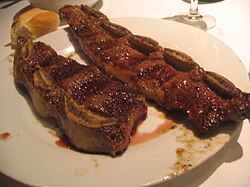
The meat is never marinated; it is seasoned simply with salt before or during cooking. To prevent smoke from altering the flavor, the asador ensures that grease does not drip directly onto the coals, sometimes leaving the area beneath the meat clear.
Accompaniments and Sides
The richness of the meat is balanced by fresh sides. A simple mixed salad of lettuce, tomato, and onion is standard, as is ensalada rusa (Salad Olivier), made with potatoes, carrots, peas, eggs, and mayonnaise. In Paraguay, sides may include chipa guasu, sopa paraguaya, and boiled manioc.
Two iconic sauces define the experience: chimichurri (a blend of parsley, oregano, garlic, salt, pepper, onion, and paprika in olive oil) and salsa criolla (tomato and onion in vinegar). These are traditionally used on offal rather than the primary steaks.
Regional Variations
| Region | Local Name | Key Characteristics | Typical Side/Sauce |
|---|---|---|---|
| Argentina/Uruguay | Asado | Slow-cooked beef/offal on parrilla | Chimichurri |
| Brazil | Churrasco | Faster cooking, often on skewers (Rodizio) | Salt seasoning |
| Chile | Cordero al palo | Whole lamb roasted perpendicular to fire | Pebre |
| Mexico | Carne Asada | Marinated meats and grilled vegetables | Cebollitas, Nopales |
Brazil and Mexico
In Brazil, churrasco is often served as a rodizio, where various meats on spits are passed from table to table. In Mexico, carne asadas or parrilladas feature marinated cuts and grilled vegetables like elote (corn) and nopales (cactus).
Country-Style Methods
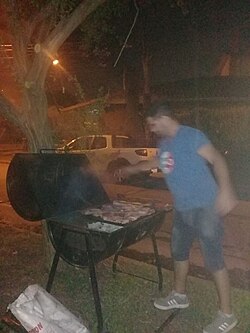
In rural areas of Argentina, Uruguay, and Paraguay, alternative tools are used. The asado al disco utilizes a concave plough disc as a grill, while the asado al horno de barro uses an adobe oven (called a tatakua in Paraguay). In windy regions like Patagonia, a chulengo—a half-cut oil barrel—is used to protect the fire and meat from the elements.
Global Similarities
While the South American asado is unique, similar traditions exist worldwide. In South Africa, the braai is the cultural equivalent of the barbecue, including the spit braai for whole carcasses.
It is important to distinguish this from the Philippine asado, which refers to braised dishes (such as asado de carajay), or the Portuguese assado, which often refers to roasted fish.
Frequently Asked Questions
What is the difference between a parrilla and an asador?
A parrilla is a grill grate placed over coals, whereas an asador refers to the metal crosses used to hold a whole carcass upright next to an open fire.
What is chimichurri and how is it used?
Chimichurri is a sauce made from parsley, garlic, oregano, and other spices in olive oil. In traditional asados, it is primarily used to flavor the offal (achuras) rather than the steaks.
How long does a traditional asado take to cook?
Because asado relies on slow cooking and controlled heat to maintain quality, the process typically takes around two hours.
What is a chulengo?
A chulengo is a portable grill enclosure made from a half-cut oil barrel, designed to protect the fire and meat from heavy winds, particularly in the Patagonia region.
Is the meat marinated before grilling?
No, traditional South American asado meat is not marinated. The only seasoning used is salt, applied either before or during the cooking process.