Arlington Memorial Bridge: A History of Renovation and Restoration
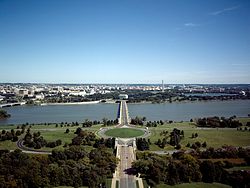
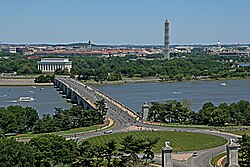
The Arlington Memorial Bridge serves as a vital link between the Lincoln Memorial and Arlington National Cemetery. While its architectural grandeur is timeless, the physical structure has required nearly a century of continuous maintenance and strategic upgrades to withstand the elements and the demands of modern traffic. From early electrical failures to a comprehensive 21st-century overhaul, the bridge's history is a testament to the ongoing challenge of preserving national infrastructure.
Early Maintenance and Structural Challenges (1936–1957)
The bridge's early years were marked by environmental damage and mechanical failures. In March 1936, severe flooding caused electrical shorts, leading to a 1938-1939 repair project. The Electrical Underground Construction Co. of New York City was paid $9,245 to replace wiring, install new conduits, and add two sump pumps to manage water infiltration.
Mechanical issues also plagued the bascule span—a type of movable bridge with a counterweight that allows a section to swing upward to let ships pass. In October 1936, a broken gear and crankshaft caused the longest closure in the bridge's early history, lasting nine hours. Further mechanical failures occurred in 1945 and 1947, the latter involving a gear and shaft replacement to stop the span from vibrating under traffic.
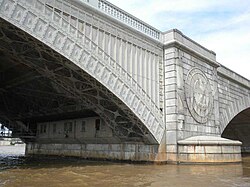
By 1951, the National Park Service (NPS) shifted focus toward safety and surface durability. In a $207,000 project executed by Corson and Gruman Co., the original granite roadway blocks were replaced with asphalt, which was considered a safer material for vehicles. This work required four consecutive weekends of full bridge closures.
Mid-Century Repairs and Incremental Upgrades (1964–2012)
Throughout the latter half of the 20th century, repairs became more frequent but less invasive. In 1964, the draw span underwent repairs that required daily single-lane closures. By November 1976, the draw span was permanently immobilized and sealed, effectively turning the movable bridge into a fixed structure.
A significant investment occurred in the summer of 1985, when A.A. Beiro Construction Co. spent $4.7 million to resurface the bridge and upgrade safety features. To ensure a timely completion by September 25, the contractor was offered a $4,000-a-day bonus for finishing ahead of schedule.
Entering the 21st century, work focused on the bridge's pedestrian areas. In 2011 and 2012, the NPS and Cianbro Corp. performed sidewalk preservation and deck repairs totaling $788,000. Despite these efforts, a 2012 report from the Federal Highway Administration (FHWA) warned that the bridge had never received a comprehensive major overhaul and urgently needed one.
The Crisis of Decay: 2013–2015 Inspections
In February 2013, the FHWA conducted a rigorous inspection that revealed the bridge was essentially beyond its intended life cycle. The report described the structure as being in "poor condition overall," citing several critical failures:
- Corrosion: Severe rusting of the steel in the bascule span and load-bearing beams.
- Concrete Deterioration: Widespread cracks in the reinforced concrete arch spans.
- Spalling: Metal flakes (spalls) breaking off the steel beams beneath the road deck.
- Drainage: Systems clogged with rust and debris.
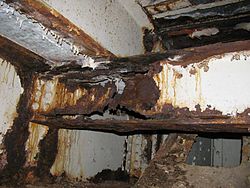
By January 2015, an environmental assessment warned that deterioration was progressing rapidly. In May 2015, the situation became critical, leading the NPS to suddenly close one lane for emergency corrosion inspections. The findings were alarming: the outer lanes of the bascule span were deemed unsafe, and secondary support beams were so weakened that a 10-short-ton (9.1 t) weight limit was imposed, effectively banning most buses from the bridge.
The Path to Full Restoration (2016–2020)
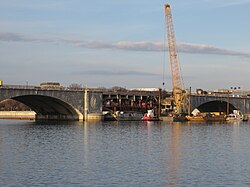
To address the decay, a phased plan was developed. The first phase focused on reinforcing approach spans at a cost of $166 million to ensure the bridge remained open until 2030. The second phase aimed to replace the bascule span and perform other structural repairs for an estimated $94 million.
Funding was secured through a combination of sources, including a $90 million FASTLANE (Fostering Advancements in Shipping and Transportation for the Long-term Achievement of National Efficiencies) grant from the U.S. Department of Transportation, conditional on $36 million in matching funds.
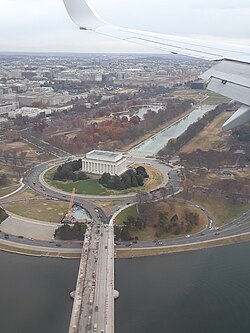
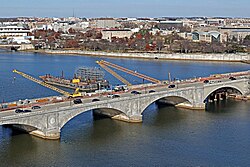
The culmination of these efforts began in 2018 with a massive $227 million renovation project. Contracted to Kiewit Infrastructure, the work involved replacing the deck, repairing the approaches, and completely replacing the draw span. This comprehensive overhaul ensured the bridge's structural integrity for future generations.
Key Facts
- Total Final Renovation Cost: $227 million.
- Major Contractor (2018): Kiewit Infrastructure.
- Critical Failure Point: The bascule span (draw span) suffered the most severe corrosion.
- Emergency Weight Limit: 10 short tons imposed in 2015 due to beam deterioration.
- Completion Date: The fully renovated bridge reopened on December 4, 2020.
| Year(s) | Primary Work | Key Detail/Cost |
|---|---|---|
| 1938–1939 | Electrical repairs & sump pumps | $9,245 |
| 1951 | Granite to asphalt repaving | $207,000 |
| 1976 | Draw span immobilized and sealed | Fixed span conversion |
| 1985 | Resurfacing and safety upgrades | $4.7 million |
| 2012 | Deck and sidewalk repair | $788,000 |
| 2018–2020 | Full overhaul (deck, span, approaches) | $227 million |
Frequently Asked Questions
Why was the bridge's weight limit reduced in 2015?
The weight limit was reduced to 10 short tons because corrosion had severely weakened the secondary support beams throughout the bridge, making it unsafe for heavy vehicles like buses.
What is a bascule span?
A bascule span is a movable bridge section that uses a counterweight to swing upward, allowing maritime traffic to pass underneath.
When did the bridge stop functioning as a drawbridge?
The draw span was immobilized and sealed in November 1976, effectively ending its use as a movable bridge.
What were the main structural issues found in the 2013 inspection?
The FHWA found severe steel corrosion in the bascule span, cracks in the reinforced concrete arch spans, spalling of steel beams, and clogged drainage systems.
How was the final 2018 renovation funded?
The $227 million project was funded through various federal sources, including a $30 million appropriation and a $90 million FASTLANE grant.