Argentina National Football Team: A History of Glory and Resilience
The story of the Argentina national football team is one of the most storied in sporting history. Known for their technical brilliance and passionate play, the Albiceleste (white and sky blue) have evolved from early regional rivals of Uruguay into a global powerhouse, claiming multiple FIFA World Cups and Copa América titles.
From the early 20th century to the modern era of Lionel Messi, Argentina's journey has been marked by periods of absolute dominance, heartbreaking absences, and triumphant returns to the pinnacle of world football.
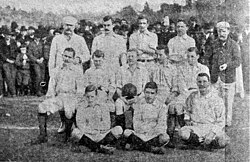
Key Facts

- First Official Title: Won the 1906 Copa Lipton.
- World Cup Success: Three-time FIFA World Cup champions (1978, 1986, 2022).
- Copa América Dominance: Multiple titles, including a recent golden era under Lionel Scaloni.
- Legendary Figures: Home to icons such as Diego Maradona and Lionel Messi.
- Olympic Achievement: Won a silver medal at the 1928 Summer Olympics.
The Early Years and Regional Rivalries
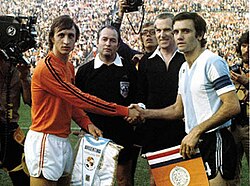
While Argentina played a match against Uruguay in May 1901, it is not considered official as it was organized by Albion FC rather than a national association. The team's official competitive history began in earnest with the Lipton Cup and Newton Cup, competitions organized by the Argentine and Uruguayan Football Associations.
Argentina secured its first official title in 1906 by winning the Copa Lipton. This era established a fierce rivalry with Uruguay, with Argentina winning four consecutive Newton Cups (1907–1911) and four Lipton Cups (1906–1909).
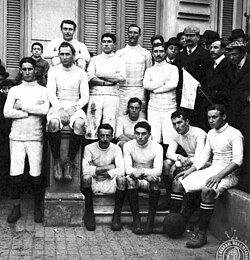
The Rise to Continental Power
By the 1920s, Argentina had cemented its status as a South American giant. In 1921, they secured their first South American Championship, and by 1927, they won another title in Peru, finishing the tournament unbeaten with victories over Bolivia, Uruguay, and Peru.
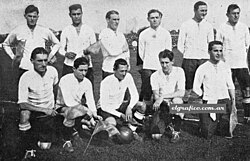
The team also made history with the "Olympic goal" scored by Onzari against Uruguay in 1924, a testament to the individual brilliance that would become a hallmark of Argentine football.
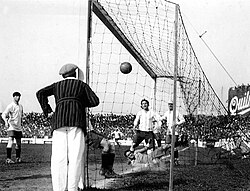
Global Debut: Olympics and the First World Cups
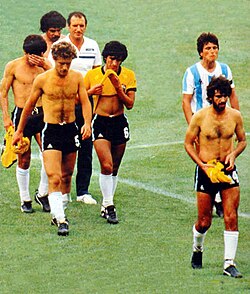
Argentina's first foray into international tournaments outside South America came at the 1928 Summer Olympics in Amsterdam. After dominant wins over the United States, Belgium, and Egypt, they reached the final, where they earned a silver medal after a 2–1 loss to Uruguay.
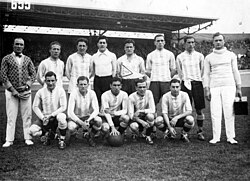
The inaugural FIFA World Cup in 1930 saw Argentina reach the final once again. After defeating France, Mexico, Chile, and the United States, they faced Uruguay in the final on July 30, ultimately losing 4–2.
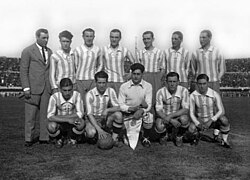
The Era of Absence and Transition
Between 1934 and 1954, Argentina experienced a turbulent period. After a quick exit in 1934, the team missed several World Cups due to a variety of reasons, including conflicts with the Brazilian Football Confederation in 1950 and a refusal to participate in 1954.
Despite these absences, the team remained strong regionally. Under coach Guillermo Stábile, Argentina won seven South American championships between 1937 and 1957. This period also saw the rise of Los Carasucias (The Scarfaces), a group of talented players including Sívori and Maschio.
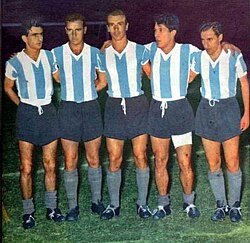
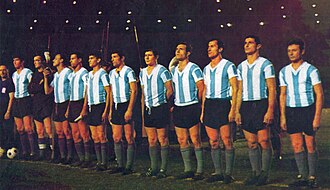
In 1964, the team won the Nations' Cup, a tournament often called "a little World Cup." Under coach José María Minella, Argentina remained unbeaten, including a prestigious 3–0 victory over Brazil.
The Road to World Cup Glory

The 1970s marked the beginning of a golden era under manager César Menotti. This period saw the international debut of a 16-year-old Diego Maradona in 1977. The culmination of Menotti's preparation came in 1978, when Argentina hosted the FIFA World Cup for the first time.

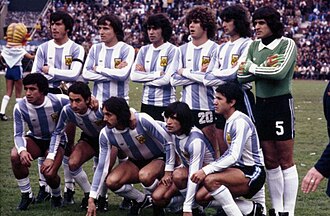
In a thrilling final at the Estadio Monumental, Argentina defeated the Netherlands 3–1 in extra time, with Mario Kempes scoring twice. This victory made Argentina the second South American nation to win the World Cup on home soil.

The Maradona Era and 1986
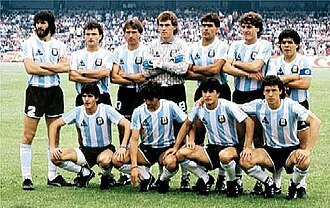
After a disappointing 1982 campaign, Carlos Bilardo took over as manager. Bilardo's tactical obsession and the genius of Diego Maradona led Argentina to the 1986 World Cup in Mexico. Argentina dominated the tournament, eventually lifting the trophy at the Estadio Azteca.


Modern Challenges and the Scaloni Renaissance
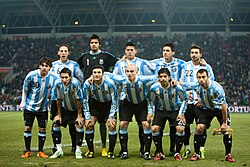
Following the highs of the 80s, Argentina faced a trophy drought and inconsistent World Cup performances, including a historic group-stage exit in 2002. However, the appointment of Lionel Scaloni sparked a new era of success.
Scaloni led the team to a series of major titles, ending the long drought by winning the 2021 Copa América. This was followed by the 2022 Finalissima and the crowning achievement: the 2022 FIFA World Cup.

In the 2022 World Cup, Argentina overcame an opening loss to Saudi Arabia to reach the final, where they defeated France in a dramatic showdown. The team continued its dominance by winning the 2024 Copa América, with Lionel Messi breaking the record for the most appearances in the tournament's history.

Summary of Major Achievements
| Competition | Key Victories/Achievements | Notable Era/Manager |
|---|---|---|
| FIFA World Cup | 1978, 1986, 2022 | Menotti, Bilardo, Scaloni |
| Copa América | Multiple (including 1921, 1991, 1993, 2021, 2024) | Various / Scaloni |
| Summer Olympics | Silver Medal (1928) | Early 20th Century |
| Nations' Cup | 1964 Winner | José María Minella |
Frequently Asked Questions
When did Argentina win its first official title?
Argentina won its first official title in 1906 by winning the Copa Lipton, defeating Uruguay 2–0 in Montevideo.
Who was the manager during the 1978 World Cup victory?
César Menotti was the manager who led Argentina to its first FIFA World Cup title in 1978.
Which World Cup did Argentina fail to qualify for?
The 1970 World Cup is the only time Argentina failed to qualify for a tournament in which they entered a team, following a poor qualifying campaign in 1969.
How many World Cups has Argentina won?
Argentina has won the FIFA World Cup three times: in 1978, 1986, and 2022.
What is the significance of the 1964 Nations' Cup?
The Nations' Cup is considered "the first great title" for Argentina, as they remained unbeaten and defeated Brazil 3–0 in Brazil.