Arawak Peoples: History, Language, and the Legacy of the Caribbean and South America
The term Arawak is an exonym—a name given by outsiders—used to describe various Indigenous groups across northern South America and the Caribbean. While the term is widely recognized today, it was popularized by 19th-century linguists rather than the peoples themselves. These diverse groups are linked by the Arawakan languages, one of the most extensive Indigenous language families in the Americas.
Historically, the label was used by Spanish explorers to categorize Indigenous populations based on their perceived disposition: those deemed friendly were called Arawak, while those considered hostile were labeled Caribs. Over time, this evolved into a broader academic classification, though modern scholars prefer specific names like Lokono for mainland groups and Taíno for those of the Greater and Lesser Antilles.
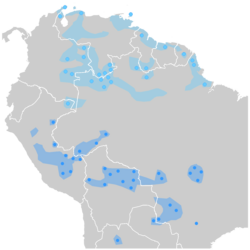
Key Facts
- Language Family: Arawakan languages are among the most widespread Indigenous languages in the Americas.
- Major Groups: Includes the Taíno (Caribbean) and the Lokono (South America).
- Taíno Population Collapse: On Hispaniola, the population dropped from several hundred thousand (or over a million) to just 35,000 by 1514.
- The Paper Genocide: A historical phenomenon where Indigenous people were erased from official census records despite continuing to exist.
- Modern Descendants: The Garifuna represent a blend of Arawak, Kalinago, and Afro-Caribbean ancestry.
The Origins and Migration of the Taíno
The Taíno culture emerged in the Caribbean through a series of ancient migrations. Archaeological evidence indicates human presence in Trinidad by 6000 BC and Cuba by 5000 BC. Later migrations, including the Saladoid people, reached Puerto Rico by 430 BC and eventually Hispaniola.
Scholars propose two primary models for these origins: the Circum-Caribbean model, which suggests a connection to the Arhuaco people of the Colombian Andes, and the Amazonian model, which posits that the ancestors of the Taíno originated in the Amazon basin, the cradle of the Arawakan languages.
European Contact and the Colonial Era
The Taíno were among the first Indigenous Americans to encounter Europeans. In 1492, Christopher Columbus arrived in the Caribbean, establishing La Navidad on the northeast coast of Hispaniola. While initial interactions varied, relations quickly deteriorated. By the time the Spanish established La Isabella and discovered gold, the Taíno faced a catastrophic decline due to warfare, enslavement, and European diseases.
By 1504, the Spanish had dismantled the cacique (chiefdom) system on Hispaniola. The resulting genocide saw the population plummet. In Puerto Rico, the population was reduced from approximately 30,000 in 1509 to just 1,148 by 1530.
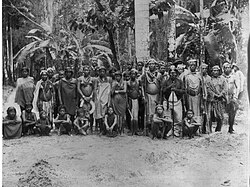
Resistance and Survival in South America
Unlike their Caribbean counterparts, the Lokono and other South American Arawakan-speaking groups resisted colonization more effectively throughout the 16th century. In the 17th century, the Lokono formed strategic alliances with the Spanish to counter the Kalina (Caribs), who were allied with the English and Dutch.
The Lokono engaged in European trade until the early 19th century, after which they faced economic decline following the collapse of the plantation economy. However, their population began to recover in the 20th century.
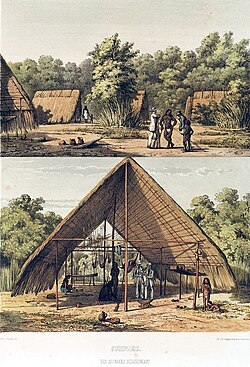
Descendants and Modern Identities
The Garifuna
The Garifuna are a distinct ethnic group descended from Arawak and Kalinago (Island Carib) peoples and Afro-Caribbean people. Originally from Saint Vincent (known as Yurumein), a founding population of 2,500 to 5,000 people was transplanted to Roatán. Today, Garifuna communities exist in Honduras, Belize, the United States, and Saint Vincent and the Grenadines.
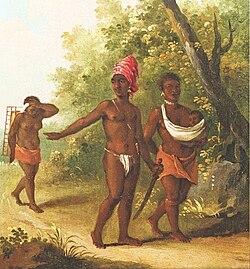
The Lokono Today
Currently, about 10,000 Lokono live primarily in Guyana, with smaller populations in Suriname, Venezuela, and French Guiana. While the population is growing, the Lokono language is critically endangered; as of 2015, only about five percent of the population remained fluent.
The Taíno and the "Paper Genocide"
For centuries, it was widely believed that the Taíno had gone extinct. This belief was fueled by a "paper genocide," where colonial administrators stopped recording Indigenous people in censuses. For example, a 1787 census in Puerto Rico listed 2,300 "pure" Indios, but the 1802 census listed none.
In reality, Taíno culture survived in secret, often disguised through Catholicism or preserved in rural communities like the jíbaro. Since the late 1980s, a movement for the revival of Taíno culture has grown, supported by DNA evidence and the practice of syncretic religions such as Agua Dulce (Tamani) in the Dominican Republic.
Summary of Arawakan-Speaking Groups
| Group | Primary Region | Historical Status | Modern Status |
|---|---|---|---|
| Taíno | Greater & Lesser Antilles | Subjugated by Spanish in 15th-16th c. | Cultural revival; genetic legacy |
| Lokono | Guyana, Suriname, Venezuela | Resisted colonization longer; traded with Europeans | Growing population; endangered language |
| Garifuna | Central America, Caribbean | Mixed Arawak, Kalinago, and African ancestry | Active diaspora in Honduras, Belize, USA |
Frequently Asked Questions
Did the Arawak people call themselves "Arawak"?
No. "Arawak" is an exonym. The Indigenous peoples of the Caribbean and South America used their own specific names, such as Lokono or Taíno.
What is the "paper genocide"?
The paper genocide refers to the erasure of Indigenous people from official colonial records and censuses, which created the false historical narrative that groups like the Taíno had become extinct.
Who are the Garifuna?
The Garifuna are descendants of Arawak and Kalinago Indigenous peoples and Afro-Caribbean people, primarily located in Central America and the Caribbean.
Where did the Taíno originate?
There are two main theories: the Circum-Caribbean model suggests they came from the Colombian Andes, while the Amazonian model suggests they originated in the Amazon basin.
Is the Lokono language still spoken?
Yes, but it is classified as critically endangered. A 2015 assessment indicated that only about five percent of the Lokono population is fluent in the language.