Arab World's Largest Cities by Population and History
The Arab world, comprising the 22 member states of the Arab League, is home to some of the most populous and historically significant urban centers in the world. From the sprawling megacity of Cairo to the ancient streets of Damascus, these cities serve as vital hubs for commerce, culture, and governance across North Africa and Western Asia.
Urbanization in this region is characterized by a blend of ancient settlements that date back millennia and modern metropolises that have grown rapidly in the last century. This diversity reflects the region's role as a crossroads of civilizations.
Key Facts
- Cairo is the largest city in the Arab world with a population of 23.2 million.
- Damascus is among the oldest continuously inhabited cities, with roots tracing back to 8,000–10,000 BCE.
- Egypt, Iraq, and Saudi Arabia host multiple cities with populations exceeding 1 million.
- The Arab world's urban landscape includes both ancient capitals and 20th-century developments like Nouakchott (founded 1903).
Population and Founding Trends
The distribution of population across Arab cities shows a heavy concentration in Egypt and the Gulf states. Cairo stands alone as a massive urban center, while cities like Baghdad, Riyadh, and Khartoum form a second tier of high-population hubs.
Ancient Urban Centers
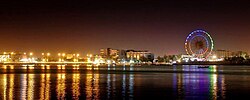
Many of the region's largest cities are not just population centers but living museums. Damascus and Amman are notable for their extreme antiquity, with Amman's origins dating back to 7250 BCE. Other ancient centers include Aleppo and Erbil, both of which have been inhabited since the early millennia BCE.
Modern Growth and Development
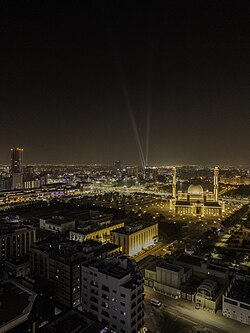
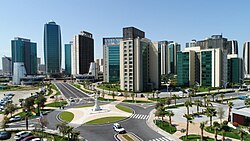
In contrast to the ancient cities, the Gulf region has seen the rise of modern powerhouses. Dubai and Abu Dhabi in the United Arab Emirates, and Doha in Qatar, have experienced rapid growth. Some cities, such as Dammam (1923) and Nouakchott (1903), are relatively young compared to the regional average.
Comparative Analysis of Major Cities
The following table provides a detailed overview of the top 15 largest cities in the Arab world, highlighting their population and the era of their founding.
| Rank | City | Country | Population | Founding Date |
|---|---|---|---|---|
| 1 | Cairo | Egypt | 23,200,000 | 968 CE |
| 2 | Baghdad | Iraq | 8,000,000 | 762 CE |
| 3 | Riyadh | Saudi Arabia | 7,900,000 | 1746 CE |
| 4 | Khartoum | Sudan | 7,400,000 | 1824 CE |
| 5 | Dubai | United Arab Emirates | 6,650,000 | 1833 CE |
| 6 | Alexandria | Egypt | 6,350,000 | 332 BCE |
| 7 | Amman | Jordan | 6,300,000 | 7250 BCE |
| 8 | Kuwait City | Kuwait | 4,825,000 | 1613 CE |
| 9 | Casablanca | Morocco | 4,500,000 | 7th century |
| 10 | Algiers | Algeria | 4,400,000 | 944 CE |
| 11 | Damascus | Syria | 4,050,000 | ~8,000–10,000 BCE |
| 12 | Jeddah | Saudi Arabia | 4,000,000 | 522 BCE |
| 13 | Sanaa | Yemen | 3,400,000 | ~500 BCE |
| 14 | Dammam | Saudi Arabia | 3,000,000 | 1923 |
| 15 | Tunis | Tunisia | 2,775,000 | 814 BCE |
Regional Distribution
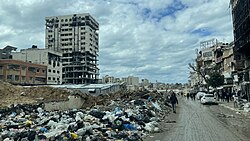
The distribution of these cities spans across diverse geographies. In North Africa, Morocco stands out with several large cities including Casablanca, Rabat, and Fez. In the Levant, Beirut and Gaza City maintain significant populations despite their smaller geographic footprints.
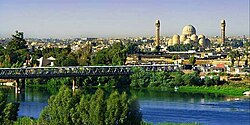
Iraq also shows a high density of large urban centers, with Baghdad, Basra, and Mosul all ranking among the most populous cities in the region.
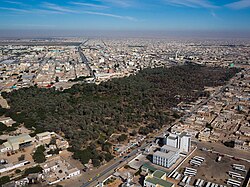
Finally, the Horn of Africa is represented by Mogadishu and Hargeisa, both of which have surpassed the 1 million population mark, reflecting the broader urban growth trends across the Arab League states.
Frequently Asked Questions
Which is the most populous city in the Arab world?
Cairo, Egypt, is the most populous city with an estimated population of 23,200,000.
What is the oldest city among the largest Arab cities?
Damascus, Syria, is one of the oldest, with evidence of settlement dating back to approximately 8,000–10,000 BCE.
Which country has the most cities with over 1 million people on this list?
Saudi Arabia and Iraq feature prominently, with Saudi Arabia having several major cities including Riyadh, Jeddah, Dammam, Mecca, and Medina.
How is the "Arab world" defined in this context?
For the purposes of this data, the Arab world is defined as the 22 member states of the Arab League.
Are there any relatively new large cities in the region?
Yes, cities like Nouakchott in Mauritania (founded 1903) and Dammam in Saudi Arabia (founded 1923) are relatively modern compared to the ancient cities of the Levant.