ARA San Juan: The Tragedy and Search for the Lost Argentine Submarine
On November 15, 2017, the ARA San Juan (S-42), an Argentine Navy submarine, vanished in the South Atlantic Ocean. While conducting a training exercise off the coast of Argentina, the vessel lost contact with command, sparking one of the most extensive maritime search and rescue operations in the history of the region. The disappearance resulted in the loss of the boat and all 44 crew members on board.
This event stands as the worst submarine disaster since the 2003 accident involving Chinese submarine 361 and represents the second-worst peacetime naval disaster in Argentine history, following the 1949 sinking of the minesweeper ARA Fournier.
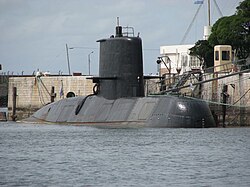
Key Facts
- Date of Disappearance: November 15, 2017.
- Location: South Atlantic Ocean (45°56′59″S 59°46′22″W).
- Casualties: 44 crew members (all deceased).
- Wreck Depth: 907 metres (2,976 ft).
- Discovery Date: November 16, 2018.
- Cause: Unknown, though the Navy confirmed the vessel imploded.
The Disappearance and Initial Rescue Efforts
The crisis began when the Argentine Navy lost contact with the ARA San Juan during its training mission. In the immediate aftermath, a massive international effort was launched to locate the vessel and rescue the crew. By November 24, the operation had grown to include 27 ships, 30 aircraft, and 4,000 professionals from 13 different countries.
During the early stages, there were fleeting moments of hope. Reports indicated that seven satellite calls may have been attempted from the submarine, and some hydroacoustic anomalies—sounds detected underwater—were recorded. However, the Argentine Navy later clarified that these noises did not correspond to a submarine.
The Transition to Search and Recovery
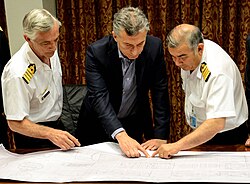
As days passed, the mission shifted from a rescue operation to a search for the wreck. After 15 days of searching, the Argentine Navy officially downgraded the operation, implying that survival was no longer possible. This transition followed the detection of a "singular event" consistent with an explosion, which severely diminished hopes for survivors.
International Collaboration and Technology
The search for the ARA San Juan saw unprecedented global cooperation. Various nations provided specialized equipment, including unmanned submersibles and advanced aircraft like the U.S. Navy's P-8A Poseidon. Russia contributed experts and the Pantera Plus underwater search vehicle to assist in the deep-sea hunt.
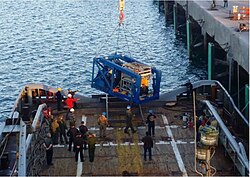
Despite the deployment of high-tech sonar and mapping tools, the vastness and depth of the South Atlantic proved challenging. The Argentine government eventually offered a reward of $98 million (approximately USD 5 million) for information leading to the discovery of the vessel.
The Role of Ocean Infinity
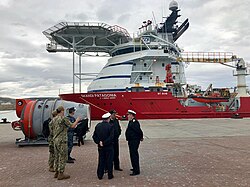
The breakthrough finally came a year after the disappearance. On November 16, 2018, the private exploration company Ocean Infinity located the wreck. The submarine was found at a depth of 907 metres. Following the discovery, the Argentine Navy confirmed that the ARA San Juan had imploded and broken into several pieces.
Summary of International Participation
The scale of the operation is highlighted by the variety of nations that pledged support, ranging from rescue capabilities to technical search equipment.
| Country | Rescue Effort | Search Effort |
|---|---|---|
| Argentina | Yes | Yes |
| United States | Yes | Yes |
| Russia | Yes | Yes |
| United Kingdom | Yes | Yes |
| Brazil | Yes | Yes |
| Canada | Yes | No |
| Spain | Yes | No |
| Chile | Yes | Yes |
Frequently Asked Questions
How many people were on board the ARA San Juan?
There were 44 crew members on board the submarine, all of whom perished in the disaster.
Where was the wreck of the submarine eventually found?
The wreck was discovered by Ocean Infinity on November 16, 2018, at a depth of 907 metres (2,976 ft) in the South Atlantic Ocean.
What caused the loss of the submarine?
While the exact cause remains unknown, the Argentine Navy confirmed that the vessel suffered an implosion, which caused it to break into several pieces.
Who discovered the wreckage of the ARA San Juan?
The wreckage was located by the private company Ocean Infinity, approximately one year after the vessel first disappeared.
Was the search for the ARA San Juan an international effort?
Yes, it was the largest search and rescue operation in the history of the South Atlantic, involving 4,000 professionals and assets from 13 different countries.