Understanding the Complex History of Anti-Chinese Sentiment in Korea
The relationship between Korea and China is a complex tapestry woven from centuries of regional influence, political conflict, and shifting social dynamics. Historically, Korea existed within a sinocentric (China-centered) East Asian regional order. However, this long history of proximity has evolved into a modern era characterized by significant tension. Today, public opinion polls indicate that many South Koreans hold overwhelmingly negative views toward China and its people.
Key Facts
- Historical Turning Point: The 1931 Wanpaoshan Incident triggered widespread anti-Chinese riots across Korea.
- Diplomatic Milestone: South Korea and the People's Republic of China (PRC) only established formal diplomatic relations on August 24, 1992.
- Generational Shift: Recent studies show that South Koreans in their 20s perceive China as a greater threat than those in their 60s.
- Security Concerns: In 2018, a poll found that 46% of South Koreans viewed China as a larger threat to inter-Korean peace than North Korea.
- Modern Sentiment: A 2022 poll indicated that 81% of South Koreans hold negative views of China.
Historical Roots of Tension
The Wanpaoshan Incident and Imperial Influence
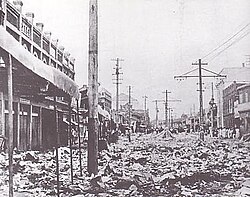
In 1931, while Korea was under the dominance of Imperial Japan, a dispute erupted between Chinese and Korean farmers in Wanpaoshan, Manchuria. The event was heavily sensationalized by the Japanese and Korean press, serving as propaganda to fuel anti-Chinese sentiment. This led to violent riots starting in Incheon on July 3, 1931, which quickly spread to other cities. Chinese sources report that the unrest resulted in 146 deaths, 546 injuries, and extensive property destruction. The most severe riot took place in Pyongyang on July 5.
The Korean War and Diplomatic Evolution
The geopolitical landscape shifted dramatically during the Korean War (1950–1953), when the People's Volunteer Army (PVA) of the People's Republic of China fought alongside North Korea against South Korean and United Nations forces. Following the war, South Korea maintained an alliance with the Republic of China (Taiwan). It was not until August 1992 that Seoul and Beijing established formal diplomatic ties.
In the 1960s, South Korean laws targeting foreign property ownership—which at the time primarily affected ethnic Chinese—prompted many Chinese residents to emigrate to Taiwan.
Modern Drivers of Sinophobia
Historical and Territorial Disputes
In the early 2000s, tensions rose over the history of Goguryeo, an ancient kingdom that both Korea and China claim as part of their own historical heritage. This dispute, alongside the "Northeast Project" in 2004, is cited as a primary catalyst for the rise in anti-Chinese sentiment.
The 2008 Olympic Torch Relay
A significant flashpoint occurred during the 2008 Olympic torch relay in Seoul. Over 6,000 Chinese students clashed with local activists. The protesters were rallying against Beijing's treatment of North Korean defectors and the crackdown on Tibetan independence movements. These violent clashes in central Seoul sparked widespread indignation among the Korean public.
The THAAD Conflict and Economic Retaliation
Relations reached a new low in 2017 following South Korea's deployment of the THAAD (Terminal High Altitude Area Defense) missile system. In response, China initiated an economic boycott against South Korea. This retaliation significantly hardened Korean views toward Beijing.
| Year | Metric | Value |
|---|---|---|
| 2002 | Favorable view of China (Pew) | 66% |
| 2008 | Unfavorable view of China (Pew) | 49% |
| 2008 | Negative view of Chinese influence (EAI) | 50% |
| 2022 | Negative view of China (CEIAS) | 81% |
Sociopolitical Trends and Cultural Friction
The Rise of "Anti-Chinese Racism"
Since the 2020s, political "anti-China sentiment" (banjung) has increasingly transitioned into "anti-Chinese racism" (hyeomjung). This trend has been linked to right-wing populism. Reports have surfaced of Chinese speakers facing hostility in Seoul, and in 2025, far-right groups held demonstrations against visa-free entry for Chinese tourists, using racial slurs and nationalist slogans.
Cultural Clashes and K-Pop
Cultural icons have also become targets of geopolitical tension. In 2020, after RM of the boy band BTS made a speech regarding the shared history of pain between South Korea and the United States during the Korean War, Chinese state media and netizens launched a boycott. This incident further fueled hostility in South Korea, as many Koreans accused China of exaggerating its historical role.
Frequently Asked Questions
Why is there tension between South Korea and China regarding history?
Tensions often stem from disputes over historical heritage, such as the status of the Goguryeo kingdom, and differing interpretations of the roles played by various nations during the Korean War.
How has the perception of China changed across generations in South Korea?
Recent studies indicate a trans-generational trend where younger South Koreans (in their 20s) perceive China as a greater threat than the older generation (in their 60s).
What was the impact of the THAAD deployment on relations?
The deployment of the THAAD missile defense system led to economic retaliation from China, which in turn caused a decisive turn for the worse in South Korean public opinion toward China.
Is the anti-Chinese sentiment purely political?
While rooted in politics, nationalism, and security concerns, the sentiment has also manifested as social racism and cultural friction, affecting how Chinese citizens are treated in South Korea.
How does China view the current state of relations with South Korea?
South Korean leaders have expressed concern that rising anti-Chinese sentiment and conspiracy theories may drive Chinese people to "turn their backs on Korea," potentially leading to consumer boycotts of Korean goods.