Animals in Sport: From Racing and Training to Cultural Traditions
Animals in sport represent a specialized category of working animals. In many commercial sporting contexts, these animals undergo rigorous training to perform specific tasks or compete at high levels. While a wide variety of species are involved, horses and dogs remain the most prominent participants in global sporting events.
These events vary significantly in how humans participate. Some competitions are held exclusively between animals, while others feature humans in supporting or guiding roles. Depending on the sport, animals may be selected through selective breeding or intensive training to maximize their performance.
Key Facts
- Common Species: Horses and dogs are the most frequent participants in animal sports.
- Racing Variety: Popular racing forms include horse, greyhound, pigeon, camel, and buffalo racing.
- Training Focus: Many sports, such as dressage and dog agility, focus on the excellence of training and breeding rather than speed.
- Legal Status: Many animal fighting events are banned globally due to cruelty, though some traditional forms remain legal in specific regions.
- Economic Impact: Animal racing is a major global industry, often linked to significant gambling activities.
Types of Animal Sporting Events
Animal sports range from large-scale multi-event gatherings to niche traditional competitions. A rodeo, for example, is a comprehensive event that can include various disciplines such as pole bending and bull riding.
Racing Competitions
Racing is the most widespread form of animal sport. While horse racing is the most popular, other forms include greyhound racing, pigeon racing, and camel racing. Some events involve riders, while others see animals compete alone. In some instances, the human is pulled by the animal, as seen in dogsled racing, harness racing, and the ancient Roman and Greek sport of chariot racing.
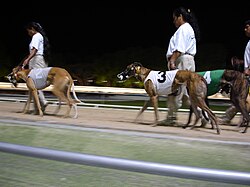
Greyhound racing became popular in the United States during the 1800s after the dogs were imported from Europe to manage hare populations. Other regional specialties include Kambala (he-buffalo racing in coastal Karnataka, India) and various traditional bull races in Indonesia, such as karapan sapi, pacu jawi, mekepung, and barapan kebo. West Sumatra has also hosted flying duck races since 1926.
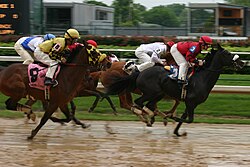
Pigeon racing differs from track events, as it relies on the homing instinct of pigeons to return from a set distance. Because of the high volume of gambling associated with racing, some jurisdictions have outlawed these sports.
One-on-One and Team Events
Beyond racing, animals participate in strategic team sports. Polo involves riders on horseback using mallets to hit a ball. A variation, elephant polo, was established in the early 20th century by British aristocrats in Nepal. Historically, jousting was a prominent one-on-one tournament for knights on horseback between the 14th and 16th centuries.
Fighting and Blood Sports
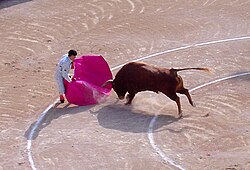
Many countries ban animal fighting, such as dog fighting and cockfighting, citing cruelty. However, some traditions remain legal, including camel wrestling and cow fighting. Certain sports involve humans competing against animals, such as the Spanish and Portuguese tradition of bullfighting and jallikattu in Tamil Nadu, India. In Macau and Hong Kong, cricket fighting is popular, though gambling on the sport is prohibited.
Historically, "blood sports" included baiting, where dogs were set upon animals—such as bears, lions, badgers, or rats—often tied to a post in a pit. There are even historical accounts of human-baiting. Animals used in these fights are typically bred specifically for stamina and strength.
Hunting and Fishing
Hunting evolved from a survival necessity in hunter-gatherer societies to a sport for the social elite. In medieval Europe, the aristocracy and high clergy held exclusive hunting rights. Dangerous hunts for wild boars or lions served as a way for the nobility to practice warfare skills during peacetime. In ancient Rome, the Venatio pitted humans against animals in amphitheaters for entertainment.

Modern hunting generally requires a license. Animals may act as assistants to the hunter or be the target of the hunt. Fox hunting has remained a particularly controversial issue in the United Kingdom due to concerns over cruelty. Additionally, pigeon shooting was once an Olympic event in 1900, where competitors aimed to kill as many live birds as possible.
Fishing is primarily viewed as a hobby or pastime, though it is frequently organized as a competitive sport.
Shows of Training and Breeding
Shows evaluate the quality of an animal's breeding or the skill of its training. In the equestrian world, this includes dressage and show jumping (both Olympic sports), as well as in-hand classes that evaluate equine conformation (the physical build of the horse).
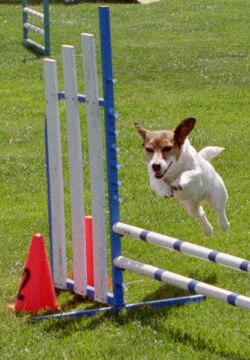
Dogs are frequent participants in shows, ranging from obedience trials and agility courses—where dogs navigate obstacles—to conformation shows like Crufts, which began in 1886. Livestock trials for cattle and sheepdogs demonstrate a dog's ability to gather animals. Similar breed-standard competitions exist for cats, and more unusual shows include rabbit jumping and vinkenzetting (bird singing contests for chaffinches).
| Category | Examples | Primary Focus |
|---|---|---|
| Racing | Horse, Greyhound, Camel, Buffalo | Speed and Endurance |
| Skill/Training | Dressage, Dog Agility, Sheepdog Trials | Precision and Obedience |
| Combat/Fighting | Bullfighting, Camel Wrestling | Strength and Tradition |
| Hunting/Fishing | Fox Hunting, Competitive Fishing | Tracking and Capture |
| Conformation | Crufts, Horse Shows | Breed Standards |
Animals in Popular Culture
The intersection of animals and sport is often mirrored in media. Some portrayals are realistic, such as the film Seabiscuit, while others are fictional, such as MVP: Most Valuable Primate. Animated works like Animalympics and Bedknobs and Broomsticks use anthropomorphized animals to spoof sports. Television has also highlighted these activities, from the BBC's One Man and His Dog to the American show Man vs. Beast, which featured challenges like a competitive eating contest between a brown bear and Takeru Kobayashi.
Frequently Asked Questions
What are the most common animals used in sports?
Horses and dogs are the most common animals involved in sporting events globally, appearing in everything from racing to agility trials.
Is animal fighting legal?
In most countries, animal fighting (such as dog or cockfighting) is illegal due to cruelty. However, some traditional events like bullfighting or camel wrestling remain lawful in specific regions.
What is the difference between a conformation show and an agility trial?
A conformation show evaluates how closely an animal matches the "ideal" physical standard of its breed, whereas an agility trial tests the animal's ability to complete a physical obstacle course.
Which animal sports are featured in the Olympics?
Dressage and show jumping are prominent equestrian sports featured in the Olympic Games.
What is Kambala?
Kambala is a traditional rural spectator sport involving he-buffalo racing, held annually during the winter in various towns and villages in coastal Karnataka, India.