Animal Thermoregulation and Temperature Adaptation
Temperature plays a fundamental role in shaping the biological world, influencing everything from an animal's physical size and growth to its behavioral patterns. To survive in diverse environments, animals have developed complex mechanisms to regulate their internal body heat, ensuring their physiological processes remain stable despite external fluctuations.
While some animals generate heat through daily activity and cool down via inactivity at night, others face unique challenges. Marine animals, for example, cannot rely on these methods. Instead, they have evolved specific traits such as a small surface-area-to-volume ratio to minimize heat loss to the surrounding water and the production of biological antifreeze to survive extreme cold.
Key Facts
- Endotherms maintain warmth through high energy expenditure and intake.
- Ectotherms rely primarily on environmental heat sources for regulation.
- Bergmann's Rule suggests endotherms in colder climates are generally larger to conserve heat.
- The Temperature-Size Rule indicates that ectotherms also tend to be larger in colder environments.
- Marine adaptations include antifreeze production and optimized surface-area-to-volume ratios.
Endotherms: Internal Heat Management
Endotherms are organisms that generate their own body heat internally. Because this process requires a significant amount of energy, these animals must maintain a high caloric intake to sustain their body temperature. To manage this energy demand, endotherms have evolved several survival strategies.
One such strategy is described by Bergmann's Rule, which observes that endotherms living in colder climates tend to be larger than their counterparts in warmer regions, as a larger body mass helps conserve internal heat. Additionally, some species utilize daily torpor (a short-term reduction in metabolic rate and temperature) or hibernation (a long-term state of inactivity) to save energy during periods of extreme cold.
Case Study: The California Spotted Owl
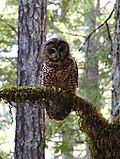
The Strix occidentalis, commonly known as the California spotted owl, provides a clear example of temperature sensitivity. This bird prefers a temperature range between 18.20 and 35.20 °C. It is less tolerant of heat than many other bird species; when temperatures reach 30-34 °C, the owl exhibits stress behaviors such as increased breathing and wing drooping. Consequently, these owls typically inhabit old-growth forests, which provide a stable environment resistant to rapid temperature changes.
Ectotherms: Environmental Heat Reliance
Unlike endotherms, ectotherms derive the majority of their body heat from their external environment. Because of this, their thermal requirements vary significantly between species based on their geographical location.
Many ectotherms maintain a static preferred body temperature across generations. When faced with drastic environmental changes, they first employ behavioral adjustments to regulate their temperature, resorting to physiological changes only as a last resort. Similar to endotherms, ectotherms generally follow the temperature-size rule, which notes that individuals in colder climates tend to be larger.
Case Study: The Italian Wall Lizard
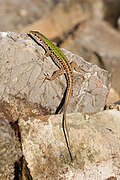
The Podarcis siculus, or Italian wall lizard, maintains a preferred temperature range of 28.40 to 31.57 °C for both males and females. Research shows a strong direct correlation between the lizard's body temperature and the air temperature during the summer, while this relationship is weaker during the spring. To prevent overheating, these lizards effectively control their internal temperature by seeking shade under leaves and rocks.
Comparison of Thermal Strategies
| Feature | Endotherms | Ectotherms |
|---|---|---|
| Primary Heat Source | Internal metabolism | External environment |
| Energy Requirement | High energy intake | Lower energy intake |
| Size Trend (Cold Climate) | Larger (Bergmann's Rule) | Larger (Temperature-Size Rule) |
| Regulation Methods | Hibernation, Torpor | Behavioral shifts (e.g., seeking shade) |
Frequently Asked Questions
How do marine animals survive extreme cold?
Marine animals adapt by maintaining a small surface-area-to-volume ratio to reduce heat transfer to the water and by producing antifreeze within their bodies.
What is the difference between torpor and hibernation?
Torpor is a short-term reduction in metabolic rate and internal temperature, whereas hibernation is a more prolonged state of inactivity used to survive cold periods.
Why do the California spotted owls live in old-growth forests?
Old-growth forests are resistant to temperature changes, providing the stable environment necessary for the California spotted owl, which has a low tolerance for high heat.
How does the Italian wall lizard regulate its temperature?
The Italian wall lizard primarily uses behavioral adaptations, such as seeking shade under rocks and leaves, to maintain its preferred temperature range.
Do both endotherms and ectotherms get larger in cold climates?
Yes. Endotherms follow Bergmann's Rule and ectotherms follow the temperature-size rule, both of which indicate a tendency toward larger body sizes in colder environments.