Anglo-Saxon England: From Sub-Roman Britain to the Norman Conquest
The history of Anglo-Saxon England is a transformative era that spans over six centuries, beginning with the departure of Roman authority and culminating in the seismic shift of the Norman Conquest. This period saw the evolution of fragmented tribal territories into a unified kingdom, the arrival of Viking raiders, and the profound influence of Christianity on the social and political landscape.
Following the abandonment of the Roman province of Britannia in 410 AD, the landscape of Britain underwent rapid cultural change. The subsequent settlement of Angles, Saxons, and Jutes began around 449 AD, laying the foundations for what would eventually become the English nation.
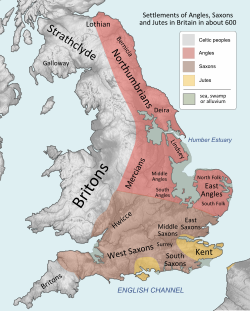
The Era of the Heptarchy and Early Kingdoms
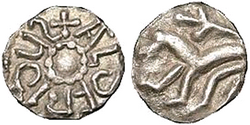
For much of the early period, Britain was divided into several competing territories. This era is often referred to as the Heptarchy, a period characterized by the dominance of various petty kingdoms. During the 8th century, the kingdom of Mercia emerged as a significant power, often engaging in conflict with the Welsh kingdom of Powys. The reign of Offa of Mercia (757–796) is particularly notable for the construction of Offa's Dyke, a 150-mile-long boundary between Wales and England.
As these kingdoms expanded and shifted, the political map of southern Britain was constantly in flux. For example, the East Saxons lost control of territories such as London, Middlesex, and Hertfordshire to Æthelbald during the mid-8th century.
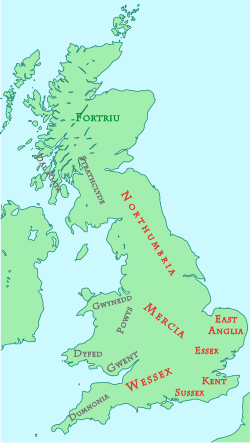
Christianisation and Cultural Shifts
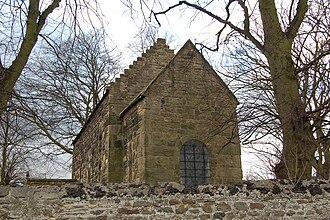
Religion played a pivotal role in the development of Anglo-Saxon society. While the early period was marked by pagan traditions, Christianity began to take root in the 6th century. The influence of the Church is visible in the architecture and artifacts of the time, such as the 7th-century Escomb Church.
The Viking Age and the Rise of Wessex
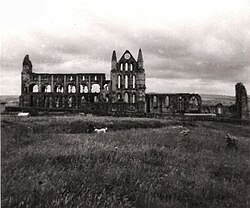
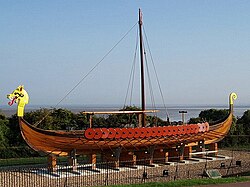
In the 8th century, the wealth of Anglo-Saxon monasteries attracted the attention of Scandinavian raiders. These invaders, known as Vikings (derived from the Old Norse víkingr, meaning an expedition), began a series of prominent raids, most notably at Lindisfarne in 793 AD. While raids occurred sporadically at first, they became increasingly regular by the mid-9th century.
The Viking presence led to the establishment of the Danelaw, a region in eastern England where Danish laws and customs prevailed. To combat this threat, the royal family of Wessex rose to prominence. King Alfred of Wessex, who styled himself King of the Anglo-Saxons from approximately 886 AD, became a central figure in resisting Viking incursions and stabilizing the region.
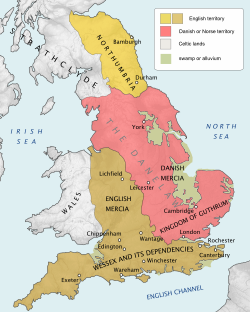
The struggle for control was intense. In the late 870s, Alfred gained the submission of the Mercians, and his son, Edward the Elder, continued the work of consolidating power. The era was marked by complex political maneuvering, including the marriage of Alfred's daughter, Æthelflæd, to the Mercian ruler Æthelred.
Unification and the Kingdom of England
![The walled defence round a burgh. Alfred's capital, Winchester. Saxon and medieval work on Roman foundations.[80]](/images/3b/c4/3bc48c800dca9acc3bf8a3924e6a1e9d587139a1245f1154c18a65b77b08b4ee.jpg)
The fragmented kingdoms eventually coalesced into a single entity. In 927 AD, King Æthelstan became the first monarch to rule a truly united Kingdom of England. Although Viking power resurged after his death, leading to challenges from leaders like Olaf Guthfrithson and Olaf Cuaran, the Anglo-Saxon monarchy continued to assert its authority.
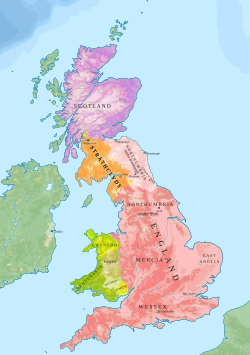
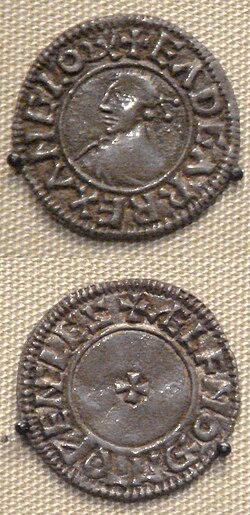
The 10th and early 11th centuries were marked by both stability and succession crises. The reign of Edgar was followed by the turbulent rule of Æthelred, famously known as "Æthelred the Unready," whose reign was characterized by disorder. This instability paved the way for the rise of the Danish King Cnut.
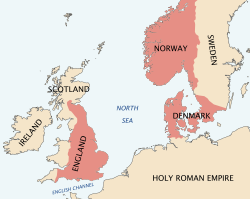
In 1016, Cnut established the North Sea Empire, a personal union between England, Denmark, and Norway. Following Cnut's death in 1035, the throne saw a succession of rulers, including Harthacnut and eventually Edward the Confessor, who had lived in exile in Normandy.
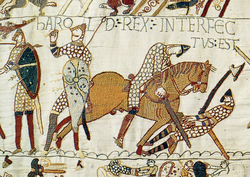
The era of Anglo-Saxon rule reached its definitive end in 1066. Following the death of Edward the Confessor, the throne was claimed by William, the Duke of Normandy. The resulting Norman Conquest fundamentally altered the course of English history.
Key Facts
- Timeline: The Anglo-Saxon period spans from the Roman departure in 410 AD to the Norman Conquest in 1066 AD.
- Political Structure: Transitioned from the Heptarchy (multiple kingdoms) to a unitary monarchy under Æthelstan in 927 AD.
- Language: The primary language spoken was Old English.
- Religion: Christianity became the dominant religion starting in the 6th century.
- Viking Impact: Scandinavian settlers established the Danelaw in eastern England during the 9th century.
- The North Sea Empire: A union of England, Denmark, and Norway ruled by King Cnut in the early 11th century.
Summary of Historical Eras
| Period | Approximate Dates | Key Characteristics |
|---|---|---|
| Sub-Roman Britain | 410 – c. 449 | Post-Roman abandonment and transition. |
| Heptarchy | c. 449 – 927 | Division into multiple petty kingdoms (Angles, Saxons, Jutes). |
| Kingdom of England | 927 – 1066 | Unified monarchy following the reign of Æthelstan. |
Frequently Asked Questions
What was the Heptarchy?
The Heptarchy refers to the period in early Anglo-Saxon history when Britain was divided into several distinct kingdoms, such as Mercia, Wessex, and Northumbria, rather than being a single unified nation.
Who was the first king of a united England?
King Æthelstan is recognized as the first king to rule a single, united Kingdom of England in 927 AD.
What was the Danelaw?
The Danelaw was a region in eastern England where Scandinavian (Viking) laws and customs were established following the settlement of Danes and Norwegians in the 9th century.
Why is Æthelred called "the Unready"?
The epithet "the Unready" (derived from the Old English meaning "ill-advised") was applied to Æthelred due to his perceived inability to govern effectively during a period of significant disorder and Viking threats.
How did the Anglo-Saxon period end?
The period ended with the Norman Conquest in 1066, following the death of Edward the Confessor and the subsequent victory of William, Duke of Normandy.