Angiosperm Phylogeny Group: Revolutionizing Flowering Plant Classification
For centuries, the classification of flowering plants—known scientifically as angiosperms—relied on physical characteristics. However, the advent of modern genetic analysis has fundamentally altered our understanding of plant relationships. To bring order to this shifting landscape, an informal international group of systematic botanists formed the Angiosperm Phylogeny Group (APG). Their mission is to establish a consensus-based taxonomy that reflects the true evolutionary history of plants discovered through phylogenetic studies.
Phylogenetic studies use genetic data to determine the evolutionary relationships between organisms. Unlike older systems, the APG approach prioritizes monophyletic groups—taxonomic groups that include a common ancestor and all of its descendants. By focusing on these evolutionary lineages, the APG provides a more stable and scientifically accurate framework for botanists worldwide.
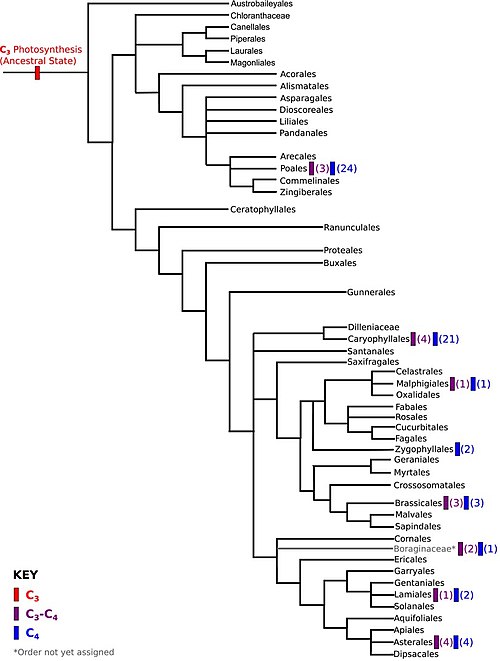
Key Facts
- Purpose: To create a consensus-based classification of angiosperms using phylogenetic (evolutionary) data.
- Core Principle: Classification must be based on monophyletic groups (descendants of a common ancestor).
- Evolution of Systems: Four major versions have been published: APG I (1998), APG II (2003), APG III (2009), and APG IV (2016).
- Scientific Driver: Molecular studies, such as the 1993 analysis of the rbcL photosynthesis gene, revealed that traditional groupings like "dicotyledons" were not evolutionarily distinct.
- Global Impact: Major herbaria and botanical gardens worldwide have updated their collections to align with APG standards.
The Shift from Morphology to Molecules
Before the 1980s, plant classification was largely based on visible traits. This changed rapidly with the availability of detailed genetic evidence. A landmark 1993 molecular study involving 5,000 flowering plants and the rbcL gene (a gene used to study photosynthesis) produced surprising results. Most notably, it showed that the traditional grouping of "dicotyledons" did not represent a single evolutionary lineage.
This influx of data "shattered" the stability of existing systems, creating a need for a unified reference. The APG was formed as a massive collaboration of scientists to provide this stability. Rather than attributing the work to individuals, the group adopted the collective name Angiosperm Phylogeny Group to represent their shared scientific consensus.
The Evolution of APG Versions
The APG system has undergone several iterations, each refining the classification as more genetic data becomes available. These updates move from broad ordinal classifications to more precise family-level groupings.
APG I (1998)
The inaugural 1998 publication was the first large-scale re-classification of angiosperms based primarily on genetic characteristics. It proposed an ordinal classification of flowering plant families to serve as a broad reference tool. This system recognized 40 orders, a significant departure from previous classifications like Takhtajan's 1997 system, which recognized 232.
APG II (2003)
As relationships became clearer, the second iteration focused on the family level. The 2003 update addressed problematic families and only proposed changes when supported by "substantial new evidence." This version also paved the way for linear ordering systems used to organize herbarium specimens.
APG III (2009)
The third revision significantly reduced the number of unplaced families and genera. A major strategic shift occurred here: the group moved away from "bracketed" families in favor of larger, more inclusive families. For example, the agave and hyacinth families were merged into the broader asparagus family (Asparagaceae). This change helped reduce confusion and was widely adopted by major herbaria.
APG IV (2016)
The most recent major update, APG IV, utilized massive banks of genes—including plastid, mitochondrial, and nuclear ribosomal DNA—to refine the tree of life. This version recognized 64 orders and 416 families. It also introduced two informal major clades, superrosids and superasterids, to categorize additional orders within the larger rosid and asterid groups.
Summary of APG Classification Progress
| Version | Year | Primary Focus/Major Change |
|---|---|---|
| APG I | 1998 | Initial ordinal classification based on genetic data. |
| APG II | 2003 | Refinement of family-level classifications. |
| APG III | 2009 | Shift toward larger, more inclusive families. |
| APG IV | 2016 | Integration of large gene banks and new major clades. |
Frequently Asked Questions
What is a monophyletic group?
A monophyletic group is a taxonomic group that consists of a single common ancestor and all of its descendants. The APG system is built on this principle to ensure classification reflects true evolutionary history.
Why did the APG move toward larger families in APG III?
The move toward more inclusive families was intended to reduce confusion. By merging smaller, closely related families (like Agavaceae into Asparagaceae), the system became more stable and easier for herbaria and botanic gardens to manage.
How does the APG differ from previous classification systems?
Previous systems often relied on physical morphology (how a plant looks). The APG system relies on phylogenetic data, primarily DNA sequences, to determine how plants are actually related through evolution.
What is the significance of the rbcL gene?
The rbcL gene, which is involved in photosynthesis, was central to the 1993 molecular study that triggered the need for the APG. It provided the genetic evidence that challenged traditional plant groupings.
Is the APG system still changing?
Yes. As new genetic technologies emerge and more DNA is sequenced, the APG continues to refine its classification to reflect the most accurate scientific understanding of plant evolution.