American Philosophical Society Buildings: A Legacy of Architecture and Knowledge
The American Philosophical Society (APS) maintains a campus in Philadelphia that serves as a physical testament to the pursuit of knowledge. Located in the heart of the city, these structures blend diverse architectural styles and historical eras, reflecting the society's evolution from the early American republic to the modern day.
Philosophical Hall
Built between 1785 and 1789, Philosophical Hall stands at 104 South Fifth Street. Designed by Samuel Vaughan in the Federal style—an architectural movement characterized by symmetry and classical proportions—the building was created specifically to house the society.
The structure has undergone several transformations. In 1890, a third floor was added to provide more space for the growing library. However, this addition was removed between 1948 and 1950 to restore the building to its original appearance during the establishment of Independence National Historical Park.
Since 2001, the building has served as The American Philosophical Society Museum. This public space hosts thematic exhibitions that examine the intersections of science, art, and history, showcasing rare books, original manuscripts, scientific instruments, and natural history specimens from the APS collections and other institutions.
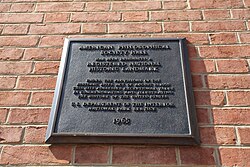
Library Hall
The history of Library Hall is one of disappearance and recreation. Originally constructed between 1789 and 1790 by the Library Company of Philadelphia (LCP), the hall stood directly across 5th Street from Philosophical Hall.
The LCP sold the building in 1884, and it was demolished in 1887 to make room for the expansion of the Drexel & Company Building. Decades later, the bank building that replaced it was also demolished in the 1950s to facilitate the creation of Independence National Historical Park.
In 1958, the APS constructed a new library building on the original site, meticulously recreating the façade of the original Library Hall to honor the site's intellectual heritage.
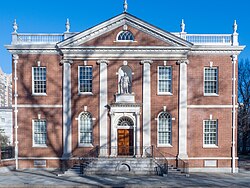
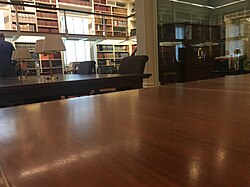
Today, the facility continues to support scholars and the public, providing dedicated spaces for deep research.
Benjamin Franklin Hall
Located at 425–29 Chestnut Street, Benjamin Franklin Hall was originally the Farmers' & Mechanics' Bank. Built between 1854 and 1855, the building was designed by John M. Gries in the Italianate style, which is inspired by 16th-century Italian Renaissance villas.
The APS restored this building to serve as its primary lecture hall. It now functions as the central hub for the society's major events and meetings.
Richardson Hall
Constance C. and Edgar P. Richardson Hall is situated at 431 Chestnut Street, immediately west of Benjamin Franklin Hall. This structure was originally the Pennsylvania Company for Insurances on Lives and Granting Annuities Building.
Designed by Addison Hutton and constructed between 1871 and 1873, Richardson Hall now houses administrative offices and the Consortium for History of Science, Technology and Medicine.
Key Facts
- Philosophical Hall: Built 1785–1789; designed by Samuel Vaughan in the Federal style.
- Library Hall: Original built 1789–90; demolished 1887; façade recreated by APS in 1958.
- Benjamin Franklin Hall: Former bank built 1854–55; designed by John M. Gries in the Italianate style.
- Richardson Hall: Former insurance building built 1871–1873; designed by Addison Hutton.
- Museum: Philosophical Hall opened as a public museum in 2001.
| Building Name | Original Purpose | Construction Date | Architectural Style |
|---|---|---|---|
| Philosophical Hall | Society Headquarters | 1785–1789 | Federal |
| Library Hall | LCP Headquarters | 1789–1790 (Original) | Recreated Façade |
| Benjamin Franklin Hall | Farmers' & Mechanics' Bank | 1854–1855 | Italianate |
| Richardson Hall | Insurance Building | 1871–1873 | Not Specified |
Frequently Asked Questions
What is the current use of Philosophical Hall?
Since 2001, it has operated as The American Philosophical Society Museum, featuring revolving exhibitions of art, science, and history.
Why was the third floor of Philosophical Hall removed?
The third floor, added in 1890, was removed between 1948 and 1950 to restore the building to its original 18th-century appearance for Independence National Historical Park.
Is the current Library Hall the original 1789 building?
No. The original building was demolished in 1887. The current building was constructed in 1958 and recreates the original façade.
What is the purpose of Benjamin Franklin Hall?
It serves as the society's lecture hall and is the primary venue for most major events and meetings hosted by the APS.
What is housed within Richardson Hall?
Richardson Hall contains society offices and the Consortium for History of Science, Technology and Medicine.