Amazon River: The World's Most Powerful River System
The Amazon River, known in Portuguese and Spanish as the Rio Amazonas or Río Amazonas, is a colossal waterway that defines the landscape of South America. Flowing primarily through Brazil, Peru, and Colombia, it is not merely a river but a vast network of tributaries and basins that sustain one of the most biodiverse regions on Earth.
From its high-altitude origins in the Andes to its massive discharge into the Atlantic Ocean, the Amazon represents a critical component of the global hydrological cycle. Its sheer scale—both in length and volume—makes it a subject of constant scientific study and geographical fascination.
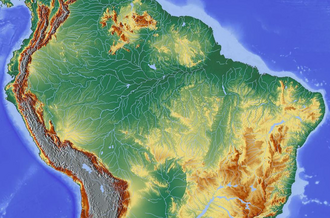
Key Facts
![Old drawing (from 1879) of Arapaima fishing at the Amazon River. The arapaima has been on Earth for at least 23 million years.[49]](/images/0e/df/0edfa4fe4273efcd845ab0005b020b2ec643f39468b5418882cdc26bffabfe4f.jpg)
- Total Length: Approximately 6,575 km (4,086 mi).
- Basin Size: 6,925,674 km², the largest drainage basin in the world.
- Average Discharge: 223,700 m³/s at the delta.
- Primary Countries: Peru, Colombia, and Brazil.
- Source: Apurímac River at Mismi Peak, Peru.
- Mouth: Atlantic Ocean, Brazil.
Geography and Course
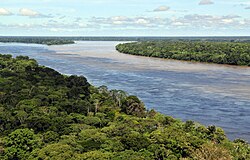
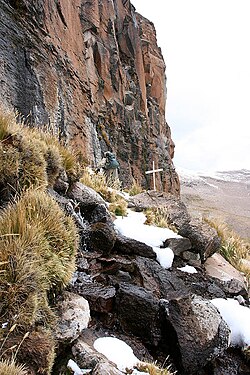
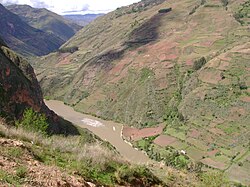
The Amazon's journey begins at an elevation of 5,220 meters (17,130 ft) at Mismi Peak in the Arequipa Region of Peru. While historically debated, the Apurímac River is recognized as a primary source.
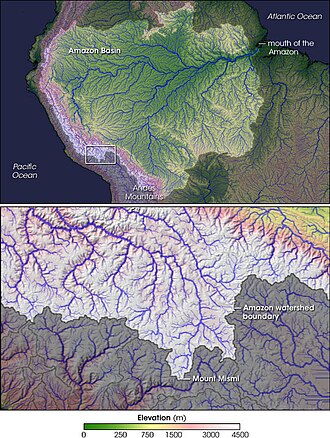
The river's course is traditionally divided into several distinct sections:
The Upper Amazon (Solimões)
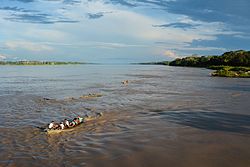
The Upper Amazon begins at the confluence of the Ucayali and Marañón rivers. In this region, the river is known as the Solimões. It is characterized by a narrower width, starting at approximately 700 meters, and flows through the heart of the Peruvian and Colombian Amazonia.
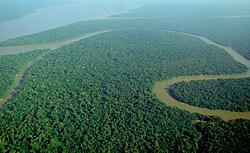
The Middle and Lower Amazon
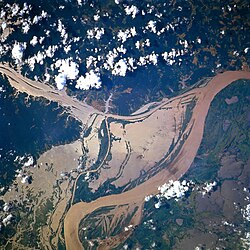
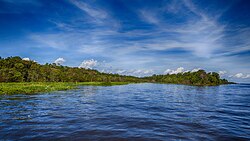
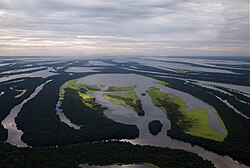
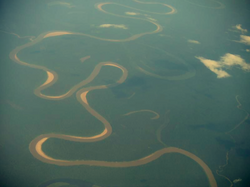
As the river progresses, it widens significantly. In the Middle Amazon, the average width is 3 km, expanding to 5 km in the Lower Amazon. At its widest points in the lower reaches, the river can stretch between 10 and 14 km, eventually opening into a massive estuary reaching 340 km in width.
The Mouth and Delta
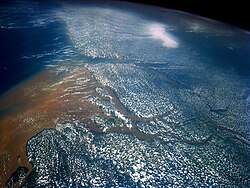
The river terminates in a vast delta on the coast of Brazil, where it empties into the Atlantic Ocean. This region is characterized by an immense volume of water and sediment discharge that influences ocean currents and salinity far beyond the coastline.
Hydrology and Tributaries
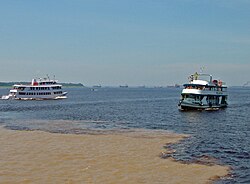
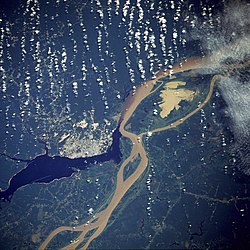
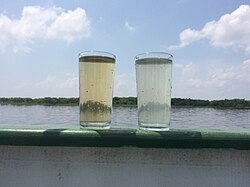
The Amazon is fed by a complex system of tributaries that contribute varying types of water. One of the most striking examples is the Meeting of Waters (Encontro das Águas) near Manaus, where the dark, acidic waters of the Rio Negro meet the sandy, sediment-rich waters of the Rio Solimões. These two rivers flow side-by-side for several kilometers without mixing due to differences in temperature, speed, and density.
The Madeira River is the largest tributary by volume, contributing roughly 14.1% of the total discharge. Other significant tributaries include the Rio Negro, Japurá, and Xingu rivers.
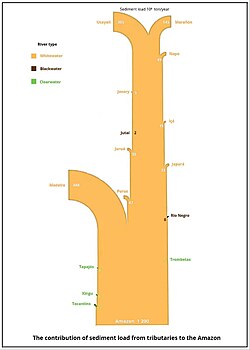
River Discharge Data
The volume of water moved by the Amazon is staggering. The average discharge at the delta is 223,700 m³/s, though this fluctuates seasonally. Peak flows typically occur between June and August, while the lowest levels are seen in December.
| Month | Amazon Discharge (m³/s) | Pará Discharge (m³/s) |
|---|---|---|
| January | 126,100 | 7,300 |
| March | 186,300 | 18,200 |
| June | 275,600 | 40,500 |
| July | 296,900 | 32,600 |
| September | 262,500 | 6,100 |
| December | 82,400 | 1,000 |
Biodiversity and Wildlife
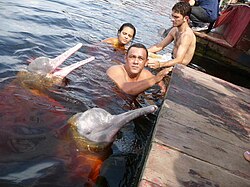
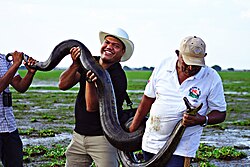
The river system supports an extraordinary array of species. Among the most famous are the Amazon river dolphin and the green anaconda, one of the heaviest snake species in existence. The waters are also home to the arapaima, a prehistoric fish that has existed for at least 23 million years.
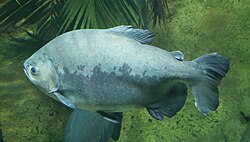
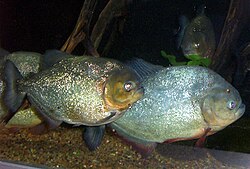
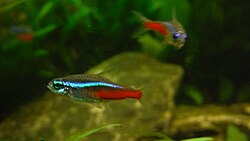
Fisheries are vital to the region, with species like the tambaqui playing a key role. Smaller, more aggressive fish such as piranhas (characins) are common, while the colorful neon tetra has become a staple in global aquariums.
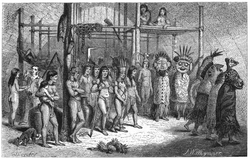
Human Presence and Exploration
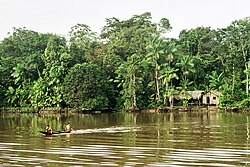
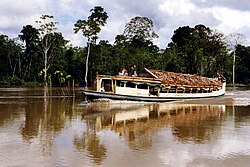
Human settlement along the river ranges from indigenous communities, such as the Ticuna Indians, to major urban centers. Manaus, the largest city in the Amazonas state, serves as a critical hub for trade and transport, famously featuring the Amazon Theatre opera house built during the rubber boom of the late 19th century.
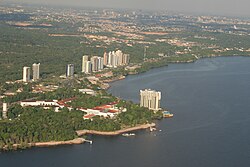
The river has long attracted explorers and naturalists. Notable figures include Alexander von Humboldt, Henry Walter Bates, and Alfred Russel Wallace, whose expeditions in the mid-19th century provided foundational knowledge of the region's biology and geography.
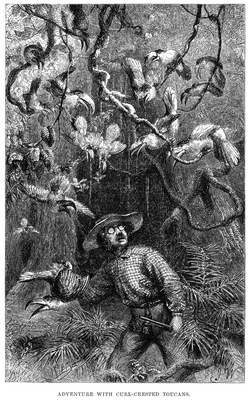
Frequently Asked Questions
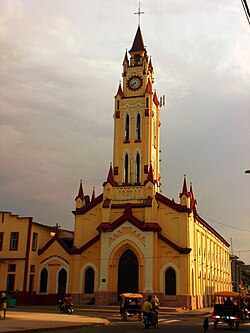
Where does the Amazon River start?
The river originates in the Peruvian Andes at Mismi Peak, specifically starting with the Apurímac River at an elevation of 5,220 meters.
Which is the largest tributary of the Amazon?
The Madeira River is the largest tributary, contributing the highest volume of water (approximately 14.1% of the total discharge) to the main stem.
Why do the Rio Negro and Rio Solimões not mix immediately?
The two rivers have different water temperatures, flow speeds, and densities (the Rio Negro is dark and acidic, while the Solimões is sandy and sediment-heavy), which prevents them from mixing instantly at their confluence.
How long is the Amazon River?
The Amazon River is approximately 6,575 kilometers (4,086 miles) long, though this measurement is sometimes subject to scientific dispute depending on the identified source.
What are some of the most iconic animals found in the river?
Iconic species include the Amazon river dolphin, the green anaconda, the arapaima, and various species of piranhas and tetras.