Allies of World War II: The Grand Alliance That Defeated the Axis
The Allies, formally known as the United Nations from 1942 onward, were a massive international military coalition that formed during World War II (1939–1945). This alliance was established with the singular goal of opposing the Axis powers. While dozens of nations eventually joined the cause, the coalition was anchored by the "Big Four": the United Kingdom, the Soviet Union, the United States, and China.
The formation of this alliance was not instantaneous but evolved through a series of diplomatic shifts, invasions, and shared existential threats. From the early days of the Franco-Polish alliance to the eventual creation of the modern United Nations, the Allied effort represented one of the most complex diplomatic and military undertakings in human history.

Key Facts

- The Big Four: The primary leadership consisted of the United Kingdom, Soviet Union, United States, and China.
- Formal Name: The coalition was formally referred to as the United Nations starting in 1942.
- Foundational Document: The Declaration by United Nations, signed on January 1, 1942, unified the original 26 signatories.
- Key Conferences: Strategic coordination occurred at the Tehran, Yalta, and Potsdam conferences.
- Global Reach: The alliance included governments-in-exile, resistance factions, and associated powers across every inhabited continent.
Origins of the Grand Alliance

The Early Conflict (1939–1941)
The war began on September 1, 1939, when Germany invaded Poland. In response, Britain and France declared war on Germany on September 3. While the Soviet Union invaded Poland from the east on September 17, it initially remained officially neutral in the conflict between Germany and the Western Allies.
For the first two years, the United Kingdom and France led the effort, though France fell in June 1940. During this period, the UK became the central hub for coordinating the war effort, hosting various governments-in-exile.
Expansion of the Coalition
The alliance shifted dramatically in 1941. In June, the Axis invaded the Soviet Union, pushing Stalin toward the Allies. By September 1941, the Soviet Union adopted the Atlantic Charter—a joint declaration of goals for the post-war world. The coalition expanded further on December 7–8, 1941, when Japan attacked American and British territories in Asia and the Pacific, prompting the United States to enter the war. China, which had been resisting Japanese invasion since 1937, formally declared war on the Axis on December 9.
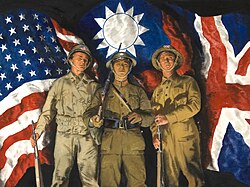
The Big Four and the Declaration by United Nations

In December 1941, during the First Washington Conference, President Franklin D. Roosevelt proposed the name "United Nations" for the coalition, a suggestion Winston Churchill accepted. On January 1, 1942, the leaders of the Big Four signed the Declaration by United Nations. The following day, 22 other allied nations signed. Notably, the Free French were excluded at this time because the U.S. still recognized the Vichy government in France.

Major Allied Powers and Their Contributions

United Kingdom and the British Empire
Following the fall of France, the UK served as the primary coordinator for the Allied effort. The British Empire, including India, provided vast manpower and resources. The UK acted as the de facto representative for many governments-in-exile throughout the war.
The Soviet Union
The Soviet Union bore a massive burden on the Eastern Front. Its forces were diverse, including millions of troops from the Central Asian Republics: approximately 1.4 million from Uzbekistan, over 1 million from Kazakhstan, and over 700,000 from Azerbaijan.

The United States
The U.S. played a dual leadership role. In the Pacific theatre, it led the fight against Japanese forces from 1941 to 1945. In Europe, from 1943 to 1945, the U.S. coordinated the Western Allies' efforts under the command of General Dwight D. Eisenhower.

China
China's war effort involved two primary factions: the Nationalists and the Communists. While often at odds, both resisted Japanese occupation. In August 1945, the Soviet invasion of Manchuria further impacted the region, with Mao Zedong planning the mobilization of up to 250,000 soldiers to assist Soviet forces.

Other Allied States and Resistance Movements

Beyond the Big Four, numerous nations contributed to the victory. This included the Free French, who fought in Africa and Europe after the fall of France, and the Polish forces, who fought both in the West (such as the No. 303 "Kościuszko" Fighter Squadron) and in the East alongside the Soviets.
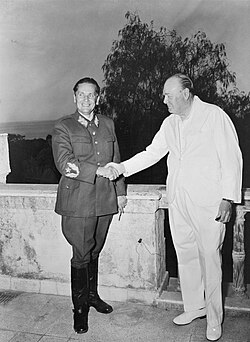
Resistance movements also played a critical role. In Yugoslavia, the Partisans led by Josip Broz Tito and the Chetniks led by General Mihailovic fought Axis occupiers, though they often represented different political visions for the future.
Summary of Allied Participation
The following table outlines the entry and status of key Allied nations.
| Country | Declaration by UN | Declared War on Axis | Role/Status |
|---|---|---|---|
| United Kingdom | 1942 | 1939 | Big Four / Lead Coordinator |
| Soviet Union | 1942 | 1941 | Big Four / Eastern Front |
| United States | 1942 | 1941/42 | Big Four / Pacific & Western Lead |
| China | 1942 | 1941 | Big Four / Asian Theatre |
| France | 1944 | 1939/40/41/44 | Allied / Free French Forces |
| Poland | 1942 | 1941 | Allied / Government-in-Exile |
| Canada | 1942 | 1939/40/41 | Allied / British Empire |
| Australia | 1942 | 1939/40/42 | Allied / British Empire |
Frequently Asked Questions


Who were the "Big Four" of the Allies?
The Big Four were the United Kingdom, the Soviet Union, the United States, and China. These nations provided the primary military and political leadership for the coalition.
When did the Allies become known as the "United Nations"?
The term "United Nations" was proposed by Franklin D. Roosevelt in December 1941 and formally adopted in the Declaration by United Nations on January 1, 1942.
Why were the Free French not original signatories of the 1942 Declaration?
The Free French were not invited to sign the original declaration because the United States still recognized the Vichy government, which had been established in France after its defeat by Germany.
What was the role of the Soviet Union in the alliance?
The Soviet Union joined the Allies in 1941 after the Axis invasion. It fought the primary land war against Germany on the Eastern Front and later intervened against Japan in Manchuria in 1945.
How did the alliance transition into the post-war era?
The wartime coalition laid the groundwork for the formal United Nations organization, established between April and June 1945, which aimed to maintain international peace and security after the war.