Alexander the Great: The Life and Conquests of Macedon's Warrior King
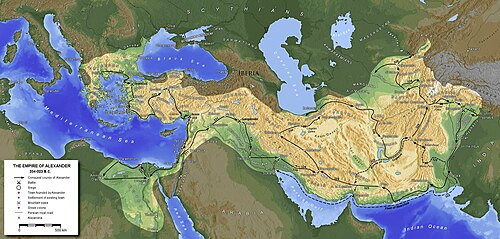
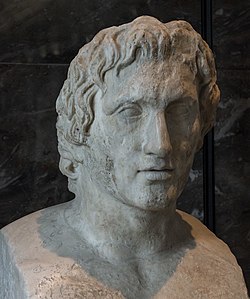
Alexander III of Macedon, known to history as Alexander the Great, stands as one of the most influential military strategists and conquerors in human history. In a reign lasting just over a decade, he transformed the known world, forging an empire that stretched from the shores of Greece to the edges of the Indian subcontinent. His legacy is not merely one of conquest, but of Hellenization—the spread of Greek culture, language, and thought across Asia and North Africa.
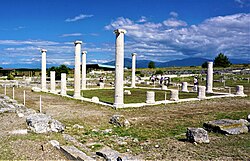
Born into the Argead dynasty, Alexander was the product of a powerful political union and a rigorous education. His early years in Pella prepared him for a life of leadership, blending the martial discipline of the Macedonian court with the intellectual depth of Greek philosophy.
Key Facts
- Reign: October 336 – June 323 BC.
- Empire Size: Approximately 5.2 million square kilometers at its peak.
- Major Titles: King of Macedon, Pharaoh of Egypt, and King of Persia.
- Military Record: Undefeated in major battles throughout his campaigns.
- Death: Died at age 32 in Babylon.
Early Life and Ascent to Power
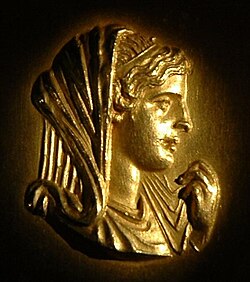
Alexander was born in July 356 BC in Pella, the capital of Macedon. He was the son of King Philip II, a visionary leader who modernized the Macedonian army, and Olympias of Epirus. His upbringing was a blend of royal expectation and intellectual curiosity.
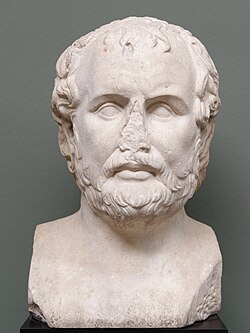
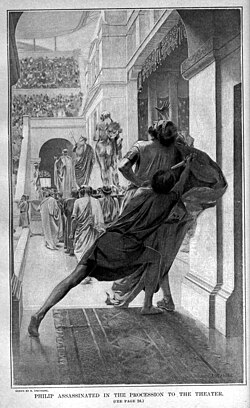
Under the tutelage of some of the finest minds of the era, Alexander developed a deep appreciation for Greek literature and strategy. However, his path to the throne was not without turmoil. Following the assassination of Philip II by Pausanias, Alexander ascended to the throne in 336 BC.
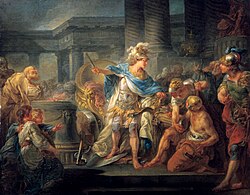
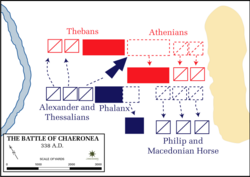
To secure his position, Alexander first consolidated power within Macedon and suppressed revolts in the Balkans. He famously demonstrated his resolve by destroying Thebes, sending a clear message to the Greek city-states that the new king of Macedon would not tolerate defiance.
The Conquest of the Persian Empire
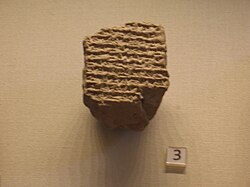
![Administrative document from Bactria dated to the seventh year of Alexander's reign (324 BC), bearing the first known use of the "Alexandros" form of his name, Khalili Collection of Aramaic Documents[102]](/images/df/ed/dfed06db32193f7a1bebca99ed2d9df73789e2c67921a41503df37512141a3e1.jpg)
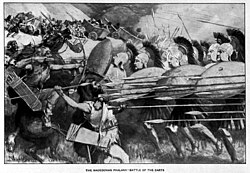
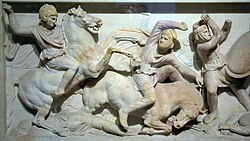
Alexander's primary ambition was the dismantling of the Achaemenid Persian Empire. His strategy relied on the Macedonian phalanx—a dense formation of infantry armed with long pikes called sarissas—and a highly mobile companion cavalry.
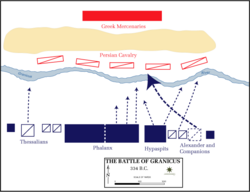
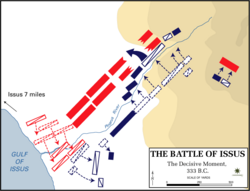
The campaign began in 334 BC with the crossing into Asia Minor. Through a series of decisive victories at the Granicus, Issus, and Gaugamela, Alexander systematically dismantled the forces of Darius III. Along the way, he overcame formidable obstacles, including the grueling siege of Tyre and the crossing of the Persian Gates.

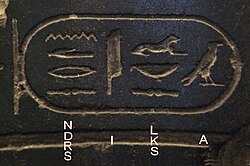
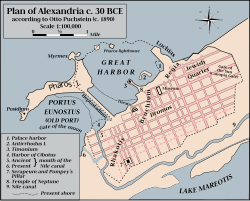
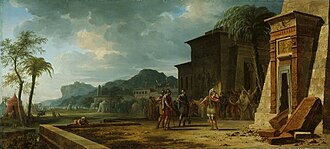
In 332 BC, Alexander entered Egypt, where he was welcomed as a liberator from Persian rule and crowned Pharaoh. It was here that he founded the city of Alexandria, which would become the intellectual center of the Mediterranean world for centuries.
The fall of the Persian Empire culminated in the capture of Babylon and the eventual death of Darius III. By the time Alexander reached the eastern provinces, he had created the largest state of its time.
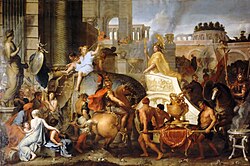
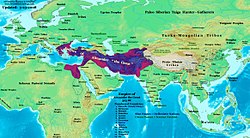
The Indian Campaign and the Limits of Empire
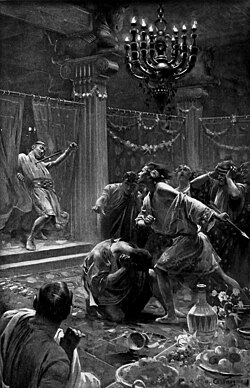
Driven by an insatiable desire to reach the "ends of the world," Alexander pushed his army into the Indian subcontinent. He faced new challenges, including the war elephants of King Porus at the Battle of the Hydaspes.
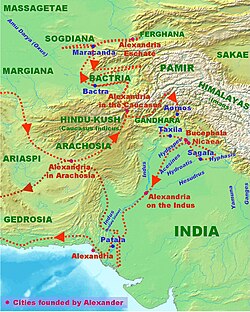
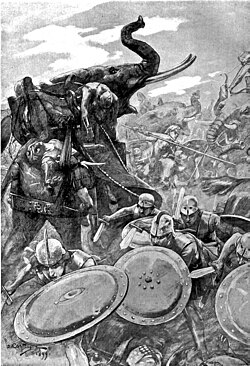
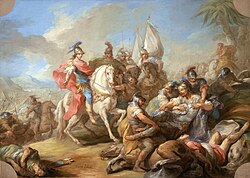
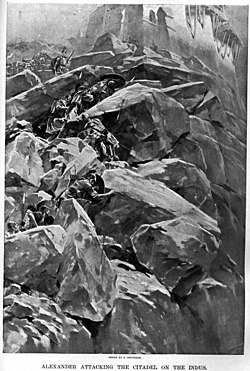
Despite his tactical brilliance and victories at the Siege of Aornos, the campaign took a heavy toll on his men. After years of continuous marching and fighting, the Macedonian army revolted, refusing to go further east. Alexander was forced to turn back, beginning a long journey home through the Gedrosian Desert.
Death and the Division of the Empire
![Silver tetradrachm of Alexander the Great struck by Balakros or his successor Menes, both former somatophylakes (bodyguards) of Alexander, when they held the position of satrap of Cilicia in the lifetime of Alexander, c. 333–327 BC. The obverse shows Heracles, ancestor of the Macedonian royal line and the reverse shows a seated Zeus Aëtophoros.[122]](/images/a7/f5/a7f520c1462944ec9ff91b39fc1c06b1ed7f6b4d5dd1f932c62a27e7cebc3d6e.jpg)
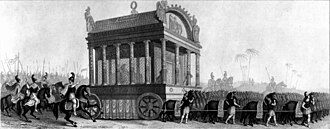
Alexander died unexpectedly in Babylon in June 323 BC at the age of 32. The cause of his death remains a subject of historical debate, with theories ranging from illness and malaria to poisoning.
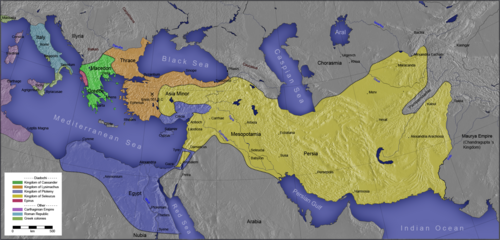
Because he left no clear heir of age to manage the vast territories, his empire was torn apart by his generals, known as the Diadochi (Successors). This period of conflict eventually split the empire into several Hellenistic kingdoms, most notably the Ptolemaic Kingdom in Egypt and the Seleucid Empire in Asia.
Legacy and Cultural Impact
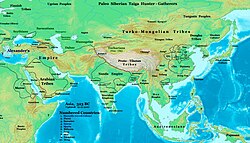
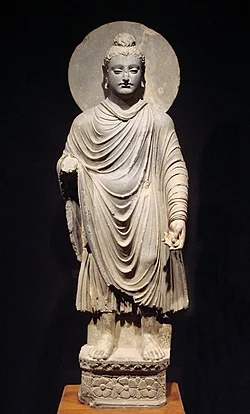
Alexander's most enduring achievement was the fusion of Greek and Eastern cultures. This era of Hellenism saw the establishment of Greek-style cities across Asia, the adoption of the Greek language for administration, and a unique artistic synthesis. This influence is evident even in the Greco-Buddhist art of Gandhara, where Buddhist figures were depicted with Greek aesthetic sensibilities.
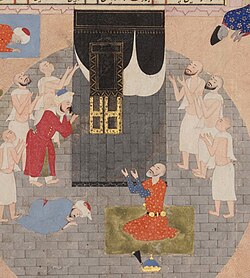
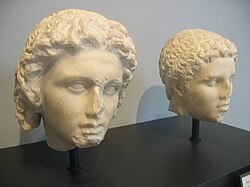
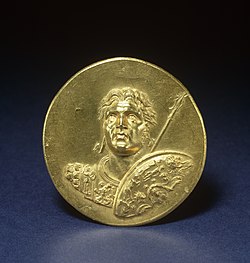
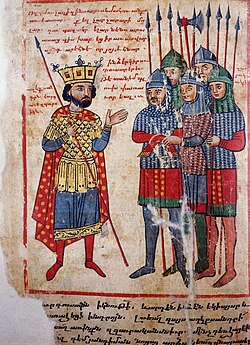
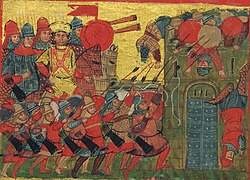
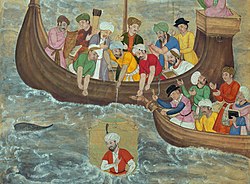
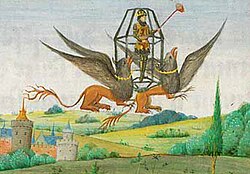
His image and legend persisted long after his death, influencing the Roman Republic and appearing in the manuscripts of Byzantine, Armenian, and Islamic traditions.
| Category | Details |
|---|---|
| Dynasty | Argead |
| Key Battles | Granicus, Issus, Gaugamela, Hydaspes |
| Major Cities Founded | Alexandria (Egypt), and numerous others across Asia |
| Spouses | Roxana, Stateira, Parysatis |
| Primary Successors | The Diadochi (Ptolemy, Seleucus, etc.) |
Frequently Asked Questions
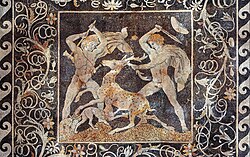
![Alexander (left), wearing a kausia and fighting an Asiatic lion with his friend Craterus (detail); late 4th century BC mosaic,[197] Pella Museum](/images/10/fa/10fa9d1de594f0d994ffb9a4a33fc23b65569d0ff2d03f605d9e1947a9e84243.jpg)
![The Hellenistic world view: world map by Eratosthenes (276–194 BC), using information from the campaigns of Alexander and his successors[273]](/images/c5/6b/c56ba6f5d83e4dbac722657794d856f8a9ba6c5e4030e4fb899441c8ca69d63c.jpg)
![Dedication of Alexander the Great to Athena Polias at Priene, now housed in the British Museum[278]](/images/8b/50/8b507a7e502d185f55e7ebd40cfa433a0947b3c688c136fb4a8e543c3603cf81.jpg)
How did Alexander the Great die?
Alexander died in Babylon in 323 BC. While ancient sources offer various accounts, modern historians debate whether he succumbed to a sudden illness, such as malaria or typhoid fever, or if he was poisoned.
What was the Macedonian phalanx?
The phalanx was a military formation consisting of infantry soldiers standing close together in a dense block, armed with the sarissa—a long pike that allowed them to strike enemies before the enemy could reach them.
What is Hellenization?
Hellenization refers to the spread of Greek language, culture, and architecture across the regions conquered by Alexander, creating a cultural synthesis between the Greek world and the Near East.
Who were the Diadochi?
The Diadochi were Alexander's generals and successors who fought a series of wars after his death to divide his massive empire into smaller, independent kingdoms.
Did Alexander ever lose a battle?
Historically, Alexander is recorded as having never lost a major pitched battle, regardless of the size of the opposing army or the terrain.