Alcácer-Ceguer: The Portuguese Conquest and Aftermath
The fall of Ksar es-Seghir, later known to the Portuguese as Alcácer-Ceguer, marked a significant shift in the geopolitical landscape of the 15th century. The success of the Portuguese conquest was driven by a combination of superior military technology and strategic hesitation from the opposing Moroccan forces.
The Fall of the City
The Portuguese victory was largely attributed to the superiority of their artillery. While the Portuguese fleet moved to siege the city, the King of Fez, Abd al-Haqq II (referred to in Portuguese as Abdalaque), was preoccupied with preparations for an attack on Tlemcen. Consequently, he kept his army in Tangier upon first learning of the fleet's presence.
Although Abd al-Haqq II eventually marched to relieve Ksar es-Seghir, he failed to reach the city before it fell. Rather than attempting a direct assault against the established Portuguese position, he retreated to organize a future siege.
Military Escalation and Failed Sieges
Following the conquest, Afonso V relocated to Ceuta. In an attempt to provoke a decisive engagement, he dispatched an embassy to the Sultan of Fez with a "polite letter" challenging him to a pitched battle. However, this diplomatic gesture was met with hostility; Portuguese ships were fired upon as they entered the harbor of Tangier.
The Sultan attempted to reclaim the city through a formal siege of Alcácer-Ceguer, which lasted from November 13, 1458, to January 2, 1459. Despite these efforts, the Sultan was unsuccessful in recovering the city from Portuguese control.
Fortification and Religious Transformation
Once the immediate threat of the siege was neutralized, the Portuguese focused on restoring and reinforcing the city's defenses. A notable cultural shift occurred when the local mosque was converted into a church dedicated to Santa Maria da Misericórdia. This church was granted to the Order of Christ, a powerful military-religious order, through the initiative of Prince Henry.
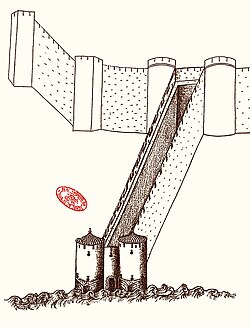
The city remained under Portuguese control for much of the following century. In 1502, the Portuguese expanded the town's defenses by constructing new fortifications that extended the walls into the sea. This strategic move ensured a secure landing ground for expeditionary forces and reinforcements.
Political Turmoil in Fez
The loss of the city coincided with violent political instability within the Moroccan leadership. In 1459, Abd al-Haqq II orchestrated a massacre of the Wattasid family to consolidate his power. However, his reign ended brutally in 1465 when he was murdered during a revolt.
This revolt signaled the end of the Marinid dynasty. Muhammad ibn Ali Amrani-Joutey, leader of the Sharifs, was proclaimed Sultan in Fes. His rule was short-lived, as he was overthrown in 1471 by Abu Abd Allah al-Sheikh Muhammad ibn Yahya. As one of only two surviving members of the Wattasid family from the 1459 massacre, he established the Wattasid dynasty.
Key Facts
- Military Edge: Portuguese superiority in artillery was a decisive factor in the conquest.
- Strategic Failure: Abd al-Haqq II failed to reach Ksar es-Seghir in time to prevent its fall.
- Failed Recovery: A siege by the Sultan from November 1458 to January 1459 failed to retake the city.
- Infrastructure: In 1502, walls were extended into the sea to secure landing grounds.
- Population: The resident Portuguese population of the town reached approximately 800 people.
- Dynastic Shift: The period saw the transition from the Marinid dynasty to the Wattasid dynasty.
| Year/Period | Event | Outcome |
|---|---|---|
| 1458–1459 | Sultan's Siege of Alcácer-Ceguer | Portuguese retained control |
| 1459 | Wattasid Family Massacre | Abd al-Haqq II consolidated power |
| 1465 | Revolt in Fez | Death of Abd al-Haqq II; End of Marinid dynasty |
| 1471 | Rise of Abu Abd Allah al-Sheikh Muhammad | Establishment of the Wattasid dynasty |
| 1502 | Construction of new fortifications | Secure sea landing for reinforcements |
Frequently Asked Questions
Why was the Portuguese conquest of Ksar es-Seghir successful?
The success was due to the superior Portuguese artillery and the delayed response of the King of Fez, Abd al-Haqq II, who was initially focused on an attack on Tlemcen.
What happened to the religious buildings in the city after the conquest?
The city's mosque was transformed into a church called Santa Maria da Misericórdia and was granted to the Order of Christ by Prince Henry.
How did the Portuguese secure the city for future reinforcements?
In 1502, they built new fortifications that extended the town's walls into the sea, creating a safe landing area for expeditionary forces.
What dynastic changes occurred in Morocco during this period?
The Marinid dynasty ended following the 1465 revolt and the death of Abd al-Haqq II. After a brief period under the Sharifs, the Wattasid dynasty was established in 1471.
How many Portuguese residents lived in the town?
The resident population under Portuguese rule reached approximately 800 persons.