Alawites: History, Beliefs, and Political Influence in the Levant
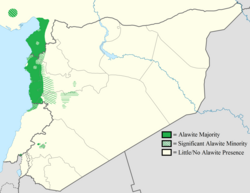
The Alawites are a distinct religious and ethnic community primarily concentrated in the Levant, with a global population of approximately 4 million. While most closely associated with Syria, their presence extends into Turkey, Lebanon, and diaspora communities in Argentina, Germany, and Australia. Their history is one of survival, evolving from a secretive minority to a dominant political force in modern Syria.
Key Facts

- Total Population: Approximately 4 million worldwide.
- Primary Regions: Syria (2–3 million), Turkey (500,000–1,000,000), and Lebanon (150,000).
- Founders: Attributed to Ibn Nusayr and Al-Khasibi.
- Languages: Levantine Arabic and Turkish.
- Political Status: Historically the dominant group in the Syrian government under the Assad family.
Origins and Etymology
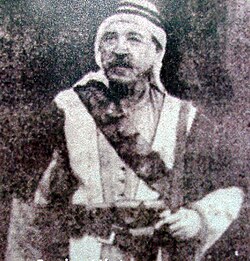
The genealogical origins of the Alawites remain a subject of academic and folkloric debate. Local tradition suggests they are descendants of the followers of the eleventh Imam, Hasan al-Askari, and his pupil, Ibn Nusayr. Conversely, some Western scholars in the 19th and 20th centuries theorized that the group descended from ancient Middle Eastern peoples, including the Arameans, Canaanites, Hittites, and Mardaites. Additionally, several prominent Alawite tribes trace their lineage to 13th-century settlers from Sinjar.
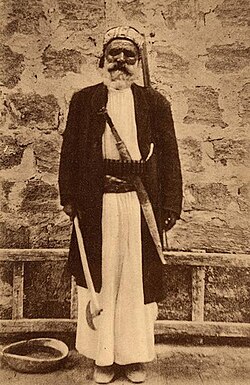
Historical Evolution
Medieval Period and the Crusades
During the initial Crusader entry into Syria in 1097, many Alawites were killed. However, as the Crusaders came to view them as a non-Islamic sect, a level of tolerance emerged, and some Alawites were even incorporated into Crusader ranks alongside Maronites and Turcopoles. The community was later uplifted by leaders such as Shaykhs al-Makzun (d. 1240) and al-Tubani (d. 1300), both originating from Mount Sinjar in modern-day Iraq.
The French Mandate and the Alawite State
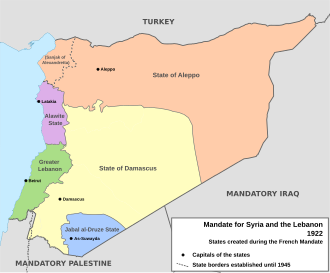
Following the collapse of the Ottoman Empire, the French Mandate period saw the creation of a specific Alawite State (approximately 1920–1936) in northwest Syria. This period of colonial rule provided a distinct administrative identity for the community before the region moved toward Syrian independence.

Political Power and the Assad Era
![Syrian actress Fadwa Souleimane became one of the most recognized faces of the Syrian Revolution.[98]](/images/19/16/1916e8fc0c2d91a4fb27aa4051dc5400e625519e64ef8bb861bcad19b9bf9dab.jpg)
The trajectory of the Alawite community changed drastically in 1971 when Hafez al-Assad declared himself president of Syria. Because the constitution at the time restricted the presidency to Sunni Muslims, a new constitution was adopted in 1973. To resolve religious requirements, Musa as-Sadr, a Lebanese Twelver Shiite leader, issued a fatwa (religious decree) in 1974 declaring Alawites to be a community of Twelver Shiite Muslims.

Sectarian Conflict and the Hama Massacre
The rise of Alawite political power met fierce resistance from the Muslim Brotherhood, an Islamist group. This tension escalated in the 1970s and 1980s, marked by events such as the 1979 Aleppo Artillery School massacre, where 32 cadets (mostly Alawites) were killed. The regime responded with extreme violence, including the slaughter of Brotherhood members at Tadmor Prison.
The conflict culminated in the 1982 Hama massacre, where the regime deployed 6,000 to 8,000 troops to suppress an insurgency. Up to 25,000 people were killed over 27 days. To ensure loyalty, the regime ensured Alawite dominance in the military units used; Rifaat al-Assad's Defense Companies were reported to be 90% Alawite.
The Syrian Civil War and Recent Events
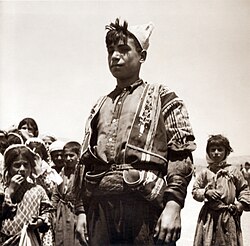
The outbreak of the Syrian civil war in 2011 reignited long-standing sectarian resentments. While the Alawite community largely remained the backbone of the Assad regime, they also suffered significant losses. Reports indicate that as many as 150,000 Alawites were killed during the six-year conflict.
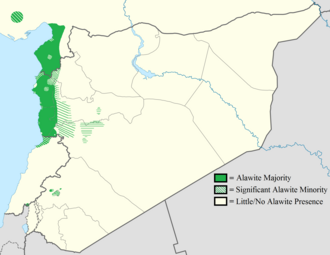
In March 2025, reports from the Syrian Observatory for Human Rights (SOHR) indicated a massacre of over 1,500 Alawite civilians in western Syria. This violence, described by some as ethnic cleansing, led nearly 13,000 Alawites to flee across the Nahr al-Kabir into Lebanon.
Beliefs and Theology
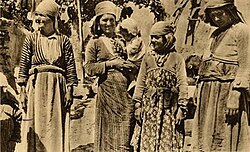
Alawite theology is complex and often secretive. A central tenet is the belief in reincarnation. Their spiritual framework is organized around a series of eras, each defined by a Meaning (Ma'na), a Name (Ism), and a Gate (Bab).
| Era | Ma'na (Meaning) | Ism (Name) | Bab (Gate) |
|---|---|---|---|
| 1 | Abel | Adam | Gabriel |
| 2 | Seth | Noah | Yail ibn Fatin |
| 3 | Joseph | Jacob | Ham ibn Kush |
| 4 | Joshua | Moses | Dan ibn Usbaut |
| 5 | Asaph | Solomon | Abd Allah ibn Siman |
| 6 | Simon Peter | Jesus | Rawzaba ibn al-Marzuban |
| 7 | Ali | Muhammad | Salman al-Farisi |
![The Shrine of Khidr, located near the Syria-Turkey border, is a notable Alawite shrine frequently visited by people from multiple cities.[210]](/images/3d/2f/3d2f1925478b26e05214fb4bcab3f81161742f3c1880fea7f86ceee31a475783.jpg)
Global Distribution
While Syria remains the heartland, Alawites exist in several other regions:
- Turkey: A population of 500,000 to 1,000,000.
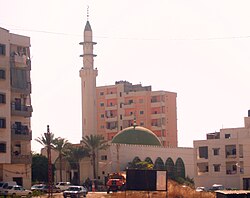
- Lebanon: Approximately 150,000 people, including a presence in Tripoli's Jabal Mohsen neighborhood.
- Golan Heights: A community of about 3,900 lives in the village of Ghajar. Following the 1967 war and subsequent Israeli administration, many became Israeli citizens.
Frequently Asked Questions
Who are the Alawites?
Alawites are a religious and ethnic group primarily located in Syria and Turkey, with a theology that incorporates elements of Shia Islam and beliefs in reincarnation.
What is the relationship between Alawites and the Assad family?
The Assad family belongs to the Alawite sect. Since 1971, they have held the presidency of Syria, utilizing Alawite loyalty within the military and security apparatus to maintain power.
Are Alawites considered Muslims?
This is a subject of debate. While some scholars and external observers view them as a separate sect, a 1974 fatwa by Musa as-Sadr officially recognized them as Twelver Shiite Muslims to satisfy Syrian constitutional requirements.
Where do Alawites live outside of Syria?
Significant populations reside in Turkey and Lebanon. There are also notable diaspora communities in Argentina, Germany, and Australia.
What is the significance of the Hama massacre?
The 1982 Hama massacre was a brutal suppression of an insurgency by the Muslim Brotherhood. It solidified the Assad regime's control but left deep, enduring sectarian resentments between Sunni and Alawite populations.