Alaska Native Art: From Utilitarian Roots to Contemporary Expression
For the indigenous peoples of Alaska, the concept of "art" as a purely decorative pursuit did not traditionally exist. Instead, creativity was woven into the fabric of daily survival. Objects were primarily utilitarian, designed for specific functions, yet they were adorned with imagery that conveyed spiritual beliefs or physical activities. This seamless blend of form and function reflects a deep-seated relationship with the natural world.
The Influence of Global Trade
The transition toward non-utilitarian art began in the 17th century when indigenous people of coastal Alaska first encountered Europeans and Asians. These interactions introduced a trade economy where native objects were exchanged for metal implements, cloth, and foodstuffs such as sugar, flour, and tea.
Initially, traded items were valued for their practical utility. These included clothing woven from grass, rainproof outerwear crafted from seal intestine membranes, and warm, durable animal skins. Harpoon tips carved from walrus ivory tusks were also highly prized for their functionality.
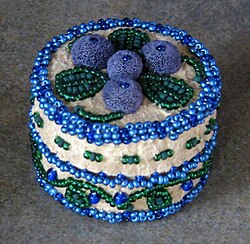
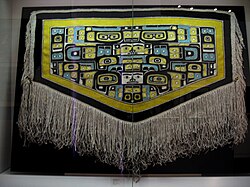
Over time, these items became more decorative to increase their trade value. A notable example is the etching of hunting scenes onto walrus tusks; this technique later became known as scrimshaw after it was brought to New England by whaling ships. As trade beads arrived, intricate beadwork patterns emerged. Ceremonial regalia—including masks, hats, dance fans, and woven clothing—became sought-after souvenirs for explorers and whalers throughout the 17th, 18th, and 19th centuries. Even the massive totem poles of Southeastern Alaska were transported to the East Coast of the United States, forming the foundation of various museum collections.
Cultural Diversity and Natural Harmony
While Alaska Native art is unified by a theme of harmony with nature, it is produced by diverse cultures with distinct styles. These include the Athabaskan Indians of the Interior, the Inupiaq of the Northwestern Arctic coasts, the Yupik and St. Lawrence Island Yupik of the Bering Sea coast, the Aleuts and Alutiiq of the Aleutian islands, and the Northwest Coastal tribes, including the Tlingit, Haida, and Tsimshian.
A core tenet of these cultures is the avoidance of waste. Every part of a hunted or fished animal was utilized. For instance, mukluks (traditional boots) might feature soles made of bearded seal skin, an outer layer of salmon skin, and straps of caribou or deerskin, sometimes dyed with natural berries.
Evolution Toward Contemporary Art
The trajectory of Alaska Native art has been shaped by shifting political landscapes, from the era of Russian America in the 17th century to the establishment of the Alaska Territory in 1867, and finally the admission of Alaska as the 49th U.S. state in 1959. These periods of "westernization" drove the evolution of artistic forms.
Today, the line between "traditional" and "contemporary" Native art is increasingly blurred. Modern galleries showcase a wide spectrum of work, ranging from international styles—such as life-size bronze castings, marble sculptures, three-dimensional mobiles, and large-scale paintings—to traditional crafts. These include bears carved from whalebone, cribbage boards made from walrus tusks, and jewelry crafted from silver and copper.
Artisans continue to use indigenous materials, such as nephrite jade and musk ox horns for bracelets, coastal white cedar for bentwood boxes, and various natural fibers—including spruce root, birch bark, beach grasses, and bowhead whale baleen—for intricate basketry.
Key Facts
- Origins: Art began as utilitarian objects decorated with spiritual or physical imagery.
- Trade Impact: Contact with Europeans and Asians in the 17th century shifted art toward decorative styles to increase trade value.
- Scrimshaw: The practice of etching walrus ivory originated with coastal Alaskan peoples before reaching New England.
- Sustainability: Traditional crafts emphasize zero waste, utilizing every part of animals (e.g., seal, salmon, and caribou).
- Materials: Common materials include whalebone, walrus tusk, nephrite jade, cedar, and bowhead whale baleen.
| Material | Common Application | Cultural/Functional Context |
|---|---|---|
| Walrus Ivory | Harpoon tips, Scrimshaw, Cribbage boards | Utilitarian tool to decorative trade item |
| Seal Intestines | Outerwear | Rainproofing |
| Bearded Seal/Salmon Skin | Mukluks (Boots) | Durability and protection |
| Coastal White Cedar | Bentwood boxes | Traditional storage and art |
| Baleen/Spruce Root/Bark | Baskets | Intricate weaving |
Frequently Asked Questions
Did Alaska Native people originally create art for decoration?
No. Historically, art as a purely decorative concept did not exist; objects were created for utilitarian purposes and decorated to convey spiritual or physical activity.
What is scrimshaw and where did it originate?
Scrimshaw is the technique of etching scenes into walrus tusks. It originated with the coastal people of Alaska and was later brought to New England by whaling ships.
Which indigenous groups contribute to Alaska Native art?
The art forms are created by various groups, including the Athabaskan, Inupiaq, Yupik, St. Lawrence Island Yupik, Aleut, Alutiiq, Tlingit, Haida, and Tsimshian peoples.
How has the definition of Alaska Native art changed over time?
It has evolved from purely functional tools to decorative trade items, and now encompasses a blend of traditional crafts and contemporary international art forms like bronze casting and marble sculpture.
What materials are used in traditional Alaskan basketry?
Baskets are woven from a variety of natural materials, including birch bark, spruce root, beach grasses, and the baleen from bowhead whales.