Al-Mutanabbi: The Master Poet of the Islamic Golden Age
In the annals of world literature, few figures loom as large as Al-Mutanabbi (Abū al-Ṭayyib Aḥmad ibn al-Ḥusayn al-Mutanabbī al-Kindī). A towering figure of the Islamic Golden Age, he is widely regarded as one of the greatest and most influential poets in the Arabic language. Known for his sharp intelligence, wit, and an ego as vast as his talent, Al-Mutanabbi transformed the traditional qasida (a classical Arabic ode) into a more personal and neoclassical form.
His work, which has been translated into over 20 languages, continues to be read across the Arab world today, with many of his verses becoming proverbial in daily speech. From the battlefields of Asia Minor to the royal courts of Aleppo and Egypt, his life was a turbulent journey of political ambition and artistic brilliance.
Key Facts
- Born: c. 915 AD in Kufa, Iraq.
- Died: September 23, 965 AD in An Numaniyah, Iraq.
- Primary Focus: Arabic poetry, focusing on courage, life philosophy, and battle descriptions.
- Major Patron: Sayf al-Dawla, the Hamdanid emir of Aleppo.
- Legacy: His name is immortalized in Baghdad's Mutanabbi Street, a center for intellectual freedom.
Early Life and the "Would-be Prophet"
Born in Kufa during the Middle Abbasid era, Al-Mutanabbi showed an extraordinary aptitude for language early on, beginning to write poetry at the age of nine. He received his education in Damascus, Syria, and spent time among Bedouin tribes, such as the Banu Kalb, where he mastered their dialects and doctrines.
His early years were marked by political volatility. In 932, he led a Qarmatian revolt in Syria. Following the suppression of this uprising, he spent two years in prison under the Ikhshid governor of Homs. It was during this period of rebellion and subsequent recantation in 935 that he earned the nickname al-Mutanabbi, meaning "The Would-be Prophet," due to his claims of being a nabi (prophet).
The Golden Years in Aleppo
Al-Mutanabbi's career reached its zenith when he joined the court of Sayf al-Dawla, the Hamdanid poet-prince of northern Syria, in 948. Sayf al-Dawla was engaged in frequent conflicts with the Byzantine Empire in Asia Minor, and Al-Mutanabbi fought alongside him, using these experiences to fuel his poetry.
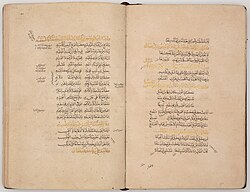
During his nine-year tenure in Aleppo, he composed 300 folios of poetry. These panegyrics—poems of praise—are considered masterpieces of Arabic literature. However, his stay was not without conflict; his political ambition to become a wali (governor) and his clashes with other court scholars and poets, such as Abu Firas al-Hamdani, eventually led to his fall from favor.
Exile in Egypt and Final Days
After leaving Syria, Al-Mutanabbi sought patronage in Egypt under Abu al-Misk Kafur. While he initially found a place at court, the relationship was strained by mutual mistrust. Kafur viewed the poet's ambitions as a threat to his own position, and Al-Mutanabbi realized his dreams of becoming a statesman would not be realized in Egypt.
Upon leaving Egypt around 960 AD, the poet turned his wit against his former patron, penning scathing satirical odes. His journey back to Iraq ended tragically; while traveling toward Baghdad, he was attacked by thieves and killed while resisting them in 965 AD.
Literary Legacy and Influence
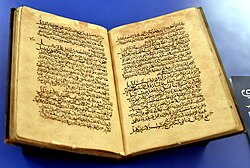
The impact of Al-Mutanabbi's work is evident in the scholarly attention it received shortly after his death. The grammarian Ibn Jinni wrote a detailed commentary titled al-Fasr ("The Explanation"), and the philosopher-poet Abu al-Ala al-Ma'arri wrote a book of exegesis on his work, referring to him affectionately as "our poet."
His style is noted for blending Iraqi and Syrian stylistics with classical features, providing a freer, more personal development of the ode. This neoclassical approach ensured that his work remained relevant long after the Abbasid Caliphate fragmented.
Mutanabbi Street: A Living Monument
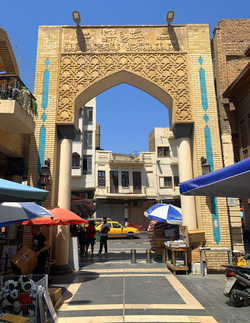
In 1932, a one-kilometer bookselling street in Baghdad was named Mutanabbi Street to honor the poet. This car-free market is lined with bookstores and serves as a symbol of intellectual freedom and a gathering place for artists and dissenting voices.
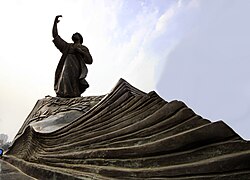
The street is marked by an arch adorned with the poet's quotes and concludes with a statue of Al-Mutanabbi overlooking the Tigris River.
| Period/Aspect | Details |
|---|---|
| Early Life | Born 915 in Kufa; educated in Damascus. |
| Political Activity | Led Qarmatian revolt (932); imprisoned in Homs. |
| Peak Career | Court of Sayf al-Dawla in Aleppo (948–957). |
| Later Years | Court of Abu al-Misk Kafur in Egypt; died 965. |
| Key Themes | Courage, philosophy of life, and battle descriptions. |
Frequently Asked Questions
Why was he called Al-Mutanabbi?
The name Al-Mutanabbi means "The Would-be Prophet." He earned this title because he claimed to be a nabi (prophet) during his time with the Qarmatians and Bedouin tribes.
Who was his most important patron?
His most significant patron was Sayf al-Dawla, the Hamdanid emir of Aleppo. Under his patronage, Al-Mutanabbi wrote some of his most famous panegyrics and participated in military campaigns against the Byzantine Empire.
What are the main themes of his poetry?
Al-Mutanabbi is best known for his poems regarding courage, the philosophy of life, and vivid descriptions of battles.
How did Al-Mutanabbi die?
He was killed in 965 AD while resisting thieves during his journey to Baghdad after leaving Egypt.
What is Mutanabbi Street?
Mutanabbi Street is a famous bookselling market in Baghdad, Iraq. Named in 1932, it is a hub for intellectuals, writers, and artists, symbolizing intellectual freedom.