Aisne River: History, Geography, and Navigation of a French Waterway
The Aisne is a significant river in northeastern France, serving as a vital left tributary of the Oise. Known in the Roman era as the Axona, the river is so central to its region that it gave its name to the French department of Aisne. From its origins in the dense forests of the east to its confluence in the west, the Aisne has shaped the geography, commerce, and military history of the region for millennia.
Key Facts
- Total Length: 356 kilometers (221 miles).
- Source: Forest of Argonne at Rembercourt-Sommaisne.
- Mouth: Joins the Oise river near Compiègne.
- Basin Size: 7,752 square kilometers.
- Historical Name: Axona (Roman period).
- Major Tributaries: Vesle, Aire, and Suippe.
Geography and Physical Characteristics
The Aisne begins its journey in the forest of Argonne, specifically at Rembercourt-Sommaisne near Sainte-Menehould. The river follows a winding path, flowing initially north before turning west. Its drainage basin covers 7,752 square kilometers, with an average discharge of 63 cubic meters per second.
The river system is supported by numerous tributaries. On its left bank, it is joined by streams such as the Ruisseau de l'Étang Neuf, Boue, and Ante. On its right bank, it receives water from the Orne, Biesme, and Aire, among others.
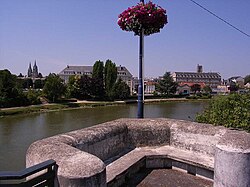
Major Settlements and Departments
As the river traverses northeastern France, it passes through several key departments and towns, including:
- Meuse and Marne (Sainte-Ménehould)
- Ardennes (Vouziers and Rethel)
- Aisne (Soissons)
- Oise (Compiègne)
Historical Significance
The Aisne valley has been a site of strategic military importance for over two thousand years. In 57 BC, the Battle of the Axona took place near the river, pitting the Roman forces against the Belgae.
Centuries later, the landscape again became a theater of war during the First World War. The valley was the site of three distinct Battles of the Aisne, leaving a lasting mark on the region's history and topography.
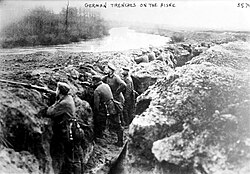
Navigation and Commercial Use
Human activity on the Aisne dates back to the Celtic period, when the river was used for commercial navigation. Until the mid-19th century, rafts were floated from points far above the current navigation limits at Vailly-sur-Aisne.
Modern canalization began in 1836, coinciding with the construction of the Canal latéral à l'Aisne. While the lateral canal was completed in 1841, river navigation was finalized two years later. Today, the waterway spans 57 kilometers from the Oise to the junction with the lateral canal, featuring seven locks.
Current traffic consists of a mix of commercial péniches (traditional French barges) capable of carrying 220 tonnes, as well as private recreational boats. Through the lateral canal, the river connects to the Marne and the Canal de la Meuse.
| Feature | Detail |
|---|---|
| Length | 356 km (221 mi) |
| Source Location | Champagne-Ardenne (Forest of Argonne) |
| Mouth Location | Oise River (near Compiègne) |
| Navigable Length | 57 km (35 mi) |
| Number of Locks | 7 |
| Average Discharge | 63 m/s |
Frequently Asked Questions
What is the Roman name for the Aisne river?
During the Roman period, the river was known as the Axona.
Where does the Aisne river originate?
The river rises in the forest of Argonne at Rembercourt-Sommaisne, near Sainte-Menehould.
Which river does the Aisne flow into?
The Aisne is a left tributary of the Oise river, joining it near the town of Compiègne.
What is the Canal latéral à l'Aisne?
It is a canal completed in 1841 that runs alongside the river, linking the Aisne with the Marne and the Canal de la Meuse to facilitate transport.
What military conflicts occurred along the Aisne?
The river was the site of the Battle of the Axona in 57 BC and three separate Battles of the Aisne during World War I.