Ahura Mazda: The Evolution of the Supreme Deity in Zoroastrianism
Ahura Mazda, the "Wise Lord," stands as the central figure of Zoroastrianism and a cornerstone of ancient Iranian spirituality. From the royal inscriptions of the Achaemenid kings to the modern interpretations of the Parsi community, the perception of this deity has shifted through various theological lenses, reflecting the political and social changes of the Persian world.
The Achaemenid Empire: Royal Devotion
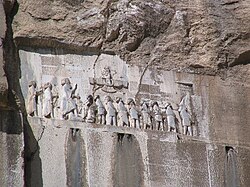
While historians continue to debate whether the Achaemenids were strictly Zoroastrians, there is no doubt they were devoted worshipers of Ahura Mazda. This deity was frequently invoked in royal inscriptions to legitimize the authority of the kings. The most prominent example is the Behistun Inscription, commissioned by Darius the Great, which contains numerous references to the deity.
Evidence of this worship extends beyond royal decrees. In a late Achaemenid temple at Persepolis, a Greek inscription invokes Ahura Mazda alongside two other deities: Mithra and Anahita. Furthermore, the Persepolis Fortification Tablets (dated 509–494 BC) record specific offerings to Ahura Mazda in the Elamite language.
Early Iconography and Symbols
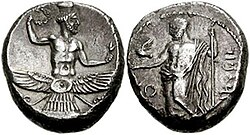
In the early Achaemenid period, Ahura Mazda was not represented by human-like images. A winged symbol featuring a male figure, once thought to be the deity, is now believed by scholars to represent the khvarenah—the personification of divine power and regal glory. Interestingly, emperors from Cyrus to Darius III maintained a tradition of including an empty chariot drawn by white horses in their armies, serving as a symbolic place for Ahura Mazda to accompany them into battle.
Visual representations of the deity only appeared later in the western satraps (provinces). By 365 BC, during the reign of Artaxerxes II, a Persian governor in Lydia commissioned the first known statue and literary reference to the deity's image.
The Parthian and Sasanian Eras
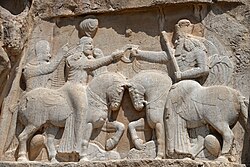
The reverence for Ahura Mazda, Mithra, and Anahita persisted into the Parthian Empire. However, the transition to the Sasanian period marked a significant shift toward iconoclasm (the rejection of religious images), which eventually ended the use of symbolic images in worship. Despite this, Ahura Mazda continued to appear in Sasanian investiture scenes as a dignified male figure, often standing or on horseback.
The Rise of Zurvanism
During the Sasanian Empire, a divergent branch of the faith known as Zurvanism emerged and gained popularity, particularly among the royal lineage and under the reign of Shapur I. Zurvanism fundamentally altered the nature of the deity:
- It replaced Ahura Mazda as the "uncreated creator" with Zurvan (Time), the primary spirit.
- Ahura Mazda and Angra Mainyu (the destructive spirit) were reimagined as twin sons of Zurvan.
- The two spirits were viewed as having equal strength, though contrasting natures.
Despite the influence of Zurvanism, Sasanian kings remained devoted to Ahura Mazda. Five kings adopted the name Hormizd, and Bahram II established the title "Ohrmazd-mowbad." This devotion is still reflected in Zoroastrian prayers, which are performed in the presence of light (fire or the sun) and begin with the declaration that "Ohrmazd is Lord."
The Rashidun Caliphate and Monotheistic Shifts
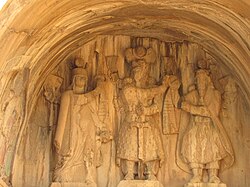
Following the Muslim conquest of Persia, Zoroastrians faced pressure to align their dualistic beliefs with the strict monotheism of Islam. To avoid mockery of the "two gods" doctrine, some sects, such as the Gayomarthians, attempted to mitigate dualism. These interpretations suggested that Ahura Mazda and Ahriman (Angra Mainyu) were both created from time, or that Ahriman was simply a corrupt angel who rebelled against Ahura Mazda.
Modern Interpretations and the Parsi Influence
In 1884, scholar Martin Haug proposed a new interpretation of the Yasna (sacred texts) that significantly impacted modern doctrine. Haug argued that Angra Mainyu was not a binary opposite to Ahura Mazda, but rather an emanation of Him—a "Destructive Spirit" contrasted with the "Bounteous Spirit" (Spenta Mainyu).
This theory was embraced by the Parsis of Bombay as a defense against Christian missionary critiques regarding the existence of an uncreated evil. By framing Angra Mainyu as a subordinate who used free will to choose evil, the Parsis shifted the theological narrative. Today, Haug's interpretation is widely accepted as standard doctrine in many circles.
Key Facts
- Primary Deity: Ahura Mazda is the "Wise Lord" and central figure of Zoroastrianism.
- Historical Evidence: The Behistun Inscription is a primary source of Achaemenid devotion.
- Symbolism: The khvarenah represents divine glory, while an empty chariot once symbolized the deity's presence in battle.
- Zurvanism: A Sasanian-era heresy that cast Ahura Mazda as the son of Zurvan (Time).
- Modern View: Many modern practitioners view the destructive spirit as a subordinate emanation of Ahura Mazda rather than an equal opposite.
| Period | Theological Status | Key Characteristic |
|---|---|---|
| Achaemenid | Supreme Deity | Invoked in royal inscriptions; no early human imagery. |
| Parthian | Revered Deity | Continued tradition with symbolic images. |
| Sasanian | Contested/Supreme | Rise of Zurvanism (son of Time) and iconoclasm. |
| Rashidun/Islamic | Adapted Deity | Shift toward monotheism to align with Islamic influence. |
| Modern (Parsi) | Absolute Creator | Evil viewed as a subordinate choice/emanation. |
Frequently Asked Questions
Did the Achaemenid kings use images of Ahura Mazda?
Not initially. Early Achaemenid art used symbols like the winged figure (khvarenah) or an empty chariot. Human-like representations of Ahura Mazda only appeared in the late 5th century BC, starting with the western satraps such as in Lydia.
What is Zurvanism?
Zurvanism was a divergent form of Zoroastrianism during the Sasanian Empire that proposed Zurvan (Time) as the primary spirit, making Ahura Mazda and Angra Mainyu twin sons of equal strength.
How did the Muslim conquest affect Zoroastrian beliefs?
The emphasis on monotheism in Islam led some Zoroastrian sects to diminish the role of Ahriman (the evil spirit) to avoid the appearance of worshipping two gods, framing evil as a rebellion or a creation of time.
Who was Martin Haug and why is he important?
Martin Haug was a scholar whose 1884 interpretation of the Yasna suggested that the destructive spirit was an emanation of Ahura Mazda. This provided a theological defense for the Parsi community against external critiques and shaped modern doctrine.
What is the significance of the Behistun Inscription?
The Behistun Inscription, written by Darius the Great, is one of the most important historical records showing the Achaemenid kings' invocation of and devotion to Ahura Mazda.