African Methodist Episcopal Church
The African Methodist Episcopal (AME) Church is a prominent Protestant denomination with a deep-rooted history of faith, resilience, and social justice. Founded as a sanctuary for African Americans facing systemic discrimination, the AME Church has evolved from a small gathering of congregations into a global institution with millions of members and a profound influence on education and civil rights.
Rooted in Wesleyan-Arminian theology—a branch of Christian thought emphasizing free will and the grace of God available to all—the AME Church operates under a system of connexionalism, which emphasizes the interconnectedness of its various congregations and districts.
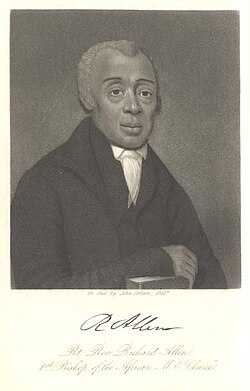
Key Facts
- Founder: Richard Allen (1760–1831).
- Established: 1787 (growing out of the Free African Society).
- Headquarters: Nashville, Tennessee.
- Membership: Estimated between 2.5 and 3.5 million members.
- Global Reach: Approximately 7,000 congregations worldwide.
- Primary Focus: Spiritual growth, education, and the fight against racial discrimination.
Origins and Early History
The AME Church was born out of a necessity for dignity and equality. In 1787, Richard Allen, a previously ordained deacon in the Methodist Episcopal Church, called together five African American congregations to escape the discrimination prevalent in society and within the church. Unlike many denominations that split over theological disputes, the AME Church was founded specifically to address racial injustice.
In 1793, Allen led a group to form the Bethel African Methodist Episcopal Church, which was dedicated in 1794 with Allen serving as pastor. To ensure the church's autonomy, Allen successfully sued in Pennsylvania courts in 1807 and 1815, securing the right for his congregation to exist independently of white Methodist congregations.
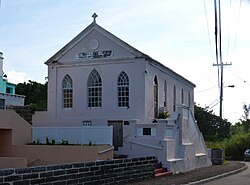
By 1816, the first General Conference of these churches—spanning Philadelphia, Delaware, and Baltimore—ordained Richard Allen as the denomination's first bishop. This established the foundation for a rapid expansion across the American South and West, particularly following the American Civil War.
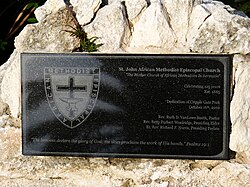
Growth and Social Contribution
The Pursuit of Education
The AME Church has historically placed a high premium on literacy and learning. During the 19th century, the church collaborated with the Methodist Episcopal Church to sponsor Wilberforce University in Ohio, the second independent historically black college (HBCU) in the United States.
By 1880, the AME Church operated over 2,000 schools, primarily in the South, serving 155,000 students. Because segregated public schools were chronically underfunded, the church used its own buildings as schoolhouses, with ministers and their wives serving as teachers and congregations providing the necessary funding.
Leadership and Political Influence
Following the Civil War, leaders like Bishop Henry McNeal Turner (1834–1915) bridged the gap between faith and politics. Turner served as the first black chaplain in the United States Colored Troops in 1863 and later worked with the Freedmen's Bureau in Georgia. A member of the state legislature during Reconstruction, Turner was instrumental in planting numerous AME churches throughout Georgia.
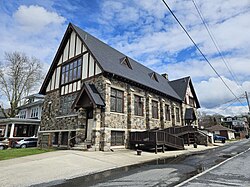
Organizational Structure and Governance
The AME Church is governed by a structured hierarchy designed to maintain unity across its vast network. Key governing bodies include the General Conference, the Council of Bishops, the Board of Incorporators, the General Board, and the Judicial Council.
The denomination is led by bishops who oversee specific episcopal districts. Notable historical figures known as the "Four Horsemen" of the AME episcopacy include Richard Allen, William Paul Quinn, Daniel Payne, and Henry McNeal Turner.
![President Barack Obama and First Lady Michelle Obama attend a church service at Metropolitan African Methodist Episcopal Church in Washington, D.C., on January 20, 2013.[30]](/images/e5/a9/e5a903e690af3c8cb7e36f27c71e350ba106fa2e886be7b1e4b4ba520bc21a74.jpg)
Denominational Summary
| Category | Details |
|---|---|
| Classification | Protestant (Methodist) |
| Theology | Wesleyan-Arminian |
| Polity | Connexionalism |
| Estimated Members | 2.5–3.5 Million |
| Number of Congregations | ~7,000 |
| Key Affiliations | World Methodist Council, World Council of Churches |
Contemporary Doctrine and LGBTQ+ Perspectives
In recent decades, the AME Church has engaged in ongoing discernment regarding LGBTQ+ matters. In 2004, the church voted to forbid ministers from blessing same-sex unions, citing scriptural interpretations. However, the church also established a sexual ethics discernment committee to study these issues.
While the 2021 and 2024 General Conferences voted against allowing same-sex marriage within the church, the 2021 conference confirmed that LGBTQ+ individuals are not barred from serving as pastors or leading the denomination. The sexual ethics discernment committee has been extended through 2028 to continue its recommendations.
Educational Institutions
The AME Church continues to support a wide array of academic institutions:
- Senior Colleges: Allen University, Edward Waters College, Morris Brown College, Paul Quinn College, and Wilberforce University.
- Junior Colleges: Shorter College.
- Theological Seminaries: Dickerson-Green, Jackson, Payne, and Turner Theological Seminaries.
- International Institutions: African Methodist Episcopal University (Liberia) and RR Wright Theological Seminary (South Africa).
Frequently Asked Questions
Who founded the AME Church and why?
The AME Church was founded by Richard Allen in 1787. It was established to provide a place of worship for African Americans to escape the racial discrimination they experienced in other churches and society.
What is the difference between the AME and AME Zion churches?
While both are major African-American Methodist denominations, they have different origins. The AME Church grew out of the Free African Society and Mother Bethel AME, whereas the AME Zion Church is a separate entity with its own distinct history.
How has the AME Church contributed to education?
The AME Church has been a pioneer in Black education, helping to found Wilberforce University and operating thousands of schools in the South during the 19th century when public funding for Black students was nonexistent.
What is the church's current stance on LGBTQ+ clergy?
As of the 2021 General Conference, the AME Church does not bar LGBTQ+ individuals from serving as pastors or holding leadership positions, although it does not permit same-sex marriage within the church.
Where is the AME Church headquartered?
The headquarters of the African Methodist Episcopal Church is located in Nashville, Tennessee.