Adolf Seilacher: Pioneer of Trace Fossils and Constructional Morphology
Adolf "Dolf" Seilacher (1925–2014) was a towering figure in the field of paleontology, dedicating over 60 years to the study of evolutionary and ecological paleobiology. A German scientist whose influence spanned continents, Seilacher fundamentally changed how researchers interpret the history of life by shifting focus from the organisms themselves to the traces they left behind and the physical laws that govern their shapes.
His career was marked by a relentless curiosity about biostratinomy (the study of what happens to an organism between death and burial) and the conditions that allow for exceptional fossil preservation. From his early doctoral work at the University of Tübingen to his later tenure as an Adjunct Professor at Yale University, Seilacher challenged prevailing biological narratives with a rigorous, structuralist approach.
Key Facts
- Primary Expertise: Specialized in trace fossils, constructional morphology, and the Ediacaran biota.
- Major Concept: Established ichnofacies, which are assemblages of trace fossils used to determine ancient water depths.
- Terminology: Coined the term Lagerstätten to describe sedimentary deposits with extraordinary fossil preservation.
- Theoretical Approach: Promoted structuralism and the concept of pneu structures (fluid-filled structures under tension).
- Notable Awards: Recipient of the Crafoord Prize (1992) and the Paleontological Society Medal (1993).
The Science of Trace Fossils and Ichnofacies
Seilacher is perhaps most renowned for his revolutionary work on trace fossils—the geological records of biological activity, such as burrows, tracks, and trails. In 1967, he introduced the concept of ichnofacies. He proposed that specific groups of trace fossils are controlled primarily by bathymetry (water depth), allowing scientists to reconstruct ancient marine environments.
Over time, this framework expanded to include other environmental variables such as salinity, oxygen levels, and the nature of the substrate. Seilacher also integrated technology into his research, collaborating with David Raup in 1969 to create early computer simulations of trace fossil morphology to better understand the behaviors of extinct organisms.
Constructional Morphology and Structuralism
In 1970, Seilacher launched his program of "Konstruktions-Morphologie" (Constructional Morphology). He argued that the form of an organism is not solely the result of adaptation to the environment, but is determined by three intersecting factors:
- Ecological/Adaptive aspects: How the form helps the organism survive.
- Historical/Phylogenetic aspects: The constraints imposed by evolutionary ancestry.
- Architectural/Constructional aspects: The physical and geometric limits of biological materials.
This perspective provided a critical counterpoint to panadaptionism—the belief that every trait is an optimal adaptation. His work influenced prominent thinkers like Stephen Jay Gould and Richard Lewontin, particularly in their analysis of biological "spandrels" (phenotypes that are by-products of other structural changes rather than direct adaptations).
Pneu Structures and Self-Organization
Seilacher's interest in pattern formation led him to the theory of pneu structures. These are fluid-filled systems under tension where the final shape is determined by the need to distribute that tension evenly across the surface, similar to how a balloon or air mattress behaves.
Lagerstätten and the Ediacaran Controversy
Seilacher significantly advanced the study of taphonomy (the process of fossilization) by coining the term Lagerstätten. This term refers to sedimentary deposits that exhibit an exceptional concentration or quality of fossils. He developed a widely accepted classification scheme for these sites in 1985.
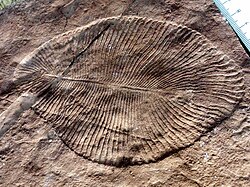
His most debated work concerned the Ediacaran biota—strange, soft-bodied organisms from the Proterozoic era. Seilacher and Friedrich Pflüger suggested that these were not early animals (metazoans) but were actually giant xenophyophores (large, single-celled rhizopodal protists) organized as pneu structures. While controversial and opposed by many, this theory highlighted the difficulty of classifying these ancient life forms.
Summary of Career and Contributions
| Category | Key Contribution / Detail |
|---|---|
| Core Concepts | Ichnofacies, Pneu structures, Constructional Morphology |
| Terminology | Lagerstätten |
| Academic Roles | University of Tübingen, University of Frankfurt, University of Baghdad, Yale University |
| Key Publications | Trace Fossil Analysis (2007) |
| Major Awards | Crafoord Prize, Raymond C. Moore Medal, Lapworth Medal |
Frequently Asked Questions
What are ichnofacies?
Ichnofacies are distinctive assemblages of trace fossils that are primarily controlled by environmental factors, most notably water depth (bathymetry), though they also reflect substrate, oxygen, and salinity.
What is a pneu structure?
A pneu structure is a fluid-filled biological form under tension. Its shape is determined by the physical requirement to distribute tension across its surface, rather than being solely a result of genetic adaptation.
What does the term Lagerstätten mean?
Lagerstätten is a German term coined by Seilacher to describe sedimentary deposits that contain fossils with extraordinary preservation or an unusually high concentration of specimens.
How did Seilacher view the Ediacaran biota?
Seilacher proposed that many Ediacaran organisms were not early animals but were instead giant single-celled protists known as xenophyophores, structured as pneu systems.
What is constructional morphology?
It is a study of biological form that emphasizes the role of architectural and historical constraints, arguing that the physical laws of construction limit the possible shapes an organism can evolve.