Admiral George Cuthbert Cayley: A Legacy of Naval and Aerial Command
Admiral George Cuthbert Cayley was a distinguished British military leader whose career spanned two of the most critical services in the United Kingdom's defense: the Royal Navy and the Royal Air Force (RAF). Serving during a period of immense technological transition in warfare, Cayley demonstrated versatility by commanding both naval vessels and early aerial divisions.
Early Naval Career and Command
Cayley began his journey with the Royal Navy in 1880. Over the following decades, he established himself as a capable leader, specializing in both the training of new recruits and the command of active warships. Between 1904 and 1913, he held several significant commands, including the boys' training ship HMS St Vincent, the HMS Blake, and the HMS Minotaur.
His commitment to naval education was further evidenced during the First World War, where he served as the commodore-in-charge and subsequently the rear admiral-in-charge of HMS Ganges, a specialized boys' training establishment located in Shotley.
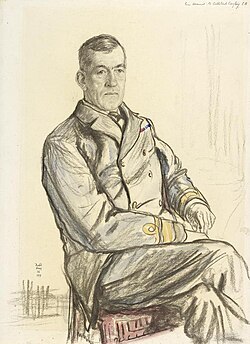
Transition to the Royal Air Force
As the nature of combat evolved, so did Cayley's role. On April 1, 1918, he transitioned from the sea to the sky by joining the newly formed Royal Air Force. He entered the RAF with the rank of major-general, a high-ranking officer responsible for strategic oversight.
During his tenure in the RAF, he served as the General Officer Commanding (GOC) for No 5 Area and later as the GOC for the North Western Area. This period marked a rare intersection of senior naval experience applied to the nascent field of military aviation.
Retirement and Final Honors
Cayley relinquished his temporary commission in the RAF on April 4, 1919, and officially entered the retired list of the Royal Navy on July 18, 1919. Despite his retirement from active duty, his professional ascent continued; he was promoted to the rank of admiral in November 1926.
His contributions to the war effort were recognized internationally. In the 1916 King's Birthday Honours, he was appointed a Companion of the Order of the Bath (CB). Additionally, the President of France awarded him the rank of Officer of the Légion d'honneur for his distinguished services during the war.
Key Facts
- Full Name: George Cuthbert Cayley, CB.
- Lifespan: August 30, 1866 – December 21, 1944.
- Naval Commands: HMS St Vincent, HMS Blake, HMS Minotaur, and HMS Ganges.
- RAF Roles: Major-General; GOC No 5 Area and GOC North Western Area.
- Highest Rank: Admiral (promoted 1926).
- Major Honors: Companion of the Order of the Bath and Officer of the Légion d'honneur.
| Period/Date | Organization | Role/Rank |
|---|---|---|
| 1880 | Royal Navy | Joined Service |
| 1904–1906 | Royal Navy | Commander, HMS St Vincent |
| 1910–1913 | Royal Navy | Commander, HMS Minotaur |
| 1918 (April 1) | Royal Air Force | Major-General / GOC |
| 1919 (July 18) | Royal Navy | Placed on Retired List |
| 1926 (November) | Royal Navy | Promoted to Admiral |
Frequently Asked Questions
When did George Cuthbert Cayley join the Royal Navy?
He joined the Royal Navy in 1880.
Which ships did Admiral Cayley command?
He commanded the HMS St Vincent (1904–1906), HMS Blake (1907), and HMS Minotaur (1910–1913), and served as the officer-in-charge of the training establishment HMS Ganges.
What role did he play in the Royal Air Force?
Cayley joined the RAF as a major-general on April 1, 1918, serving as the General Officer Commanding (GOC) for both No 5 Area and the North Western Area.
What honors was he awarded for his service?
He was appointed a Companion of the Order of the Bath (CB) in 1916 and was named an Officer of the Légion d'honneur by the President of France.
When was he promoted to the rank of Admiral?
Although he had retired from active service in 1919, he was promoted to admiral in November 1926.