Aden's Transition from British India to Crown Colony
During the early 20th century, the strategic port of Aden underwent a series of complex administrative shifts. Originally managed as part of British India, the territory's unique demographic makeup and geopolitical importance eventually necessitated a separation from the Indian administration to ensure direct British imperial control.
By the late 1920s, the push for constitutional reforms in India created a logistical and political dilemma. Aden, characterized by an Arab majority, did not fit naturally into the framework of a potential federal India. The British government was particularly concerned that a powerful Bombay legislative assembly would maintain authority over such a critical imperial base.
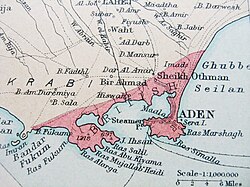
The Chief Commissioner's Province
To resolve these tensions, the British administration decided to remove Aden from Bombay's control. On April 1, 1932, Aden became a Chief Commissioner's Province. In this arrangement, the territory was placed under the direct authority of the Viceroy of India, serving as a transitional phase while its permanent status was determined.
Sir Bernard Rawdon Reilly, a diplomat from the British Colonial Office who had served as Resident since 1931, was appointed as the first Chief Commissioner in 1932. He would lead the province through this period of instability and transition.
Transition to a Crown Colony
The status of a Chief Commissioner's Province was always intended to be temporary. The Government of India Act 1935 explicitly stated that Aden would cease to be part of British India. This mandate was realized through the Aden Colony Order 1936, which officially transformed Aden into a Crown Colony on April 1, 1937.
This shift placed Aden under the direct responsibility of the Colonial Office. The British government was firm in its refusal to share control of the vital base with a future independent Indian nation. However, to appease the Indian community, certain ties were preserved:
- Legal Links: While the District and Sessions Court of Aden became the colony's Supreme Court, appeals for criminal cases and specific civil cases (including property and other civil rights) were still directed to the High Court of Judicature in Bombay.
- Currency: The Indian rupee remained the official currency of the territory.
Following the transition, Sir Bernard Rawdon Reilly became the first Governor of the Aden Colony in 1937, serving in that capacity until 1940.
Key Facts
- Administrative Shift: Aden moved from Bombay's control to a Chief Commissioner's Province (1932), and finally to a Crown Colony (1937).
- Key Legislation: The Government of India Act 1935 and the Aden Colony Order 1936 facilitated the separation from India.
- Leadership: Sir Bernard Rawdon Reilly served as Resident, Chief Commissioner, and eventually the first Governor of the colony.
- Strategic Value: The British government prioritized direct control of Aden as a vital imperial base over shared administration with India.
Demographic Composition
Aden's population was highly diverse, reflecting its role as a global crossroads. In 1891, the religious landscape was dominated by Islam, though it hosted significant Christian, Jewish, and Hindu communities. By 1933, the ethnic composition showed a strong Arab presence alongside a substantial Indian population.
| Category | Group/Religion | Population/Count | Percentage/Detail |
|---|---|---|---|
| Religion (1891) | Islam | 35,193 | 79.8% |
| Christian | 3,005 | 6.8% | |
| Judaism | 2,826 | 6.4% | |
| Hinduism | 2,713 | 6.1% | |
| Zoroastrianism | 318 | 0.7% | |
| Buddhism | 24 | 0.05% | |
| Ethnicity (1933) | Arabs | 29,820 | - |
| Indians | 7,287 | - | |
| Jews | 4,120 | - | |
| Somalis | 3,935 | - | |
| Europeans | 1,145 | - |
Frequently Asked Questions
Why was Aden separated from British India?
Aden was separated because its Arab majority made it difficult to integrate into a new federal India. Additionally, the British government wanted to maintain absolute control over the territory as a vital imperial base without interference from a future independent Indian nation.
What was a Chief Commissioner's Province?
It was a transitional administrative status that took effect on April 1, 1932, placing Aden under the direct control of the Viceroy of India rather than the Bombay legislative assembly.
When did Aden become a Crown Colony?
Aden officially became a Crown Colony on April 1, 1937, following the Aden Colony Order 1936.
Which legal ties remained between Aden and India after 1937?
Despite becoming a colony, appeals from the Supreme Court of Aden to the High Court of Judicature in Bombay were still permitted for criminal cases and certain civil cases involving property and civil rights.
Who was the first Governor of the Aden Colony?
Sir Bernard Rawdon Reilly, who had previously served as the Resident and Chief Commissioner, was appointed the first Governor in 1937.