Aden Province: The Transition from British India to Crown Colony
The history of Aden is a complex tale of strategic geography and bureaucratic evolution. For nearly a century, the port of Aden served as a vital imperial base for the British Empire, though its administrative status shifted several times to accommodate the changing political landscapes of both India and the Middle East.
Between 1932 and 1937, the territory existed as the Chief Commissioner's Province of Aden. This brief but significant period acted as a bridge, transitioning the region from a dependency of the British Raj to a standalone Crown Colony. While the Aden Protectorate in the hinterland remained separate, the settlement itself underwent a profound shift in governance.
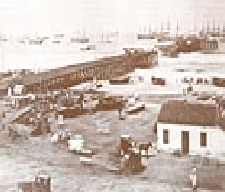
Key Facts
- Timeline: The Chief Commissioner's Province existed from April 1, 1932, to April 1, 1937.
- Preceding Status: Previously known as the Aden Settlement (1839–1932), administered by the Bombay Presidency.
- Succeeding Status: Became the Colony of Aden in 1937, reporting directly to the Colonial Office in London.
- Governance: During its time as a province, it was controlled by the Viceroy of India.
- Key Figure: Sir Bernard Rawdon Reilly served as both the final Chief Commissioner and the first Governor of the Colony.
The Aden Settlement and Administrative Confusion
The British first occupied the port of Aden on January 19, 1839, via the East India Company (EIC). For the next 93 years, it was known as the Aden Settlement. Administratively, it was a dependency—a semi-exclave—of the Bombay Presidency, a major administrative unit of the British Raj based in India.
This arrangement created significant logistical and political friction. Because Aden was located at the southwestern tip of the Arabian Peninsula, far from Bombay, the local British official (the Resident) often faced a confusing chain of command. He frequently had to seek approval from three separate entities: the Bombay Government, the Government of British India (led by the Viceroy), and the Colonial Office in London.
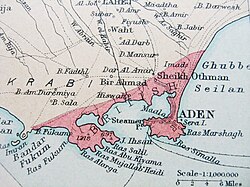
The Impact of World War I
The fragility of this system became apparent during World War I. In 1917, the Government of British India admitted it could not provide enough forces to defend the port against Turkish invaders. Consequently, military control was transferred to the War Office, and the affairs of the Aden Protectorate were handed to the Foreign Office. However, the internal administration of the Settlement remained with India, a situation London increasingly viewed as an anachronism given Aden's Arab population and Middle Eastern location.
The Path to the Chief Commissioner's Province
For two decades following the Great War, bureaucratic disputes persisted. The primary conflict centered on who should pay for Aden's expensive defense costs—India or London. Additionally, the powerful Indian commercial community in Aden feared that direct control by the Colonial Office would lead to the same administrative discrimination they had witnessed in British East Africa.
The urgency to resolve these issues peaked in the late 1920s during discussions regarding constitutional reforms in India. It became clear that a territory with an Arab majority could not be easily integrated into a future federal India, particularly if the Bombay legislative assembly maintained power. To resolve this, the British established the Chief Commissioner's Province on April 1, 1932, placing Aden under the direct control of the Viceroy.
Transition to a Crown Colony
The status of a Chief Commissioner's Province was always intended to be temporary. Under the Government of India Act 1935, it was mandated that Aden would cease to be part of British India. This was finalized via the Aden Colony Order 1936, and on April 1, 1937, Aden officially became a Crown Colony under the Colonial Office.
To appease the Indian community, the British maintained certain ties. The Indian rupee remained the official currency, and the High Court of Judicature in Bombay continued to hear appeals for specific civil and criminal cases. Sir Bernard Rawdon Reilly, who had led the province as Chief Commissioner, transitioned into the role of the first Governor of the Colony of Aden.
Demographics and Composition
Aden was a diverse melting pot of ethnicities and religions, reflecting its role as a global trading hub. The following tables outline the population composition during the British administration.
| Category | Group/Religion | Population/Count | Percentage/Detail |
|---|---|---|---|
| Religion (1891) | Islam | 35,193 | 79.8% |
| Christian | 3,005 | 6.8% | |
| Judaism | 2,826 | 6.4% | |
| Hinduism | 2,713 | 6.1% | |
| Zoroastrianism | 318 | 0.7% | |
| Buddhism | 24 | 0.05% | |
| Ethnicity (1933) | Arabs | 29,820 | - |
| Indians | 7,287 | - | |
| Jews | 4,120 | - | |
| Somalis | 3,935 | - | |
| Europeans | 1,145 | - | |
| Miscellaneous | 331 | - |
Frequently Asked Questions
What was the Chief Commissioner's Province of Aden?
It was a short-lived administrative status (1932–1937) where the territory of Aden was governed by the Viceroy of India, serving as a transition between being a dependency of the Bombay Presidency and becoming a separate Crown Colony.
Why was Aden originally administered by the Bombay Presidency?
After its capture in 1839 by the East India Company, Aden was established as a settlement and placed under the jurisdiction of the Bombay Presidency, which was a primary administrative unit of the British Raj.
Why did the British move Aden from Indian to direct London control?
The move was driven by the strategic importance of the base, the Arab majority of the population, and the upcoming constitutional reforms in India, which made it impractical for Aden to remain part of a future independent Indian state.
Did the transition to a Crown Colony sever all ties with India?
No. To mollify the Indian commercial community, the British allowed the Indian rupee to remain the official currency and permitted certain legal appeals to be sent to the High Court of Judicature in Bombay.
Who was the key leader during this transition?
Sir Bernard Rawdon Reilly played a pivotal role, serving as the Resident (1931), the Chief Commissioner (1932–1937), and finally the first Governor of the Colony of Aden (1937–1940).