Acid Jazz: The Fusion of Groove, Soul, and Club Culture
Emerging from the vibrant club scene of 1980s London, acid jazz (also known as club jazz, psychedelic jazz, or groove jazz) is a dynamic genre that blends the improvisational spirit of jazz with the rhythmic drive of funk, soul, and hip hop. What began as a niche movement among DJs searching for obscure records eventually evolved into a global phenomenon, influencing everything from mainstream pop to the modern jam band scene.
Key Facts
- Origins: Developed in London during the 1980s via the rare groove movement.
- Core Elements: A blend of funk, soul, hip hop, and jazz.
- Key Figures: Coined and popularized by DJ Gilles Peterson and the Acid Jazz Records label.
- Defining Sound: Characterized by danceable grooves, repetitive compositions, and live instrumentation.
- Global Reach: Spread from the UK to the US, Japan, Western Europe, and Latin America.
The Origins and Etymology of Acid Jazz
The term "acid jazz" is most widely attributed to French-English disc jockey Gilles Peterson, who co-founded the Acid Jazz Records label alongside Chris Bangs and Eddie Piller. The name was a nod to the acid house genre popular in UK clubs at the time. However, it is important to note that acid jazz is not electronic music; unlike acid house or acid techno, it does not rely on the "acid-like" squelching sounds of the Roland TB-303 synthesizer.
While some figures, such as Femi Williams and Marco Nelson of Young Disciples, have claimed the term originated from a club layout with acid music downstairs and jazz upstairs, these claims are generally viewed as dubious given the timeline of the Acid Jazz label's formation.
Musical Characteristics and Evolution
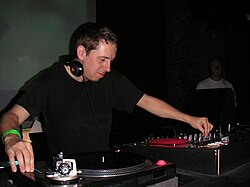
Acid jazz evolved through two distinct movements. The first was driven by DJs and producers who took jazz tracks from the 1960s and 1970s and layered them with electronic dance beats and additional percussion. The second movement consisted of live bands influenced by these remixes, placing a heavy emphasis on the groove—the rhythmic feel that makes the music danceable.
A typical acid jazz ensemble features a rhythm section (drums, bass guitar, and percussion), a horn section, a DJ, and a vocalist who may either sing or rap. While the genre borrows the improvisational nature of jazz, its repetitive structures and focus on percussion align it more closely with funk and dance music.
The Rise of the London Scene
The genre's foundation lies in the rare groove movement, where DJs played obscure jazz-funk and soul-jazz records, particularly from the Blue Note catalogue. Gilles Peterson played a pivotal role, moving from pirate radio to Kiss-FM before launching Acid Jazz Records in 1988. The label's debut compilation, Totally Wired, bridged the gap between 1970s jazz-funk and contemporary sounds.
By the early 1990s, the genre hit the mainstream. The Brand New Heavies achieved significant success with hits like "Never Stop," while Us3's "Cantaloop (Flip Fantasia)" became one of the genre's biggest global hits. Jamiroquai also rose to prominence through the label before signing with Sony and releasing the massive hit "Virtual Insanity" in 1996.

Global Expansion: The US and Beyond
Acid jazz crossed the Atlantic in 1990, landing in New York City via the Groove Academy parties at the Giant Step club. This sparked a wave of US-based artists, including the Brooklyn Funk Essentials and the Greyboy Allstars in San Diego. The influence of jazz also seeped into hip hop, notably in A Tribe Called Quest's The Low End Theory (1991).
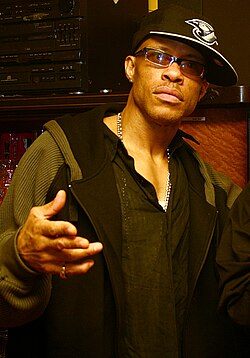
Other notable US contributions include the Grammy-winning single "Rebirth of Slick (Cool Like Dat)" by Buckshot LeFonque (a collaboration between Branford Marsalis and Digable Planets) and the Jazzmatazz series by the rapper Guru.
The movement also found a home internationally, with Japan producing influential acts like United Future Organization, Mondo Grosso, and Gota Yashiki, while Poland saw the rise of Skalpel.
Decline and Lasting Legacy
In the mid-to-late 1990s, the surge of electronic club music led to a decline in the specific "acid jazz" label. By the 21st century, the genre became less distinct, merging into broader categories such as nu jazz, neo soul, and jazz-funk.
Despite its decline as a standalone category, its legacy persists. It is credited as the most significant jazz form to emerge from the British scene and heavily influenced the jam band movement, providing a framework for extended improvisation for groups like Medeski, Martin and Wood.
| Region | Key Artists / Labels | Notable Contributions |
|---|---|---|
| United Kingdom | Brand New Heavies, Jamiroquai, Incognito, Us3 | Mainstream hits, Acid Jazz Records label |
| United States | Guru, Digable Planets, Greyboy Allstars, Liquid Soul | Jazzmatazz series, Grammy-winning collaborations |
| Japan | United Future Organization, Mondo Grosso | International club reputation |
| Poland | Skalpel | European expansion of the groove sound |
Frequently Asked Questions
Is acid jazz a type of electronic music?
No. Despite the name, acid jazz is not an electronic genre. It does not use the Roland TB-303 synthesizer characteristic of "acid" electronic music like acid house or acid techno; instead, it relies heavily on live instrumentation and organic grooves.
Who is credited with naming the genre?
The term was likely coined by DJ Gilles Peterson, who helped establish the genre's identity through his club residencies and the founding of Acid Jazz Records.
What is the difference between acid jazz and nu jazz?
Acid jazz was a specific movement in the 80s and 90s blending funk and soul with jazz. Nu jazz is a more modern, broader evolution that often incorporates more contemporary electronic production and diverse jazz elements.
Which acid jazz song was the most successful?
Us3's "Cantaloop (Flip Fantasia)" (1993) is cited as the biggest hit within the genre, alongside Jamiroquai's "Virtual Insanity."
How did the rare groove movement contribute to acid jazz?
The rare groove movement involved DJs playing obscure, hard-to-find jazz-funk and soul records from the 60s and 70s. This curation provided the sonic blueprint and inspiration for the acid jazz artists who followed.