Aberdeen: The Granite City and Oil Capital of Europe
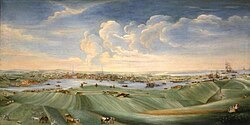
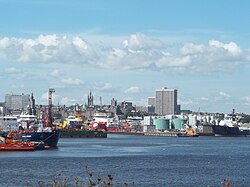
Known affectionately as the Granite City and the Silver City by Sea, Aberdeen is a vibrant coastal city in Scotland. Serving as a critical hub for the energy sector, it has earned the title of the Oil Capital of Europe. From its historic roots and stunning grey stone architecture to its modern role in global energy, Aberdeen blends traditional Scottish heritage with international industry.
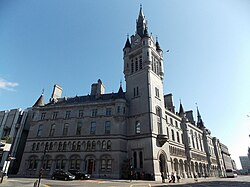
The city is governed by the Aberdeen City Council, with its administrative headquarters located at the Town House. As a unitary authority since 1996, it manages a diverse urban landscape that stretches from the North Sea coastline to the rolling hills of the northeast.
Key Facts
- Population: 231,780 (2024 estimate).
- Nicknames: Granite City, Silver City by Sea, Oil Capital of Europe.
- Administrative Center: Aberdeen Town House.
- Key Industries: North Sea oil and gas production.
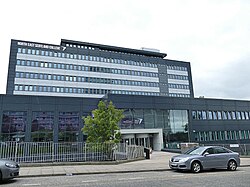
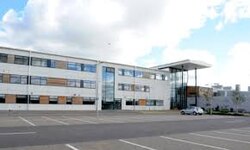
- Major Institutions: University of Aberdeen and North East Scotland College.
- City Status: Officially granted in 1891, though its earliest charter dates back to 1179.
Geography and Climate
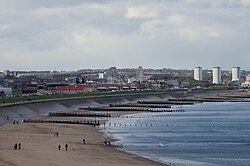
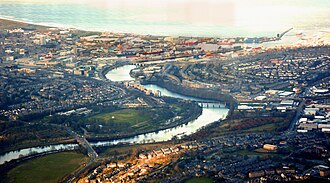
Aberdeen is situated on the northeastern coast of Scotland, bordering the North Sea. The city covers a total area of approximately 72 square miles (186 km²), making it the 25th largest council area in Scotland by size.
The climate is characterized by maritime influences, resulting in relatively mild temperatures but significant precipitation. On average, the city sees about 832.5 mm to 866.2 mm of rainfall annually. Summer temperatures typically peak in July and August, with mean maximums around 24°C, while winter months see mean minimums dipping toward 0°C, with record lows reaching as far as -19.3°C at Dyce.
Demographics and Society
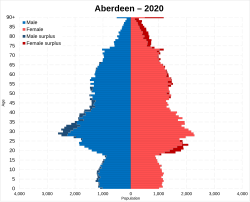
Aberdeen is a multicultural city with a growing international population. While the majority of residents identify as White (86.56% in 2022), there has been a notable increase in diversity. The Asian community now makes up 5.84% of the population, and the African community accounts for 3.96%.
The city's international nature is reflected in its birth statistics; Poland, Nigeria, and India are among the top countries of birth for overseas-born residents. In terms of faith, a majority of the population (58%) reports no religion, followed by Christians (30.7%) and Muslims (2.9%).
![Aberdeen's population since 1396[65]](/images/3a/34/3a348c1d869bd98ee65ef35c8634623218ea47dd3dcda933fbf6eccda879c0c9.gif)
Economy and Infrastructure
The Energy Sector
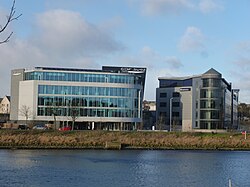
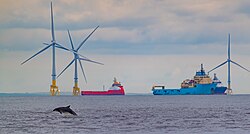
Aberdeen's economy is inextricably linked to the North Sea oil and gas industry. The city serves as the primary onshore base for offshore operations, supporting a vast network of engineering, logistics, and corporate offices.
Transport and Connectivity
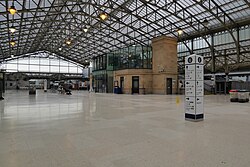
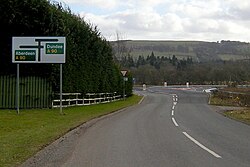
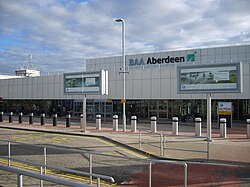
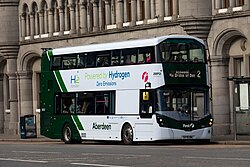
The city is well-connected by land, air, and sea. Aberdeen Railway Station is a central hub served by four train operating companies, while the A90 and A96 roads provide vital links to the rest of Scotland and the north-west. For international travel, Aberdeen Airport serves as the primary gateway.
Maritime and Urban Layout
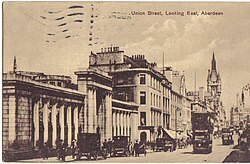
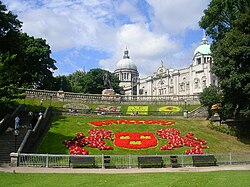
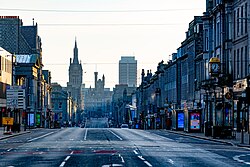
The Aberdeen Harbour is central to the city's commercial identity. In the city center, Union Street remains a primary artery for shopping and commerce, flanked by the scenic Union Terrace Gardens.
Culture, Education, and Landmarks
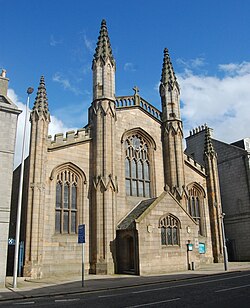
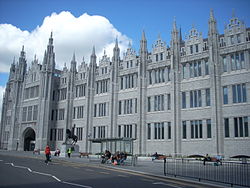
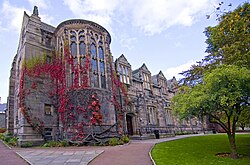
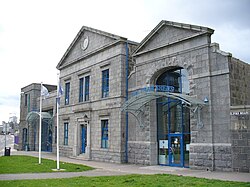
Aberdeen is a center of academic excellence, home to the University of Aberdeen and North East Scotland College. The city's architectural landscape is dominated by granite, most notably seen in the grand Marischal College and the Town House.
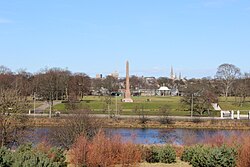
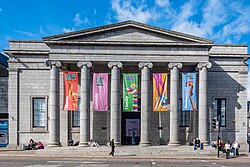
Cultural life is enriched by venues such as His Majesty's Theatre, the Aberdeen Arts Centre, and the Music Hall. For nature lovers, Duthie Park offers a serene escape within the urban environment.
Local Traditions and Sport
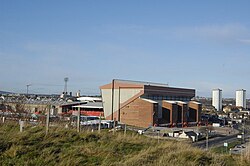
A local culinary staple is the Aberdeen buttery (also known as a rowie), a traditional pastry often served with jam. In sports, the city is passionate about football, centered around Pittodrie Stadium, as well as rugby, golf, and ice hockey.

City Overview Summary
| Category | Detail |
|---|---|
| Total Population (2024) | 231,780 |
| Total Area | 72 sq mi (186 km²) |
| Administrative HQ | Town House |
| Primary Industry | North Sea Oil & Gas |
| Key Educational Institutions | University of Aberdeen, North East Scotland College |
| Twin Cities | Stavanger, Regensburg, Clermont-Ferrand, Bulawayo, Houston |
Frequently Asked Questions
Why is Aberdeen called the Granite City?
Aberdeen earned this nickname because much of its city center and many of its most prominent buildings are constructed from locally sourced grey granite, giving the city a distinct, shimmering appearance.
What is the primary economic driver of Aberdeen?
The primary economic driver is the North Sea oil and gas industry, which has established the city as a global hub for energy production and support services.
What are "rowies"?
Rowies, also known as Aberdeen butteries, are a traditional local pastry known for their rich, buttery taste and distinct texture.
Which major universities are located in Aberdeen?
The city is home to the University of Aberdeen, one of the UK's ancient universities, as well as the North East Scotland College.
How is the weather in Aberdeen?
Aberdeen has a maritime climate with mild temperatures and frequent rainfall. It is generally cooler than southern Scotland, with average summer highs around 24°C and winter lows near 0°C.