2020 United States Presidential Election: A Comprehensive Overview
The 2020 United States presidential election was one of the most consequential and contentious contests in American history. Held on November 3, 2020, the election pitted the incumbent Republican President Donald Trump against the Democratic nominee Joe Biden. The race took place against the backdrop of a global pandemic and significant social unrest, leading to unprecedented changes in how Americans cast their ballots.
The election resulted in a victory for Joe Biden, who secured the presidency by winning a majority of the electoral votes and the popular vote, marking a transition of power from the Republican to the Democratic Party.
Key Facts
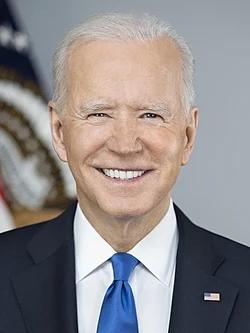
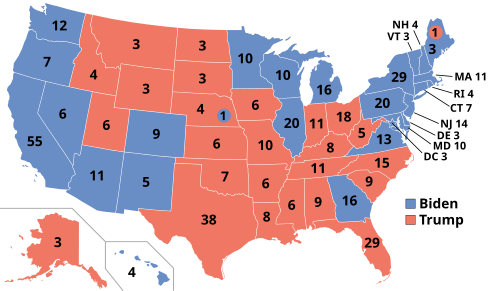
- Winner: Joe Biden (Democratic Party) with 306 electoral votes.
- Runner-up: Donald Trump (Republican Party) with 232 electoral votes.
- Popular Vote: Joe Biden received 81,283,501 votes (51.3%); Donald Trump received 74,223,975 votes (46.8%).
- Tipping Point: Wisconsin was the tipping-point state for Biden's victory.
- Major Shifts: Georgia, Pennsylvania, and Nebraska's 2nd congressional district flipped from Republican to Democratic.
- Voter Turnout: A total of 158,429,631 votes were cast.
The Candidates and Tickets
The election featured two primary tickets representing the major political parties, alongside candidates from the Libertarian and Green parties.
The Democratic Ticket
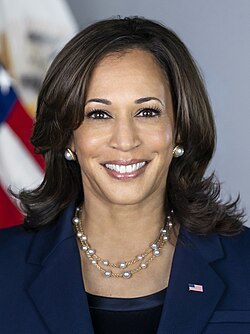
Joe Biden, a former U.S. Senator from Delaware and the 47th Vice President (2009–2017), led the ticket. He was joined by Kamala Harris, a U.S. Senator from California, who became the first female Vice President of the United States.
The Republican Ticket
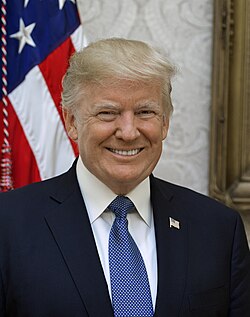
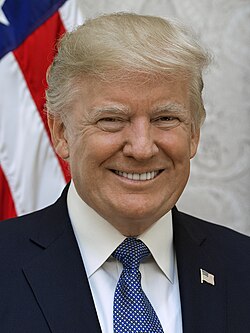
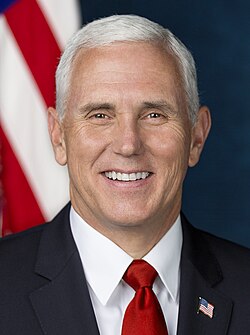
The incumbent, Donald Trump, the 45th President of the United States, sought a second term. He was joined by Mike Pence, the 48th Vice President of the United States.

Critical Issues and the Impact of COVID-19

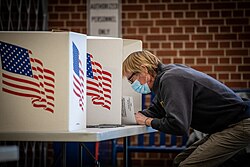
The 2020 election was uniquely shaped by the COVID-19 pandemic, which influenced both the campaign strategy and the voting process. The pandemic led to a surge in mail-in voting and early voting to ensure voter safety.
![Chart of July 2020 opinion survey on likelihood of voting by mail in November election, compared to 2016[166]](/images/0b/2a/0b2a33f35dbda9e53ffb7624e7141f3c7fa2a38ccc246f2115e1f728ff776988.png)
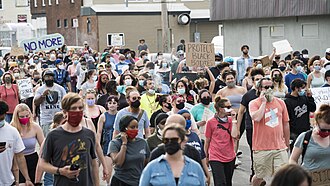
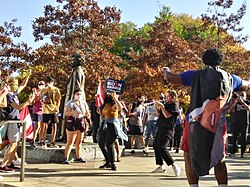
Public opinion was sharply divided over the administration's handling of the pandemic. Data indicates that for many voters, the pandemic was a primary factor in their decision-making process. Other significant issues included Supreme Court appointments—highlighted by the nomination of Amy Coney Barrett—and widespread protests following the death of George Floyd.

Election Results and Analysis
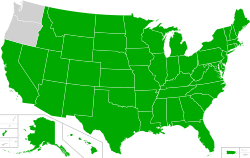
To win the presidency, a candidate must secure at least 270 of the 538 available electoral votes. Joe Biden surpassed this threshold, winning 25 states plus the District of Columbia and Nebraska's 2nd congressional district.
The results were particularly tight in several "swing states"—states where the outcome is uncertain and can shift the entire election. In Georgia, for instance, the margin of victory was just 0.23% (11,779 votes).
The following table summarizes the final results of the major candidates:
| Candidate | Party | Popular Vote | Popular % | Electoral Votes |
|---|---|---|---|---|
| Joe Biden | Democratic | 81,283,501 | 51.31% | 306 |
| Donald Trump | Republican | 74,223,975 | 46.85% | 232 |
| Jo Jorgensen | Libertarian | 1,865,535 | 1.18% | 0 |
| Howie Hawkins | Green | 649,552 | 0.41% | 0 |
Post-Election Controversy and Certification
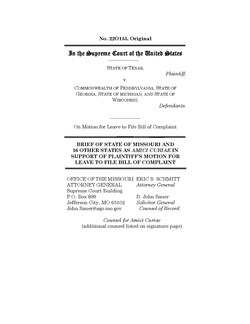
Following the election, President Donald Trump refused to concede, alleging that the election was "rigged" and citing widespread interference. These claims were met with numerous legal challenges, including the Texas v. Pennsylvania motion, which sought to nullify results in several states; however, these efforts were unsuccessful in the courts.
![Screenshot of a tweet from Trump's Twitter account where he repeatedly and falsely claimed he had won.[407][408]](/images/7e/fe/7efe386839fc7f3b135a3355a0aeb3365475ebd7babae479a1db509ef931ffc2.png)
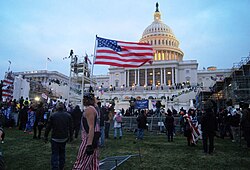
The tension culminated on January 6, 2021, when pro-Trump protesters stormed the U.S. Capitol Building in an attempt to disrupt the certification of the electoral votes by Congress.
Despite these events, the electoral votes were certified, and Joe Biden was inaugurated as the 46th President of the United States on January 20, 2021.
Frequently Asked Questions









![In 14 states, representing 223 electoral votes, a plurality of voters chose to stay home rather than vote for any candidate.[282]](/images/8b/d5/8bd5df6255fffab2f6c427be7bc079262d727a19283537a33679f8806a252b81.png)

![To sow election doubt, Trump escalated use of "rigged election" and "election interference" statements in advance of the 2024 election compared to the previous two elections—the statements described as part of a "heads I win; tails you cheated" rhetorical strategy.[409]](/images/ea/ce/eacead096e5111afae0b3392a092ef42e76c3e524009b67cf3d3590371a6fc6e.webp)
![CNN fact checker Daniel Dale reported that through June 9, 2021, Trump had issued 132 written statements since leaving office, of which "a third have included lies about the election"—more than any other subject.[458]](/images/8e/9b/8e9b3647255c7610bae59bd90c9a6df7ffa2447a205b9a392335fde4718ba0da.webp)
Who won the 2020 US Presidential Election?
Joe Biden of the Democratic Party won the election, securing 306 electoral votes and the majority of the popular vote.
How many electoral votes were needed to win?
A candidate needed a minimum of 270 electoral votes out of the 538 total to be elected President.
Which states flipped from Republican to Democratic in 2020?
Georgia, Pennsylvania, and Nebraska's 2nd congressional district flipped from the Republican Party to the Democratic Party.
What was the impact of the COVID-19 pandemic on the election?
The pandemic led to a significant increase in mail-in and early voting and served as a major policy issue that influenced voter behavior.
What happened on January 6, 2021?
Pro-Trump protesters stormed the U.S. Capitol Building in an attempt to prevent the official certification of Joe Biden's victory in the Electoral College.