2012 United States Presidential Election in New Jersey
On November 6, 2012, New Jersey participated in the United States presidential election, casting its 14 electoral votes to decide the state's representation in the Electoral College. The contest pitted the incumbent Democratic President Barack Obama and Vice President Joe Biden against the Republican challenger, former Massachusetts Governor Mitt Romney and Congressman Paul Ryan.
President Obama secured a decisive victory in the Garden State, winning 58.38% of the popular vote compared to Romney's 40.59%. This 17.79% margin of victory marked an increase from the 15.53% margin Obama achieved in 2008. Notably, New Jersey was one of only six states to swing further in Obama's favor between the two elections, representing the largest vote share for a Democratic nominee in the state since Lyndon Johnson in 1964.
Key Facts
- Winner: Barack Obama (Democratic)
- Popular Vote: Obama (2,126,610) vs. Romney (1,478,749)
- Electoral Votes: 14 for Obama, 0 for Romney
- Voter Turnout: Approximately 66.91%
- Margin of Victory: 17.79%
- Historical Note: This was the last time a Democrat won Salem County as of the 2024 election.
Primary Elections
Democratic Primary
The Democratic primary took place on June 5, 2012. President Barack Obama ran unopposed, receiving 283,673 votes. Consequently, the state's 172 delegates voted unanimously for him at the Democratic National Convention in Charlotte, North Carolina.
Republican Primary
The Republican primary was held on June 5, 2012, utilizing a winner-take-all statewide vote for 50 delegates. Mitt Romney dominated the contest, securing 81.3% of the vote.
| Candidate | Votes | Percentage | Delegates |
|---|---|---|---|
| Mitt Romney | 188,121 | 81.3% | 50 |
| Ron Paul | 24,017 | 10.4% | 0 |
| Rick Santorum | 12,115 | 5.2% | 0 |
| Newt Gingrich | 7,212 | 3.1% | 0 |
General Election Analysis
Predictions and Ballot Access
Leading up to the election, major political analysts and outlets—including CNN, The New York Times, and the Washington Post—categorized New Jersey as "Safe D" or "Solid D." While Obama and Romney were the primary contenders, several third-party candidates gained ballot access, including Gary Johnson (Libertarian) and Jill Stein (Green).
The Impact of Hurricane Sandy
The election occurred shortly after Hurricane Sandy, a devastating superstorm that left two million households without power and destroyed 346,000 homes. The storm created significant logistical challenges for voting. To accommodate displaced citizens, officials allowed absentee ballots to be requested and returned via email or fax.
This emergency system faced several glitches, including a 15-minute validation process per request and confusion among non-displaced voters regarding eligibility. These delays forced an extension of email voting until November 9. Furthermore, some counties struggled to tally the approximately 10,000 emailed ballots before the certification deadline.
Political analysts suggest that President Obama's handling of the crisis may have bolstered his performance. A poll showed that 77% of Obama voters and 44% of Romney voters approved of his response. Even the state's Republican governor, Chris Christie, described the response as "outstanding."
Regional Results and Turnout
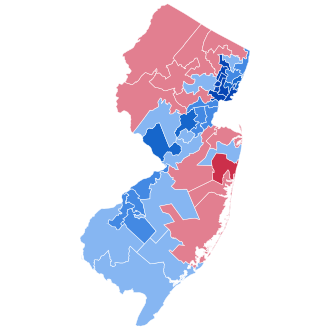
Obama's increased margin was largely driven by stronger performances in northern and central counties, specifically Middlesex, Hudson, Passaic, and Union, where he netted nearly 45,000 more votes than in 2008. Conversely, turnout decreased in several Republican strongholds, such as Monmouth and Ocean counties, which may have further widened the gap.
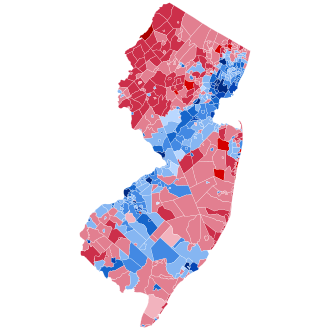
In terms of congressional districts, Obama won eight of the 12 districts. Notably, he won two districts that had elected Republican representatives, demonstrating a broad appeal across different demographics in the state.
Frequently Asked Questions
Who won the 2012 presidential election in New Jersey?
Barack Obama won the state with 58.38% of the popular vote, securing all 14 of New Jersey's electoral votes.
How did Hurricane Sandy affect the voting process?
Due to widespread displacement and damage, New Jersey implemented emergency email and fax voting for displaced residents, though the system experienced technical delays and validation issues.
Did any third-party candidates receive significant support?
While the race was dominated by Obama and Romney, Gary Johnson of the Libertarian Party received the most third-party support with 21,045 votes (0.58%).
Which counties were most influential in Obama's victory?
Obama saw significant gains in Middlesex, Hudson, Passaic, and Union counties, which contributed to his increased margin of victory compared to 2008.
How did the Republican primary result in New Jersey?
Mitt Romney won the Republican primary decisively with 81.3% of the vote, earning all 50 of the state's delegates to the Republican National Convention.