2006 Hezbollah Cross-Border Raid and the Outbreak of the Lebanon War
On the morning of July 12, 2006, a meticulously planned military operation by Hezbollah fundamentally altered the security landscape of the Levant. This cross-border raid, which resulted in the capture of two Israeli soldiers and the deaths of several others, served as the immediate catalyst for the 2006 Lebanon War, ending the period of tension known as the 2000–2006 Shebaa Farms conflict.
Key Facts
- Date: July 12, 2006, starting around 9:00 am.
- Primary Objective: Capture Israeli soldiers to use as leverage for the release of Lebanese prisoners.
- Casualties: 8 Israeli soldiers killed, 2 wounded, and 2 captured.
- Immediate Result: The launch of a large-scale Israeli ground and air campaign in Lebanon.
- Resolution: The bodies of the captured soldiers were returned in 2008 in exchange for Samir Kuntar and four Hezbollah prisoners.
Historical Background and Tensions
The roots of the 2006 raid lay in a long-standing cycle of conflict and prisoner disputes. Hezbollah was formed in 1982 to oppose the Israeli invasion of Lebanon, and while Israel withdrew from southern Lebanon in 2000, tensions remained high. A significant point of contention was the status of prisoners; although a major exchange occurred in 2004, several high-profile prisoners, including Samir al-Quntar, remained in Israeli custody.
Beyond prisoner exchanges, the Blue Line—the border demarcation line established by the UN—was a source of constant friction. Lebanese officials claimed thousands of Israeli violations of this territory between 2000 and 2006. Previous skirmishes, such as a failed Hezbollah raid in Ghajar in November 2005 and rocket exchanges in May 2006, had already signaled a deteriorating security situation.
The Lead-Up to the Attack
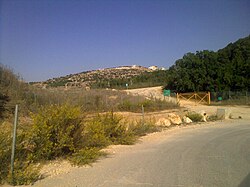
In the months preceding the July attack, Israeli military intelligence noted increased Hezbollah activity. Brigadier General Ishai Efroni observed armed patrols and the movement of donkeys laden with equipment, suggesting a buildup of arms. Intelligence specifically identified Milepost 105 as a vulnerability. This location featured a wadi (a dry riverbed) that created a "dead zone," shielding troops from the view of observation posts and tanks.
Although the IDF issued a high alert and deployed the Egoz Reconnaissance Unit to the area in late June, the unit was withdrawn by July 2. Crucially, reports of Hezbollah fighters near the fence on the night of July 11 did not reach the reserve units scheduled to patrol the area the following morning.
Execution of the Raid
The operation began in the early hours of July 12. Hezbollah fighters used explosives and wire cutters to breach the electric border fence, slipping into the wadi at Milepost 105 to set up an ambush. At approximately 9:00 am, the raid commenced with a coordinated diversion: Katyusha rockets and mortars were fired at Israeli border villages, including Shlomi and Zar'it, and seven army posts were attacked to disable surveillance and communications.
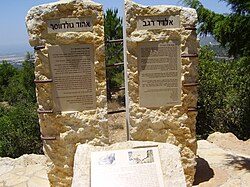
During the chaos, two Israeli Humvees (designated 4 and 4A) were ambushed. Three soldiers were killed instantly, and two others—Sgt. Ehud Goldwasser and Sgt. Eldad Regev—were captured and taken into Lebanon. In a subsequent attempt to rescue the captured soldiers, another five Israeli soldiers were killed within Lebanese territory.
Aftermath and the 2006 Lebanon War
Israel responded to the raid with an immediate and massive military escalation, including a naval blockade, airstrikes, and a ground invasion. The conflict lasted 34 days before a cease-fire was reached. During the war, the architect of the raid, Khalid Bazzi, was killed by an Israeli drone strike.
While Hezbollah leader Hassan Nasrallah later claimed the war had been planned for months and the raid merely accelerated the timeline, the capture of the soldiers remained the central political issue. For two years, the fate of Goldwasser and Regev remained uncertain until Prime Minister Ehud Olmert declared them dead in June 2008.
On July 16, 2008, a prisoner swap was finalized. Hezbollah returned the bodies of the two soldiers in exchange for the release of Samir Kuntar, four Hezbollah prisoners captured during the war, and the remains of 200 fighters.
Summary of Casualties and Losses
| Category | Israeli Defense Forces (IDF) | Hezbollah / Civilians |
|---|---|---|
| Killed | 8 (3 in raid, 5 in rescue attempt) | None reported in initial raid |
| Captured | 2 (Sgt. Goldwasser, Sgt. Regev) | None in initial raid |
| Wounded | 2 soldiers, 2 civilians | Not specified |
Frequently Asked Questions
What was the primary goal of the Hezbollah raid?
The primary goal was to capture Israeli soldiers to use as bargaining chips to force the release of Lebanese prisoners held in Israeli jails, specifically Samir al-Quntar.
Why was Milepost 105 chosen as the attack site?
Milepost 105 was chosen because the road dipped into a wadi, creating a "dead zone" where IDF vehicles were hidden from the sight of nearby observation posts and tanks.
How did the raid lead to a full-scale war?
Israel viewed the abduction of its soldiers as a severe provocation and a breach of sovereignty, responding with a large-scale air and ground campaign to recover the soldiers and degrade Hezbollah's capabilities.
What happened to the captured soldiers?
Sgt. Ehud Goldwasser and Sgt. Eldad Regev were captured during the raid. Although their status was debated for years, they were eventually declared dead, and their bodies were returned to Israel in a 2008 prisoner exchange.
Who was Samir Kuntar?
Samir Kuntar was a high-profile Lebanese prisoner held by Israel, whose release was a primary demand of Hezbollah and a key condition for the return of the captured Israeli soldiers.