1984 Summer Olympics: The Games of the XXIII Olympiad in Los Angeles
The 1984 Summer Olympics, officially known as the Games of the XXIII Olympiad, were a landmark international multi-sport event held from July 28 to August 12, 1984. Hosted in Los Angeles, California, these Games marked the second time the city had welcomed the Olympic spirit, following its first hosting in 1932.
The event was characterized by a unique financial model and significant political tension. It was the first Summer Games presided over by IOC President Juan Antonio Samaranch and was officially opened by U.S. President Ronald Reagan, who hailed from California.
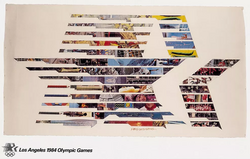
Key Facts
- Host City: Los Angeles, United States
- Dates: July 28 – August 12, 1984
- Participants: 6,800 athletes (5,231 men, 1,569 women) from 140 nations
- Scope: 221 events across 21 sports and 29 disciplines
- Motto: "Play a Part in History"
- Opening Ceremony: Opened by President Ronald Reagan
- Closing Ceremony: Closed by IOC President Juan Antonio Samaranch
Organization and Financial Innovation
The 1984 Games were managed by the Los Angeles Olympic Organizing Committee (LAOOC), established on June 15, 1978. Under the leadership of President Peter Ueberroth, who took office in early 1979, the LAOOC implemented a pioneering approach to funding. Instead of relying on public debt, the committee managed the Games using private funds, setting a new precedent for the financial sustainability of future Olympic events.
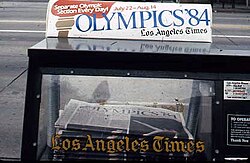
This private-sector focus extended to extensive corporate sponsorships. Major partners included American Express, Coca-Cola, McDonald's, and IBM, among many others, ensuring the Games were well-supported by global brands.
Venues and Infrastructure
The Games utilized a wide array of existing facilities across Los Angeles and Southern California to minimize construction costs.
Primary Los Angeles Venues
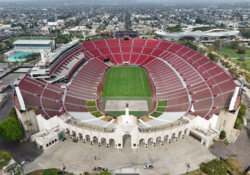
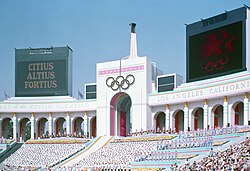
- Los Angeles Memorial Coliseum: The centerpiece for athletics and the opening and closing ceremonies.
- Los Angeles Memorial Sports Arena: Hosted boxing events.
- Dodger Stadium: The venue for baseball.
- Pauley Pavilion (UCLA): Hosted gymnastics.
- Olympic Swim Stadium (USC): Used for swimming, diving, and synchronized swimming.
Regional Southern California Venues
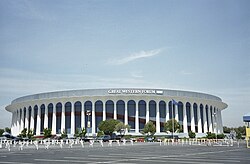
Events extended beyond the city limits to leverage specialized facilities. The Forum in Inglewood hosted basketball and team handball finals, while the Rose Bowl in Pasadena served as the site for the football final. Other notable locations included the Olympic Velodrome in Carson for track cycling and the Long Beach Shoreline Marina for sailing.
Participation and Political Climate
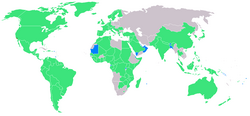
While 140 nations participated, the 1984 Games were heavily impacted by geopolitical strife. In a retaliatory move following the U.S.-led boycott of the 1980 Moscow Games, a Soviet-led boycott saw 15 Eastern Bloc nations and 4 non-Eastern Bloc nations abstain from the competition.
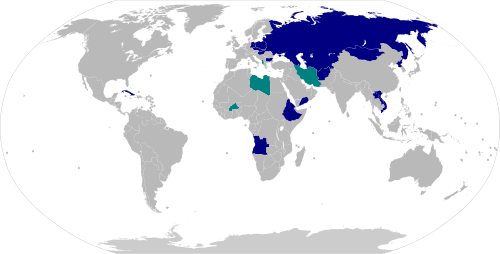
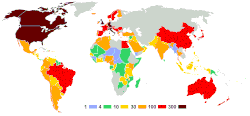
Despite the boycott, the Games saw a massive turnout of 6,800 athletes. The United States, as the host nation, sent the largest delegation with 522 athletes, followed by Canada and West Germany.
Olympic Summary Table
| Category | Details |
|---|---|
| Total Athletes | 6,800 |
| Participating Nations | 140 |
| Total Events | 221 |
| Number of Sports | 21 |
| Opening Ceremony Venue | Los Angeles Memorial Coliseum |
| Torch Lighting | Rafer Johnson |
Frequently Asked Questions
Who officially opened the 1984 Summer Olympics?
The Games were officially opened by the incumbent U.S. President, Ronald Reagan.
How were the 1984 Games funded?
The Los Angeles Olympic Organizing Committee (LAOOC) managed the event using private funds rather than public debt, marking a significant shift in Olympic financing.
Which countries boycotted the 1984 Los Angeles Games?
The Games were boycotted by 15 Eastern Bloc nations led by the Soviet Union, as well as 4 non-Eastern Bloc nations.
How many athletes participated in the 1984 Games?
A total of 6,800 athletes participated, consisting of 5,231 men and 1,569 women.
What was the motto of the 1984 Summer Olympics?
The official motto for the Los Angeles 1984 Games was "Play a Part in History."
