1937 South American Championship: Argentina's Path to a Fifth Title
The fourteenth edition of the South American Championship—the precursor to the modern Copa América—took place in Buenos Aires, Argentina, from December 27, 1936, to February 1, 1937. This tournament marked a significant milestone in the competition's history, as it was the first time more than five teams participated in a single event.
Six nations competed for the title: Argentina, Brazil, Chile, Paraguay, Peru, and Uruguay. While the tournament expanded, it also saw the withdrawal of Bolivia and Colombia, the latter being a new member of CONMEBOL (the South American Football Confederation).
Due to the intense summer heat of the region, organizers scheduled most matches for the evening. This required the use of Estadio Gasómetro, one of the few venues in Argentina equipped with artificial lighting at the time. Other fixtures were held during the day at Estadio Alvear y Tagle.
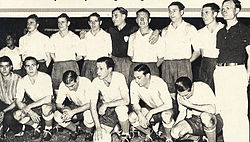
Key Facts
- Champion: Argentina (their 5th title).
- Runner-up: Brazil.
- Top Scorer: Raúl Toro with 7 goals.
- Total Goals: 69 goals scored across 16 matches (4.31 per match).
- Host City: Buenos Aires, Argentina.
- Format: Round-robin followed by a championship playoff.
Tournament Format and Venues
The competition followed a round-robin format where every team played against every other participant. Points were awarded based on a traditional system: two points for a win, one point for a draw, and zero for a loss.
The matches were distributed across three venues in Buenos Aires, varying significantly in size:
- Estadio Gasómetro de Boedo: 75,000 capacity.
- Estadio Alvear y Tagle: 40,000 capacity.
- Estadio Brandsen y Del Crucero: 25,000 capacity.
The Road to the Final
The tournament was characterized by high-scoring affairs and a tight race at the top. Brazil and Argentina both dominated the standings, each securing four wins and one loss. While Brazil boasted a slightly better goal difference, both teams finished tied with 8 points.
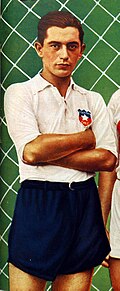
Chile's Raúl Toro emerged as the standout individual performer, netting 7 goals throughout the campaign, including crucial strikes against Argentina and Uruguay.
The final standings for the round-robin stage were as follows:
| Team | Played | W | D | L | GF | GA | GD | Pts |
|---|---|---|---|---|---|---|---|---|
| Argentina | 5 | 4 | 0 | 1 | 12 | 5 | +7 | 8 |
| Brazil | 5 | 4 | 0 | 1 | 17 | 9 | +8 | 8 |
| Uruguay | 5 | 2 | 0 | 3 | 11 | 14 | -3 | 4 |
| Paraguay | 5 | 2 | 0 | 3 | 8 | 16 | -8 | 4 |
| Chile | 5 | 1 | 3 | 12 | 13 | -1 | 3 | |
| Peru | 5 | 1 | 3 | 7 | 10 | -3 | 3 |
The Championship Play-off
Because Argentina and Brazil were tied on points, a playoff match was required to determine the champion. The decisive game took place on February 1, 1937, drawing a massive crowd of 80,000 spectators.
The match remained deadlocked through regulation time, forcing the game into extra time (a.e.t.). Argentina eventually broke the tie with two goals from De la Mata in the 108th and 112th minutes, securing a 2-0 victory and their fifth South American title.
Frequently Asked Questions
Who won the 1937 South American Championship?
Argentina won the tournament, claiming their fifth title after defeating Brazil in a playoff match.
Who was the top scorer of the tournament?
Raúl Toro was the top scorer, finishing the competition with a total of 7 goals.
Why were most matches played at night?
Most matches were played at night to avoid the extreme summer heat of Buenos Aires.
How was the winner decided since Argentina and Brazil tied in points?
A playoff match was held on February 1, 1937, which Argentina won 2-0 after extra time.
Which teams withdrew from the competition?
Bolivia and Colombia withdrew from the tournament.