1924 Summer Olympics Football: Uruguay's Historic Gold Medal
The football tournament at the 1924 Summer Olympics in Paris marked a pivotal moment in the history of the sport. As the sixth edition of Olympic football, it was the first time the winners were recognized as FIFA World Champions. The event saw a significant expansion, featuring 22 countries from four different confederations, signaling the beginning of a global era for the game.
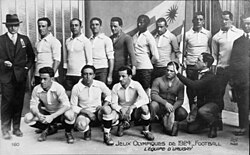
While Europe dominated the entries, the tournament is best remembered for the stunning debut of Uruguay. Representing South America, the Uruguayan squad arrived in France as relative unknowns, having traveled via third-class passage and completed a tour of Spain. Despite their lack of international experience outside their own continent, they displayed a level of skill and physical conditioning that would redefine the sport.
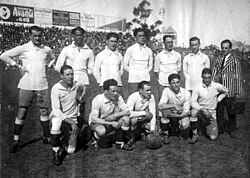
Key Facts
- Champions: Uruguay (their first gold medal).
- Host City: Paris, France.
- Top Scorer: Pedro Petrone with 7 goals.
- Total Teams: 22 nations from four confederations.
- Total Goals: 96 goals scored across 24 matches.
- Attendance: 210,424 spectators in total.
The Amateurism Controversy
The 1924 Games were clouded by disputes over amateur status—the rule that players must not be paid to play. In 1921, the Belgium Football Association began allowing payments to players to compensate for lost work time, a practice followed by Switzerland and Italy. The British Associations, adhering to a strict 1884 definition of professionalism, demanded that FIFA uphold these rigid standards.
When FIFA representatives on the International Football Association Board refused to accept the British definition, the United Kingdom and Denmark withdrew their teams from the 1924 Olympics in protest.
Tournament Progression and Key Matches
The tournament began with a preliminary round and moved through a knockout format. Uruguay immediately established themselves as the team to beat, utilizing a style of play characterized by speed, skill, and intelligent positional play. Their path to the gold was dominant, starting with a 7–0 victory over the Kingdom of SCS.
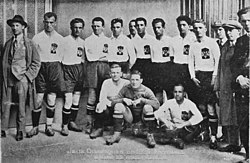
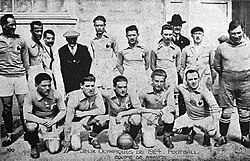
Other notable results included a surprising 3–0 win for Egypt over Hungary and a crushing 8–1 defeat of the reigning gold-medallists, Belgium, by Sweden. As the tournament progressed, Uruguay continued their streak, eliminating France with a 5–1 victory in the quarter-finals.
The Road to the Final
The semi-finals were fraught with tension. The Netherlands took an early lead against Uruguay, but a late penalty—which the Dutch protested—secured a 2–1 victory for the South Americans. To resolve disputes regarding the final's officiating, the Olympic Committee famously drew the name of the referee, Marcel Slawick, out of a hat.
The Gold Medal Match
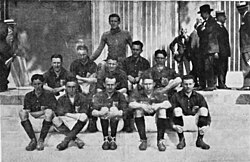
On June 9, 1924, Uruguay faced Switzerland in the final at the Colombes Stadium. In front of a massive crowd of 60,000 (with another 10,000 locked out), Uruguay secured a 3–0 victory. This win cemented their status as the best team in the world and earned them their first Olympic gold medal.
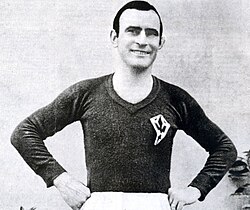
Pedro Petrone emerged as the tournament's standout performer, finishing as the top scorer.
Tournament Summary
| Position | Team | Matches Played | Goals For | Goals Against | Result |
|---|---|---|---|---|---|
| 1 | Uruguay | 5 | 20 | 2 | Gold Medal |
| 2 | Switzerland | 6 | 15 | 6 | Silver Medal |
| 3 | Sweden | 5 | 18 | 5 | Bronze Medal |
| 4 | Netherlands | 5 | 11 | 7 | Fourth Place |
Frequently Asked Questions
Who won the gold medal at the 1924 Olympic football tournament?
Uruguay won the gold medal, defeating Switzerland 3–0 in the final.
Why did the United Kingdom and Denmark withdraw from the tournament?
They withdrew due to a disagreement with FIFA over the definition of amateur status and the payment of players.
Who was the top scorer of the 1924 Games?
Pedro Petrone of Uruguay was the top scorer, netting a total of 7 goals.
How was the referee for the final match selected?
To appease protests from the Uruguayan team, the Olympic Committee selected the referee, Marcel Slawick, by drawing his name out of a hat.
Which venues were used for the matches in Paris?
The matches were held at four venues: the Olympic Stadium (Colombes), Bergeyre Stadium, Pershing Stadium, and Paris Stadium.