1885: A Year of Global Transformation and Innovation
The year 1885 served as a pivotal bridge between the traditional 19th century and the dawn of the modern industrial age. From the birth of the automobile and the first skyscraper to seismic shifts in global geopolitics and medicine, the events of this year laid the groundwork for the 20th century. It was a period defined by daring invention, colonial tension, and the pursuit of scientific progress.
Key Facts
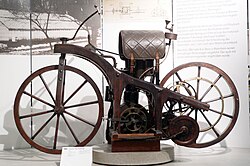
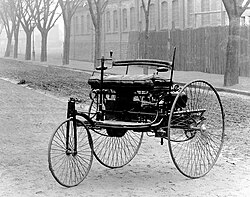
- Automotive Birth: Karl Benz produced the Benz Patent-Motorwagen, the first automobile, and Gottlieb Daimler patented the first motorcycle.
- Financial Milestones: Charles Dow published the first edition of the Dow Jones Industrial Average.
- Medical Breakthroughs: Louis Pasteur and Émile Roux successfully tested the first rabies vaccine.
- Architectural Firsts: The Home Insurance Building in Chicago was completed as the world's first skyscraper.
- Global Conflict: The Sino-French War concluded, and the North-West Rebellion took place in Canada.
Technological Breakthroughs and Industrial Firsts
The mid-1880s witnessed a surge in mechanical engineering that fundamentally changed human mobility. In Germany, the foundations of the automotive industry were laid. Karl Benz produced the Benz Patent-Motorwagen in Mannheim, which is widely regarded as the first automobile. Simultaneously, Gottlieb Daimler advanced personal transport by securing a patent for a single-cylinder, water-cooled engine in April, followed by the Reitwagen (riding car) in August, recognized as the first motorcycle.
Beyond the road, the skyline of the United States changed forever with the completion of the Home Insurance Building in Chicago. Designed by William Le Baron Jenney, this ten-story structure utilized a fireproof weight-bearing metal frame, earning it the title of the first skyscraper. In the realm of leisure and transport, John Kemp Starley demonstrated the Rover safety bicycle, the first practical modern bicycle, while LaMarcus Adna Thompson patented the roller coaster in January.
Global Politics and Colonial Conflict
The geopolitical landscape of 1885 was marked by the "scramble for Africa" and territorial disputes in Asia. The Berlin Conference concluded in February, establishing the regulations for European colonization and trade across the African continent. This era of expansion also saw King Leopold II of Belgium establish the Congo Free State as his own personal possession.
In Asia, the Sino-French War reached its climax. Following victories at Núi Bop and Đồng Đăng, a final French victory at Kép in April forced Chinese forces to withdraw from Tonkin (modern-day Vietnam). Meanwhile, the British Empire expanded its influence by establishing the Bechuanaland Protectorate in March.
Social Unrest and National Identity
North America experienced significant internal strife, most notably the North-West Rebellion in Canada. Led by Louis Riel and the Métis people, the conflict began in March with the Battle of Duck Lake. Despite a major victory for Cree and Assiniboine warriors at the Battle of Cut Knife in May, Canadian government forces secured a decisive win at the Battle of Batoche. The rebellion ended with the surrender of Plains Cree warriors at Loon Lake in June and the execution of Louis Riel for high treason in November.
In the United States, the year was marked by both progress and tragedy. While the Statue of Liberty arrived in New York Harbor in June, racial tensions boiled over in Wyoming during the Rock Springs massacre, where white miners attacked Chinese coworkers, resulting in 28 deaths.
Science, Culture, and Finance
The intellectual world saw monumental achievements in 1885. Louis Pasteur and Émile Roux achieved a medical milestone in July by successfully testing a rabies vaccine on Joseph Meister. In astronomy, the discovery of S Andromedae marked the first time a supernova was observed outside the Milky Way galaxy.
The financial world gained a vital tool on February 16, when Charles Dow published the first Dow Jones Industrial Average. Starting at 62.76, the index averaged 14 stocks, including 12 railroads, providing a new way to measure economic health. Culturally, the year was enriched by the premiere of Dvořák's Symphony No. 7 and Brahms's Symphony No. 4, as well as the opening of Gilbert and Sullivan's The Mikado in London.
| Category | Event/Innovation | Significance |
|---|---|---|
| Transport | Benz Patent-Motorwagen | First automobile |
| Finance | Dow Jones Industrial Average | First stock market index |
| Medicine | Rabies Vaccine | First successful human test |
| Architecture | Home Insurance Building | First skyscraper |
| Politics | Berlin Conference | Regulated colonization of Africa |
Frequently Asked Questions
What was the first automobile created in 1885?
The Benz Patent-Motorwagen, produced by Karl Benz in Mannheim, Germany, is regarded as the first automobile.
Who created the first stock market index in 1885?
Charles Dow published the first edition of the Dow Jones Industrial Average on February 16, 1885, featuring 14 stocks.
What was the significance of the Berlin Conference of 1885?
The final act of the Berlin Conference regulated European colonization and trade during the period known as the "scramble for Africa."
Which medical breakthrough occurred in 1885?
Louis Pasteur and Émile Roux successfully tested the first rabies vaccine on a young boy named Joseph Meister.
What was the North-West Rebellion?
It was a conflict in Canada led by Louis Riel and the Métis people, which began in March 1885 and ended with the defeat of the rebels and Riel's execution.