145 Piccadilly: The Royal and Historic Legacy of a Lost London Landmark
Located in the heart of London, 145 Piccadilly was once a prestigious address that hosted some of the most influential figures in British history. From hosting world-renowned musicians and political titans to serving as the childhood home of the future Queen Elizabeth II, the house stood as a witness to the evolving social and political landscape of the United Kingdom for over a century.
Early Residents and Notable Occupants
The house saw a rotating cast of distinguished residents throughout the 19th and early 20th centuries. In February 1845, it was the home of William Purey, the eldest son of William Cust. By June 1859, while the residence of Spencer Compton, 2nd Marquess of Northampton, the house hosted the Grande Matinee Musicale, an annual event held by the German composer and pianist Jacques Blumenthal.
During the 1880s and 1890s, the property was occupied by Hamar Bass, a prominent brewer and politician, before being passed to his son, Sir William Bass, 2nd Baronet, in 1898. By 1912, Albert Maximilian von Goldschmidt-Rothschild and his wife took up residence. The house also played a vital role during World War I, serving as the base for the Central Voluntary Work Rooms of the British Red Cross, where garments were coordinated for troops.
The Childhood Home of Princess Elizabeth
The most famous era of 145 Piccadilly began in 1926, when the Duke and Duchess of York (later King George VI and Queen Elizabeth) moved in with their daughters, Princesses Elizabeth and Margaret. Having previously lived at 17 Bruton Street and returned from a six-month tour of Australia and New Zealand, the family greeted cheering crowds from the house's balcony on June 27, 1927.
The residence was designed for family life, featuring both day and night nurseries. The day nursery contained a tall cabinet filled with curios and gifts from across the British Empire, provided by Queen Mary. Princess Elizabeth's personal rooms were located on the fourth floor, while her sister, Margaret, was born in 1930. The princesses were educated in a third-floor schoolroom by their governess, Marion Crawford, who described the atmosphere as "homelike and unpretentious." Elizabeth's childhood toys included a farm set from Woolworths and 30 toy horses.
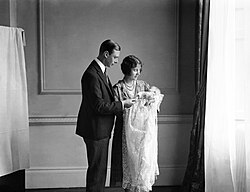
The family remained at 145 Piccadilly until December 1936. Following the abdication of Edward VIII, George ascended to the throne and moved the family to Buckingham Palace. George reportedly preferred the comfort of No. 145 over the palace, which had been neglected during Edward's brief reign, leading to discussions about building a secret tunnel between the two properties.
Royal Treasures and the Impact of War
In 1939, the house hosted a significant exhibition titled "Royal and Historic Treasures" to benefit the Heritage Craft Schools for Crippled Children in Chailey, Sussex. Initiated by Princess Alice, Countess of Athlone, the event featured extraordinary loans, including:
- A waistcoat worn by Christopher Wren at the opening of St. Paul's Cathedral.
- A sleeping bag belonging to Antarctic explorer Lawrence Oates.
- The petticoat of Elizabeth I.
- A table once owned by Marie Antoinette.
- An artist's palette used by J. M. W. Turner.
The exhibition was visited by Queen Mary and a large royal party on July 10, during which Sacha Votichenko performed on his tympanon royal.
The house's fortunes shifted during World War II. On October 7, 1940, it was severely damaged during an air raid in the London Blitz (the strategic bombing of London by Nazi Germany). By 1942, the ruins were repurposed as an allotment run by the Girls' Training Corps under Irene Astor, Baroness Astor of Hever.
Demolition and Modern Development
Post-war, the property transitioned from a private residence to commercial use. In March 1947, Alexander Korda of London Films purchased the lease. Korda also leased No. 146 for offices and used the adjoining No. 144 as the headquarters for the London Films publicity department.
The house was eventually demolished in 1959 to facilitate road developments at Hyde Park Corner. By 1969, the remaining leasehold interests of 142 through 145 Piccadilly were held by Amalgamated West End Developments. The site of the former royal residence is now occupied by the InterContinental London Park Lane hotel, completed in 1975.
Key Facts
- Royal Residents: Home to the future King George VI and Queen Elizabeth from 1926 to 1936.
- War Effort: Served as a British Red Cross coordination center during WWI.
- Historic Artifacts: Hosted a 1939 exhibition featuring items from Elizabeth I and Marie Antoinette.
- Destruction: Badly damaged during the London Blitz on October 7, 1940.
- Current Site: Now the location of the InterContinental London Park Lane hotel.
| Period/Date | Event/Occupant |
|---|---|
| 1845 | Death of William Purey at the residence |
| 1880s-1890s | Residence of Hamar Bass |
| 1912 | Occupied by Albert Maximilian von Goldschmidt-Rothschild |
| 1926-1936 | Home of the Duke and Duchess of York and their daughters |
| 1939 | 'Royal and Historic Treasures' exhibition held |
| 1940 | Severely damaged during the London Blitz |
| 1947 | Lease bought by Alexander Korda (London Films) |
| 1959 | House demolished for road development |
| 1975 | InterContinental London Park Lane hotel completed |
Frequently Asked Questions
Who lived at 145 Piccadilly before the Royal Family?
The house had several notable residents, including William Purey, the 2nd Marquess of Northampton, brewer Hamar Bass, and Albert Maximilian von Goldschmidt-Rothschild.
Where did Princess Elizabeth spend her early childhood?
Princess Elizabeth lived at 145 Piccadilly from 1926 to 1936, with her rooms located on the fourth floor of the house.
What happened to the house during World War II?
The house was badly damaged during an air raid on October 7, 1940, during the London Blitz. Its ruins were later used as an allotment by the Girls' Training Corps.
Why did the Duke and Duchess of York leave the house in 1936?
They moved to Buckingham Palace in December 1936 following the ascension of George to the throne after the abdication of his brother, Edward.
What stands on the site of 145 Piccadilly today?
The house was demolished in 1959, and the InterContinental London Park Lane hotel was built on the site in 1975.